Archive for February 2023
Meet Verena Salon Operators
hair-stylist Irene and manicurist Dawn
to get your questions answered about
services, operating times and other matters.
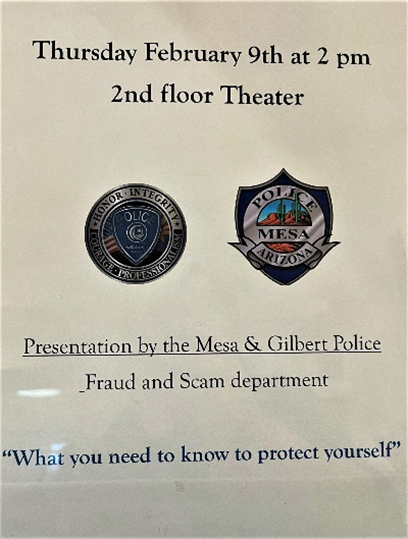
10 a.m. 2nd floor theater
And then . . .
It’s taken a long time
for us old farts
to realize that there’s no sense
to eating right and exercising regularly to stay fit

because we’re still going to die anyway.
Whatever Happened . . .
. . . to Albert Einstein’s brother

Frank?
Get your free blood-pressure check
in the lobby
every Wednesday at 10 a.m.
provided by BAYADA
then
Check your hearing & hearing-aids
at 3 p.m.
in the 2nd floor multipurpose room
with Preferred Hearing Care
Stay Informed . . .

. . .don’t miss today’s monthly Town Hall meeting
4 p.m. in the 2nd floor theater.
Draw Up End of Life Plans Anytime
A dear friend who passed away recently after a lengthy illness took time to discuss with her spouse details to be attended to after her death. They both agreed on the disposition of their remains and where they should be ensconced. Both felt at ease talking quietly and patiently about their plans as her death approached. After taking care of her wishes, the widower discussed and passed on these plans to their children to be followed when he dies.
Making after-death lists can become critical when they deal with your final weeks, days and hours, especially if you lapse into a coma or any condition that makes it difficult to make on-the-spot decisions. Doctors and medical staff are committed to keeping their charges functioning as long as there is any chance they will survive, when they feel the patient is not terminally ill.
More than 30 percent of adults have formalized their end-of-life preferences in what is known as an advance directive – a legal document with instructions on how they feel they wish to end their lives. In most cases, the person wishes to avoid a lengthy pain-riddled existence leading to their death. Problems arise if there is no health-care proxy on hand to ensure that the patient’s directions are followed and/or when the patient is unconscious and medics have to determine whether or not the patient is terminally ill.
To increase your chances of a peaceful death, you should discuss your plans and wishes with your family physician. If you feel he or she is unwilling to go along with your directive, you might seek another doctor. In some cases, you might want to talk things over with a clergyman.
Review your plans over and over with members of your family – all of them so there are no battles when your end-of-life treatment and timing becomes critical. You might have one of them use their mobile phone camera to take a video of you explaining your plans.
Today’s The Last Day . . .
. . . to sign up for a
free 15-minute chair massage
provided by LifeQuest starting at —
10 a.m. tomorrow (Tuesday) in the 2nd floor theater.
It Takes Effort to Collect on Insurance
Most of us have several types of insurance covering, among others, auto-accident damage and liability, mortgage, renters, long-term care, home damage and liability, and death (called life insurance for some strange reason). And when we take a trip, many of us pick up a travel-insurance coverage.
But there’s work to be done to collect any benefits after the trauma of a crippling auto accident or fire that destroyed your home. And it has to be done quickly, usually while you’re still emotionally addled and physically drained by the happenstance.
Your first step is to find the policies that apply to your loss with all the pertinent information about where to file your claim. In some cases, you can call to the agent who sold you the policy to get some advice. That means you should keep our insurance policies handy. Someone else in the family or your attorney should also know where they are because you might be hospitalized and someone will have to launch your claim for you.
Make sure all instructions are followed to the letter. Unanswered questions or an overlooked step will delay the process and require redundant correspondence and contact with the insurance company.
Keep every police and medical report and all other bits of information connected to the incident prompting the claim. And every receipt. If you’re in doubt about whether a document is relevant, keep it and let the company toss it out.
If our claim involves lost or damaged property, it helps if you have a prepared inventory – photographs are better – of all your property along with a list of what’s been missing or destroyed.
File all correspondence and conversations with the insurers and don’t take no for an answer. Their job is to avoid paying out for non-qualifying and fraudulent claims. Your job is to prove to them that your claim qualifies.
Be persistent. If you hit a wall in your initial stages, ask to speak to your contact’s supervisor and present your case. If this doesn’t work discuss the matter with your attorney.
When you file claims for long-term-care reimbursement, make copies of your receipts before sending the originals to the insurance company.
Super Bowl Sunday . . .

. . . is next Sunday,
so it’s not too late
to get in on a scoreboard lottery.
Crooks Crouch in Cyberspace
The COVID-19 shutdowns, changing regulations and general pandemonium have made it easier for cyberspace vultures to plunder your lifetime savings.
High on the list of scams is a caller pretending to be from a bank or credit-card company seeking to straighten out some issue or threaten you with penalties for a reported late payment. Be wary of similar snail-mail correspondence.
Don’t call the numbers left by the caller or letter writer. Use the contact numbers you have on your bank or credit card statements if you feel you need to follow through on the matter.
Other crooked calls claim you’re late with tax payments, you’ve won a major prize, or face legal prosecution for some fictitious matter.
There’s also the caller checking on a reported attack on your credit line and asks to verify personal information ranging from address to Social Security, credit-card and bank account numbers.
Be suspicious of any unidentified emails that creep into your computer or cell phone.
Bob Pakenas Sez . . .

Have a cool shmooz at our weekly ice cream social Sunday p.m.
Longevity Opens New World
The current senior mantra is “Things Will Never Be the Same” because of the changes wrought by the COVID-19 plethora of political proclamations designed to protect us from ourselves. But a deeper and more profound change was already under way before the pandemic encircled the globe.
The population is getting older. By 2030, the senior population around the world is expected to top 1.5 billion from the current 900 million. China’s over-65 phalanx that accounts for less than 10 percent of its population now is predicted to account for a quarter of its population in just three decades. By the end of this decade, more than 20 percent of the North American population will be 65 years or older. By 2060, one out four people will be in that age bracket.
This phenomenon is occurring for a few reasons. One is the graying of the post-World War II baby boomers, the 77 million Americans born between 1946 and 1964. Added to that is the fact that we’re living longer while the birth rate is diminishing. The 1950 U.S birth rate was 25 per 1,000 people compared with 12 per 1,000 last year.
By the beginning of the 2030s, workers will account for only 30 percent of the population. This shrinking workforce means a shrinking source of payroll taxes to finance Social Security and Medicare benefits for the aging population that no longer will be working. Counterbalancing this trend are recent reports that three-quarters of the current labor force plan to keep working past the age of 65. But pundits still predict Social Security benefits will have to be cut by at least 20 percent by the mid-2030s.
All of this movement not only affects financial-support programs, it puts a strain on the health-care industry, which already is looking at a shortage of more than 120,000 doctors and some 100,000 nurseds assistants and other medical aides over the next 10 years.
Whenever You Start Thinking . . .
. . . about looking for the person
who’ll change your life,

just look in the mirror.
Bocce ball fans meeting 11 a.m. beside the swimming pool
Second Opinion Always Helps
Getting a thoughtful and valid second opinion is becoming increasingly important in our fast-moving world of medical testing, innovation and disease control. Too many patients follow doctor’s orders without question regardless of the diagnosis.
After a series of tests and X-rays, a late relative’s primary care physician diagnosed spinal pressure as the cause of severe neck pain and numbness in the patient’s right shoulder and arm and referred him to a surgeon. The surgeon inspected the medical record, examined the patient and recommended a procedure that would fuse a handful of vertebrae to solve the problem. The operation was performed and, while the pain disappeared, the patient’s right hand became almost useless because of nerve damage caused either by the spinal pressure, the surgery or both.
The relative moved to a different city and, after arranging an introductory appointment with a local doctor, had his medical records sent to the physician. During his first visit, the patient was dumbfounded to hear that he might have a combination of some serious and complicated disabilities and disease, including Lou Gehrig’s disease (ALS), lymph cancer and neurological damage. His new doctor recommended a series of tests and referred him to a handful of specialists.
As it turned out, he did have cancer and ALS, both of which should have been unearthed during the process that led to his surgery just over a year earlier. Consensus at this stage was that the surgery was unnecessary and the cancer might have been curtailed. A second opinion at that time might have added years to his life.
It’s up to you to seek out a second diagnosis whether your primary care physician likes it or not. The situation doesn’t have to be life-threatening. It may be a change in your medication, the possibility of expensive surgery, or the feeling that you’re symptoms are being given trivial treatment. When you do face this issue, check with your health-care insurer to determine what they cover. You can ask your doctor for a referral as well as talk to family and friends about doctors they’ve seen.
When you’ve arranged to meet with another doctor, have your medical records sent to their office and prepare a list of questions you want answered. Your family doctor might have some questions to add. What happens if the new diagnosis differs drastically from the first? Then look to getting a third and fourth opinion.
My Brother Said. . .
. . . the cops knocked on his door the other day
and told him there were reports
that his dogs were chasing people on bikes.
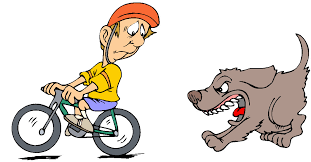
My brother said that was impossible
because his dogs don’t own any bikes.
Daily Life Changed Already
There was a never-ending stream of predictions and prognostications about how our lives would change as we emerged from of the COVID-19 shut-downs. Some have already happened.
Folks who never gave a thought to having groceries delivered have settled into this convenience for the rest of their lives. They’ve discovered the ease of shopping online and dropping by the source to have their order deposited in their trunk in minutes instead of spending an hour or two pushing a cart up and down aisles after competing with countless other vehicles to find a parking spot.
Many have realized the added comfort of having their goods dropped off at their doorstep. They’ve decided to forego the hassle of having to jostle through traffic and crowds to get their goods.
Shaking hands is disappearing. We’re learning to meet and greet each other with a fist bump or touching elbow to elbow.
Calling or emailing your doctor also is a novel approach to good health. Telemedicine has made giant strides in the few months this pandemic has been in force. Much is due to the fact that insurance companies have begun to pay for these cyberspace calls. Getting a diagnosis and medication has, in many cases, become as easy as making a phone call.
The home office and workshop have become a bigger part of working lives. Employees have discovered the comfort and convenience of not having to wear a shirt and tie and climbing into the car to spend a couple of hours on the freeway to get work. And they don’t have to drop off the kids at a chld-care center.
Employers have seen how they don’t have to provide expensive equipment and space to have their work produced, whether its schematics or sales. Computers provide the capability to have all this and more achieved remotely. Researchers report that more than one-third of office work can be performed at home. And those downtown office buildings are staying dark.
 Mature Life Features