Archive for August 2023
It Sounds Like . . .
. . . 100 percent of the people in this country

think at least 50 percent of the people in this country
have lost their minds.
= = = = =
Backyard Travel in Vogue
The coronavirus has dealt crippling blows to the travel industry, but folks hooked on or interested in tramping new ground can still get out and about.
They can explore their neighborhoods, cities and nearby countrysides without threatening their fellow man with contagion.
It’s still possible to take a bike ride along forest breaks that used to be railway lines to enjoy the quiet and comfort of the countryside.
And you can drive up to such major attractions as the Grand Canyon, South Dakota’s Mount Rushmore, and bluffs on the Atlantic or Pacific coast to watch sunrise and sunsets without having to get out of your car.
There‘s much to see, hear and taste in our environs.
While Baltimore lures you with the finest crab cakes in the galaxy, it’s difficult to match fresh-lobster dining offered on Canada’s Prince Edward Island.
The Monterey scenic drive still provides long-lasting memories for travelers.
Trains offer comfortable vistas of the Pacific Coast and the Prairies, to mention a couple of interesting travels that are handy.
Most RVers will tell you there are North American vistas that vie with the most picturesque parts of the world – the Rockies, Yosemite National Park, Mackinac Bridge, Toronto Skyline, the St. Lawrence Seaway’s Thousand Islands, Carlsbad Caverns, Niagara Falls, and Seattle Space Needle, to cite a few sights.
Many food venues are attractions, including Kansas City steaks, New Orleans jambalaya, ballpark hotdogs, and home-cooked Amish dishes in Pennsylvania-Dutch country.
If you haven’t dropped by your hometown for a few decades, a revisit can be a door to an entirely new world wrapped around your old memories.
I Didn’t Realize . . .
. . . how many dear old gals
knew the F word

until I heard on of them yell
“Bingo!”
= = = = =
Another busy Friday with
bocce, billiards, bridge & bingo.
= = = = =
Get Busy to Do Nothing
Most people have figured out what they’re going to do when they retire.
Travel, visit the kids, play golf, grab some coffee with old friends, and go fishing are high on the list of plans.
But most people haven’t figured out what their going to do when there’s nothing left they want to do.
There’s an art to doing nothing when you know you can do anything you want to do whenever you want to do for as long as you want to do it.
So you might want to start practicing.
Recent studies indicate doing nothing – giving your brain a rest — can actually stimulate your mind. Researchers report that sitting back and doing nothing for a spell can refresh your brain and enhance your creative abilities.
Studies have revealed that, when boredom sets in, your brain is actually daydreaming – and those dreams can be productive.
However, doing nothing all the time can calcify your thinking.
To start doing nothing, get away from your television set, mobile phone, book, jigsaw puzzle or whatever else around you that can command your attention.
Some experts suggest you start doing something boring, like counting cars streaming by your window or stroll down to the nearby park to stretch out on a bench and stare into the pond or at the overhead clouds.
Killing time by wandering through the internet, meditating or checking messages doesn’t work because they don’t allow your mind to wander, to daydream. The idea is to eliminate all stimulation and activity so your body and your mind and emotions can do nothing.
Even listening to music can be a distraction when you’re trying to do nothing.
If you have to be doing something, try coloring in a coloring book – something that keeps our hands busy but doesn’t require any brain work.
These do-nothing periods can not only boost your awareness as you proceed through the day, they can help develop more creative pastimes to help you enjoy the times when you’re not doing nothing.
If Your Flight . . .
. . . is delayed or cancelled,
shouldn’t the airport
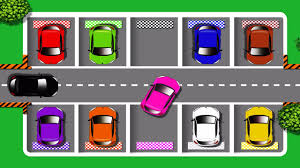
give you a refund for parking?
= = = = =
Golden Age Depends Upon Your Age
By Tom Morrow, Mature Life Features
We often hear the phrase “that was back in the ‘golden age’ of” – fashion, cars, Hollywood, you pick it.
High on the list of the most commonly discussed golden age deals with communication and spans a wide variety of topics: magazines, newspapers, radio and television.
Remember the heydays of Collier’s, Saturday Evening Post, Life, and Look? If you don’t, you didn’t arrive on earth until after the 1950s because these poplar weekly publications were the People magazines of their day. News magazines such as Time and U.S. News & World Report were vogue by mid-20th century.
One could say the golden age of newspapers stretched from the late 1800s through the first half of the 20th century. Every major city in America had at least two newspapers. New York City had seven until the late ‘70s. Chicago still has three.
Today, Los Angeles has just one, down from three just a couple of decades ago.
Interestingly enough, overseas cities such as London, Paris, Melbourne, Sydney, and Berlin still have more than four. Most of those cities sell their newspaper via street vendors. Door-to-door delivery seems to be an American thing.
The automobile’s golden age began in the 1920s and lasted through the ‘60s. Some f the most inventive vehicles were born and sold during this era.
There was the Stanley Steamer. Yes, it was powered by steam and went very fast. There was the luxurious hand-built Duesenberg, which was a “real doozie.” There were a number of electric-powered cars way back then – one-third of all cars on the road in 1900 were powered by electricity.
One of America’s first transportation companies, Studebaker, built horse- and oxen-drawn wagons during the Civil War and many of the so-called “Prairie Schooners” for the great migration to settle the West.
A friend writes that his family owned a 1929 four-door Studebaker-Erskine, named after Erskine, the president of Studebaker during the late ‘20s. The sedan was turned into scrap metal during WWII since gas-ration cards limited gasoline availability.
Those of you who have been around since the ‘30s may recall the Packard, Willys, Kaiser, Frasier, Crosley, and the short-lived the Tucker. One of the best-built but ugliest might have been Ford’s Edsel. Its gruesome grille might have had something to do with its short life.
Radio’s ruled the air waves from the late ‘20s through the 1940s. Many of television’s star performers, sit-coms and drama formats were developed during this period.
Many of us rushed home from school to listen in on “The Lone Ranger,” “Sky King,” “Sergeant Preston of the Yukon,” and “Straight Arrow.” On Sunday afternoons it was “The Shadow,” and “Nick Carter, Private Eye.” Weeknights it was “Johnny Dollar” and “Lux Radio Theater.” Every night “Fibber McGee & Molly,” “Bob Hope, “Jack Benny, “George Burns & Gracie Allen” made us laugh.
Today’s television programming is far-reaching. There’s very little that you can think of that isn’t available on a wide variety of “streaming” channels.
On-demand programming has new movies available while they’re still in the theaters – if you can find one that hasn’t closed down. Cable TV offers 24-hour news and talking heads spewing all sorts of opinions.
The not-too distant generation might look at the present time as TV’s golden age with sets bigger, better and lower-priced than ever before. Added to this is the array of computers, cell phones, and video games.
They might say this was the “Golden Age of Indulgence.”
(Tom Morrow’s books are available at Amazon.com and on Kindle.)
You Don’t Have To . . .
. . . believe everything you hear

to repeat it.
= = = = =
It’s old-farts’ discount
today at Fry’s.
= = = = =
How Rockefeller Came to Mean Rich
By Tom Morrow
John Davison Rockefeller Sr., one of the original six moguls who built America, is considered by many to have been the world’s wealthiest man ever with an estimated worth of some $410 billion in current dollars.
He was born July 8, 1839, and, with the founding of the Standard Oil monopoly in his 20s, he controlled the American petroleum industry for most of his adult life. That made him one of the so-called “robber barons” of our nation’s history.
The company’s origins date to 1863 when he hooked up with a couple of partners in the oil-refining business in Cleveland. Seven years later, after some ownership shifts, he incorporated Standard Oil and focused on refining oil rather than drilling for it.
Oil was used throughout the country as a source for fueling lamps until the introduction of electricity and then as a fuel and lubricant with the invention of the automobile.
As the need for kerosene and gasoline grew, his company controlled as much as 95 percent of all oil refining in the United States.
By establishing a maze of refining, marketing and affiliated companies, he also gained enormous influence over the railroad industry, which transported his oil around the country. Standard Oil became the first great business trust in the United States and, in 1911, the U.S. Supreme Court ruled it violated federal anti-trust laws and ordered it be dismantled.
It was broken up into 34 separate entities that included companies that eventually would become ExxonMobil and Chevron, among others. Individual pieces of the company were worth more than the whole and shares of these doubled and tripled in value in their early years,
Rockefeller became the country’s first billionaire with a fortune worth nearly 2 percent of the national economy. In 1913, his peak net worth was estimated at $336 billion (in 2007 dollars). He spent the last 40 years of his life in retirement at his estate in Westchester County, NY.
His fortune was used to create the modern systematic approach of targeted philanthropy. His foundations pioneered the development of medical research and were instrumental in the near-eradication of hookworm and yellow fever in the United States.
Religion was a guiding force throughout his life and he believed it to be the source of his success. He supported many church-based institutions and was a faithful congregant of the Erie Street Baptist Mission Church, where he taught Sunday school and served as a trustee, clerk and occasional janitor. He adhered to total abstinence from alcohol and tobacco all his life
He also was considered a supporter of capitalism based on a perspective of social Darwinism and was quoted often as saying, “The growth of a large business is merely a survival of the fittest.”
At age 86, Rockefeller penned the following words to sum up his life:
I was early taught to work as well as play,
My life has been one long, happy holiday;
Full of work and full of play
I dropped the worry on the way
And God was good to me every day.
(Tom Morrow’s books are available at Amazon.com and on Kindle.)
 Mature Life Features