Archive for the ‘Health’ Category
Working Your Way . . .
. . . thru Medicare

will be mapped out at
2 p.m. today
in the 2nd floor theater
by the Oak St. Health team,
and then they’ll host the
Thirsty Thursday happy hour and entertainment.
How to. . .
. . . stay healthy and well

will be explained clearly and concisely by
Physician Assistant Clara Goodman from Health U Family Medicine
at 2 p.m. in the theater.
Then hop down to the dining room at 3:30 p.m.
for the monthly birthday party
for residents who have birthdays this month.
And hang around for Mary Weaver’s review
of things to do the rest of this month (while she’s away)
at 4:30 in the dining room.
= = = = =
Acting Like Someone Else
Might Help Mental Health
By James Gaffney
Mature Life Features
While it sounds counterintuitive, there’s mental-health research suggesting one of the best ways to feel good about yourself is to try not “acting like yourself.”
You heard right.
“Being true to yourself” often means acting counter to your personality traits, according to research conducted by a Wake Forest University psychologist.
Because authenticity predicts a variety of positive psychological outcomes, this study can help people see they have options for how they behave.
One implication of these findings is it might be possible for individuals to improve their mental health by acting against their personality traits. Being flexible with who you are is OK. It is not denying or disrespecting who you are. People are often too rigid about themselves and stick with the comfortable and familiar.
Results of the study revealed that introverts feel more “authentic,” or true to themselves, when they are acting extroverted. When a shy person attends a party and acts like a social butterfly, the individual is likely to report feeling like showing off his or her true self at that time in that situation.
Some might argue that acting in this way suggests people are faking it. But the Wake Forest study shows that is not the case.
Authenticity is consistently associated with acting highly extroverted, even for those who characterize themselves as introverts. Also, people who think of themselves as disagreeable and rude feel more true to themselves when they are agreeable, considerate, polite and kind. And, people who consider themselves careless feel more true to themselves when they are conscientious.
-30-
We’ve Been Invited . . .
. . . to a car show

by our next-door neighbors at Sky Ridge
beginning at 4 p.m. Cinco de Mayo (Friday).
+ + +
And don’t forget our weekly indoor bocce at 11 a.m.
in the 2nd floor multi-purpose room.
= = = = =
Men “Bulletproof”
Until First Heart Attack
A major health concern in the fact that many men in their 50s and older haven’t seen a doctor in years. With the aging of the baby boomers, more than 150,000 men a month are turning 50 from coast to coast.
Men also are not conditioned, as women are, to have annual checkups. This means a large segment of the population doesn’t know about or use the health-care system. Things begin to change after about age 45 because of three critical ailments that begin to emerge – joint deterioration, cancer, and the number-one killer around the world – heart disease.
A handful of simple steps has been developed by medical experts to help solve what has become a major health-care problem: men in their late 40s and older who do not visit doctors regularly.
The first move is to have an annual physical exam to screen for general problems, such as stress and anxiety. Then each of the following steps should be taken each year (they can be scheduled with your annual physical): check blood pressure, cholesterol and blood sugar or glucose level, blood analysis for such disorders a kidney and liver disease and urine analysis, and a stool test for blood.
Men should undergo a prostate-wall and prostate-specific antigen test annually. They also should have at least one thyroid screening and periodic electrocardiograms to check for heart abnormalities after they turn 50. They also should have their lower bowel viewed with a flexible camera to check for polyps that are precursors to cancer.
For Those of You . . .
. . . who didn’t make it to the food-service meeting,
the possibility of doing away with Sunday brunch and
replacing it with regular week-day breakfast and lunch service
is being explored.
= = = = =
Eyes Give First Glimpse
of Health Problems
The old adage that the eye is the window to the body has been found to be literally true as many diseases manifest themselves first in the eyes. Diabetes and high blood-pressure are two health problems optometrists can pick up on early during an eye exam. Rheumatoid arthritis and lupus are just two conditions that have ocular manifestations easily detected by the optometrist.
Vascular diseases, such as atherosclerosis, that can put a person at risk for heart attack or stroke also can be detected via an eye exam, even when a patient has no visible symptoms.
The following symptoms are red flags that require an immediate visit to the optometrist:
— Fleeting loss of vision;
— Fluctuating vision;
— One or both eyes turning red;
— Soreness and inflammation of one or both eyes, or
— Worsening vision.
The medical community suggests adults have eye examinations once every year or two from ages 41 to 60, then once a year from age 60 onward.
= = = = =
Val Vista Pharmacy . . .
. . . is back again
at noon today
to answer all your prescription questions.
THIS HAS BEEN CANCELLED
A Friend Recently .. .
. . .mulled replacing some of her furniture
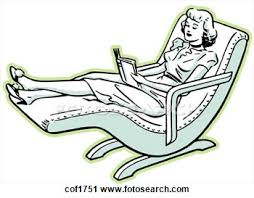
but she gave it up because she said
she and her recliner go way back.
= = = = =
Caregivers Pay Economic, Emotional Prices
Besides the shoulder-stooping emotional cost of caring for ill and ailing loved ones, there is can be an enormous economic price to pay by the more than 22 million U.S. families who provide such care.
Caregiving costs individuals some $660,000 over their lifetimes in lost wages, and lost pension contributions and Social Security because they take time off, leave their jobs or miss out on opportunities for training, promotions, and plum assignments.
Almost 85 percent of employees reportedly make adjustments to their work schedules by taking sick leave or vacation time, decreasing work hours, taking a leave of absence, switching to part-time employment from full-time, resigning, or retiring.
Elder care has more negative impacts on workers than does child care, particularly for those who are the primary caretakers for an older adult. Taking care of an aging parent is always difficult, but it is even more difficult for employees who have to care for their parent in their own home. It essentially means employees have a second shift of work when they get home.
As the population ages, the number of caregivers grows and the personal and corporate costs rise. Employees who care for elderly or sick relatives with long-term-care insurance are twice as likely to stay in the workforce as are workers who care for relatives without coverage, according to data from three MetLife institute surveys.
In addition, working caregivers of loved ones with long-term-care insurance coverage are less likely to experience such types of stress as having to provide constant attention to the care recipient or having to offer caregiving while ailing themselves.
Attention All Bocce . . .
. . .aficionados ! ! !

It’s Friday again
so dive into your playing gear
and climb aboard the team bus
at the Verena front door at 11 a.m.
= = = = =
Mental Exercise Sharpens Seniors’ Mind
A few mental push-ups here and there can help keep an older adult’s mind just about as sharp as ever — much the same way physical exercise can help maintain physical fitness, according to the Pennsylvania State University’s Gerontology Center. Researchers worked with 5,000 men and women for more than three decades and found less than half showed a decline in mental ability, even those aged 74 to 81.
Does mental ability start to decline in middle age? Ridiculous, not even at age 60, they report. Just as you can maintain physical well-being as you age by exercising and eating properly, you can maintain mental well-being by engaging in stimulating activities, continuing to make decisions and leading an active life.
Mind-sharpening exercises include watching television informational programs rather than soap operas, playing bridge instead of bingo, playing blackjack instead of slot machines, and taking up word games like Scrabble or anagrams. They even recommend square-dancing because not only is it good for you physically, it’s also mentally challenging because you have to follow intricate patterns chanted by the caller.
Dr. Raz in Residence
Therapist Dr. Candace Raczkowski

will introduce her healing service to us at
1 p.m. in the 2nd floor theater
Her knowledge, experience, training and background
treating and preventing problems with
balance,
post-surgical recuperation,
joint inflation and
a wide-range of chronic conditions
will help most us overcome stiffness and pain.
= = = = =
Married Couples More Wealthy Than Singles
Just like love and marriage, marriage and wealth‑building go hand in hand.
Don’t leap astride your high horse should someone suggest you or a dear friend or relative is marrying for money.
A Purdue University study reveals that marriage has a lot to do with wealth accumulation. Getting and staying married appears to provide institutional benefits that greatly impact long‑term economic well‑being.
A survey of more than 7,000 households that included at least one pre‑retirement person between 51 and 61 years of age indicated that people who never married had only 14 percent of the financial assets that married people accumulated.
Even when divorced individuals and surviving spouses remarried, they still did not make up as much financial ground as partners who were continuously married. The negative effects are greater when a marriage ends in divorce.
Financial potentials that are greater in marriage include home ownership, insurance coverage for spouses, survivor pension benefits, and increased rates of saving. A continuous marriage is more important to acquiring housing equity than other type of assets.
Which leads sponsors of the study to warn married couples pondering divorce to consult with a financial counselor before calling their attorneys.
A financial consultant can help because quickly liquidating jointly held property and establishing two households with the proceeds can be costly to both parties. And spinning off from that is the need to review individually held property before forging a marriage contract, whether it’s the first marriage or the latest in a series. Pre‑nuptial financial agreements should be given as much priority as legally binding romantic bonds.
If You Don’t Like . . .
. . .tucking your hearing aids into your ears,
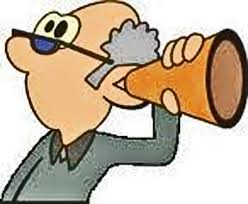
put them in your pocket and take them down to
the 2nd floor multi-purpose room
at 3 p.m. to get them
checked and cleaned.
= = = = =
It’s a good thing I became a wordsmith because
I can’t even count the times I failed math at school.
= = = = =
Too Sick to Seek Care
Imagine being too sick to get help from becoming sicker. That’s what appears to happening to a lot of the elderly. Poor physical health and disabilities could be keeping older patients from seeking preventive care, such as mammograms and flu shots, according to a report by the Washington, D.C.-based Center for the Advancement of Health.
It also seems that physical-health problems affect the elderly’s health behavior more than mental-health problems like depression. The one exception, according to results of a survey of more than 4,500 individuals aged 65 to 103, is that older patients who reported being depressed were more likely to smoke.
Most people are less likely to smoke or drink alcohol frequently as they age but are also less likely to have mammograms, lose weight, and exercise as they grow older. Minority and low-income patients, as well as those with physical-health limitation, are less likely to use preventive medical services.
On the other hand, elderly respondents taking multiple prescription medications or who had recent falls were more likely to use preventive care and to practice good-health behaviors. This suggests that regular contact with health-care providers encourages better good-health practices. Additional visits also give health-care providers more opportunities to suggest vaccinations, go over opportunities for advance directives, and discuss needs for behavioral changes.
Blood Pressure checking . . .
. . . cancelled today
but don’t forget Val Vista Pharmacy personnel
available at 11 a.m. in 2nd floor theater

to review your prescriptions and
discuss how they can work with you
to provide automatic service and free delivery.
= = = = =
 Mature Life Features