Archive for the ‘History’ Category
Wars . . .
. . . don’t determine who’s right,
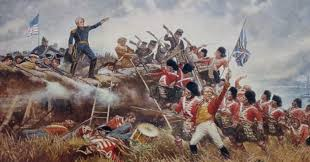
they sort out
who’s gong to write history.
It’ll Be Interesting . . .
. . . to see what happens
when the government realizes
only one company
makes the game of Monopoly
= = = = =
It’s a Matter of Time
By Tom Morrow, Mature Life Features
About the only occasion most of us take notice of time is when we have to keep an appointment, find out when our favorite TV program is aired, or cuss out that confounding “daylight savings time.” The definition of a time zone is a longitudinal geographic area that observes a uniform time for legal, commercial and social purposes.
There are 24 time zones circling the globe. Time zones are 15 degrees apart longitudinally and often follow the boundaries between states and countries and their subdivisions instead of strictly following lines of longitude because it is convenient for areas and operations in frequent communication to keep the same time … like railroads, airlines, and communications networks.
The position of the sun in the sky, known as solar time, varies by location due to the spherical shape of the Earth. This variation corresponds to four minutes of time for every degree of longitude. For example, when it is solar noon in London, it is about 10 minutes before solar noon in Bristol, England, which is about 2.5 degrees to the west of that city.
The British Royal Observatory in Greenwich was founded in 1675 and established Greenwich Mean Time (GMT), the solar time at that location. Astronomers of that era developed GMT as an aid to mariners to determine their longitudal position at sea. Today, U.S. military units refer to GMT as “Zulu Time.”
In the 19th century, as transportation and telecommunications improved, it became increasingly inconvenient for each location to observe its own solar time. In November, 1840, the Great Western Railway started using GMT kept by portable chronometers. This practice was soon followed by other railway companies in Great Britain and became known as Railway Time. Around August of 1852, time signals were first transmitted by telegraph from the Royal Observatory. By 1855, Great Britain’s public clocks were using GMT, but that didn’t become England’s legal time until 1880.
Time-keeping on North American railroads in the 19th century was complex. Each railroad used its own standard of time, usually based on the local time at its headquarters or, more importantly, its terminus. Each railroad’s train schedules were published using its own time. Some junctions served by several railroads had a clock for each railroad each that showed a different time.
In 1863, Charles F. Dowd proposed a system of hourly standard time zones for North American railroads. He took this action without consulting the railroads. Rail officials weren’t consulted on the matter until 1869. In 1870, Dowd proposed four ideal time zones for the United States having north-south borders with the first centered on Washington, D.C. By 1872 the first time zone was centered on the meridian 75 degrees west of Greenwich. Dowd’s system was never accepted by North American railroads. Instead, U.S. and Canadian railroads implemented a version proposed by the Traveler’s Official Railway Guide. The borders of its time zones ran through major cities’ railroad stations
Canadian-born Sanford Fleming proposed a worldwide system of time zones. His proposal divided the world into 24 time zones. All clocks within each zone would be set to the same time but differing by one hour from those in the neighboring zones. He advocated his system at several international conferences, including the International Meridian Conference, where it received some consideration. Today, while his system has not been directly adopted, some maps divide the world into 24 time zones.
By 1900, almost all inhabited places on Earth had adopted a standard time zone but only some of them used an hourly offset from GMT. Many applied the time at a local astronomical observatory to an entire country, without any reference to GMT. It took many decades before all time zones were based on some standard offset from GMT, also known as Coordinated Universal Time. (UTC). By 1929, the majority of countries had adopted hourly time zones, except Iran, India and parts of Australia, which have time zones with a 30-minute offset to UTC.
Today, all nations currently use the UTC time zone system, but not all of them apply the concept as originally conceived. Several countries and subdivisions use half-hour or quarter-hour deviations. China and India use a single time zone even though the extent of their territory far exceeds the ideal 15 degrees of longitude for one hour. Spain and Argentina use standard hour-based offsets, but not necessarily those determined by their geographical location. The consequences affect the lives of local citizens and, in extreme cases, contribute to larger political issues, such as in the western reaches of China. In Russia, which has 11 time zones, two zones were removed in 2010 but were reinstated in 2014.
When I was a boy, my grandfather could look up at the sun and tell within 30 minutes, what time it was. He’d check himself by looking at his pocket watch as the trains came through town. Bygone days.
My Tablemate . . .
. . .was not impressed
when he asked me
what I was feeding my dying plants
and I told him it was their favorite:

root beer.
= = = = =
Bard’s Spirit
Still Alive in
Avon ‘s Stratford
By Silvia Shepard-Lobanov, Mature Life Features
STRATFORD-UPON-AVON, England –- The “Sweet Swan of Avon,” Ben Johnson’s honorific for William Shakespeare, is reflected best in Nature’s choreography as the stately curvaceous creatures carve their way over the surface of this world-famous waterway. When you visit here, chances are you will find a place where a swan, in Wordsworth’s words, “floats double, swan and shadow” and fluttering its feathers while skimming noiselessly upon the water.
The Avon, like many English waterways, has a series of locks designed to let the water flow evenly across the countryside. Their dimensions determine the length and width of the long boats that carry visitors and others on relaxing cruises. Row, motor, and small boats of every sort ply these waterways. In summer, the setting becomes a liquid raceway with rafts, canoes, and home-made craft “struggling,”as the locals say, down the river in complete disarray.
The town’s largest venue where the Bard’s words are given substance is the Royal Shakespeare Theater that opened in 1932. The Other Place Theatre, 100 yards up the road, also houses themed medieval events as well as lectures and debates. Other local sights of interest include dwellings that played a part in Shakespeare’s life.
In 1582, at age 18, he married Anne Hathaway, eight years his senior, and sired three children, Susan, Hammett and Judith. Anne Hathaway’s Cottage, where she grew up, is open to visitors. It’s a 12-room farm house with timbered walls and lattice windows and a signature piece of Elizabethan homes: the thatched roof is made of straw piled high without wood planks underneath.

The thatching was the only place where animals could get warm, so all the village‘s cats and dogs lived in the roofs. When it rained, the thatch became slippery and sometimes the animals would fall off the roof. Hence the saying, “It’s raining cats and dogs.”
Stratford, which is less than 100miles northwest of London on the M-40 motor way, breathes Shakespeare. You can see his bed, the dishes he used, and other elements of his life. And on his gravestone in Stratford’s Holy Trinity Church the epitaph on the stone, supposedly written by the Bard himself, reads:
“Good friend for Jesus sake forbeare,
To dig the dust enclosed here.
Blessed be the man that spares these stones,
And cursed be he that moves my bones.”
Busy Day . . .
. . . with scooter and walker checks, yoga,
and billiards lessons
this morning,

and crafts in the afternoon making a relaxing
Thirsty Thursday look even more appealing.
= = = = =
T’other day,
a tablemate wistfully wished for a lobster tail,
so I said,
“Once upon a time,
there was this pretty little lobster. . .
= = = = =
Truth and Falsehood
About Legendary
Emelia Earhart
By Tom Morrow, Mature Life Features
Fables have had time to become confused with facts surrounding the life and loss of Amelia Earhart. So many myths surround the career of the famed flyer that the truth has become hidden in historical rewrites of her deeds leading up to her 1937 disappearance.
We know that she was born July 24, 1887, in Atchison, Kansas, where she apparently developed a passion for adventure at a young age and learned to fly.
In 1928, Earhart become the first woman to cross the Atlantic by airplane. She achieved celebrity status even though she wasn’t the pilot. She kept a log of the 20-hour-and-40-minute flight while a pilot and co-pilot handled the controls. Then, just four years later, Earhart piloted a Lockheed Vega 5B from Newfoundland to Ireland to become the first woman to make a solo non-stop transatlantic flight.
She set several other records, wrote best-selling books about her experiences, and was instrumental in forming The Ninety-Nines, an organization for female pilots. It was during an attempt to fly around the world in 1937 in a Lockheed Model 10-E Electra that she and navigator Fred Noonan disappeared on July 2 Near Howland Island in the central Pacific Ocean.
In between all this, facts stumble over fiction.
Various theories, many of them flights of fancy, have been offered as to how she and her navigator disappeared without a trace. One of the most controversial stories about Earhart’s disappearance is the so-called survival theory. This version has her surviving World War II in Japanese custody and then somehow being repatriated back to the United States in 1945.
The idea that Earhart and Noonan were captured by the Japanese shortly after crash –landing in Saipan was chronicled in “Daughter of the Sky,” an Earhart biography by Paul Briand Jr. published in 1960. This prompted CBS newsman Fred Goerner to travel to Saipan four times to interview numerous native “eyewitnesses” and write his bestselling “The Search for Amelia Earhart” in 1966.
According to Goerner’s theory, Earhart made a forced landing on or near the Japanese-held Marshall Islands in the central Pacific. There reportedly is considerable evidence indicating the two might have been held as Japanese prisoners on Saipan in the Marianas Islands. In Donald M. Wilson’s “Lost Legend” (1993) as well as “With Our Own Eyes: Eyewitnesses to the Final Days of Amelia Earhart” by Mike Campbell (2002), other eye-witness accounts have been recorded.
However, no hard evidence exists to support any Earhart survival theory. Specifically, no evidence has been found that supports the idea that Earhart ever left Saipan, either documented or anecdotal. Earhart’s so-called “eye-witnessed” presence on Saipan remains a major area of contention. Some claim simply that Earhart and Noonan died at the hands of the Japanese and their bodies were buried secretly.
Still, post-war survival rumors continue. There was a bizarre story about her living in the Japanese Emperor’s Palace in Tokyo as Hirohito’s mistress. This story, combined with the theory of a government conspiracy to “repatriate” Amelia Earhart would have to have been an extremely secret matter.
Other questions survive. How could Amelia never connect with her family, especially her mother with whom she was extremely close? How could she never contact her sister Muriel, with whom she also was very close? Her secretary, Margot de Carie, said Amelia “would swim across the ocean to her home and family if she were alive.”
Contrary to popular belief, Amelia’s marriage to publisher George Putnam was not just a marriage of convenience. While their husband-and-wife business team was unusual for the time, the myth has been discredited in “Whistled Like a Bird,” (1997) by Sally Putnam Chapman (1997), Putnam’s granddaughter. She provides numerous letters and diary entries from Amelia and George that show the couple had a normal and loving marriage.
Falling . . .
. . . isn’t the problem.

It’s what happens when you stop.
= = = = =
The Man Who Flew Into History
By Tom Morrow, Mature Life Features
An argument could be made that the biggest load of World War II landed on shoulders of 30-year-old U.S. Army Air Corps’ Col. Paul Warfield Tibbets Jr. He commanded and trained an entire bomb group before personally piloting the B-29 that dropped the first atomic bomb Aug. 6, 1945, on Japan.
After flying 43 combat missions over Europe, he returned to the United States in February 1943 to help with the problem-ridden development of the Boeing B-29 Superfortress bomber. In September 1944, he was named commander of the 509th Composite Group, which a year later would drop atomic bombs on the Japanese cities of Hiroshima and Nagasaki. Tibbets was selected for these duties because he was recognized as the best flier in the Army Air Corps.
The 509th was a self-contained unit comprising 1,700 men and 15 B-29s with a high priority for unlimited military supplies. Tibbets chose Wendover on the Utah-Nevada border for his base because of its remoteness. In January 1945, Tibbets moved his wife and family with him to Wendover because he felt that allowing married men to be accompanied by their families would improve morale.
While he had been briefed briefly on the Manhattan Project, which was designing the bomb that his crews would carry to Japan, not even he knew the full scope of their mission. Hundreds of runs were made over the Mohave Desert and Salton Sea in Southern California dropping replicas of the nuclear bombs credited with ending World War II.
To explain the presence of all the highly-technical civilian engineers who were working on the highly secret project, he had to lie to his wife, telling her they were “sanitary workers.” It worked because Tibbets discovered that his wife had recruited a scientist to unplug a drain in their apartment.
Tibbets named his bomber “Enola Gay” after his mother while it was still on the assembly line at the Martin plant in Bellevue, Nebraska, just south of Omaha. At 2:45 a.m. Monday, Aug 6, 1945, the Enola Gay lifted off from Tinian, the Mariana Island just 1,500 miles from Japan for the six-hour run to Hiroshima. With Tibbets at the controls, the 10,000-pound Little Boy was dropped at 8:15 a.m. After a second atomic bomb was dropped two days later on Nagasaki, Japan surrendered.
Tibbets was awarded the Distinguished Service Cross and celebrated as a national hero back home. He was promoted to brigadier general in 1959. “I’m proud that I was able to start with nothing, plan it and have it work as perfectly as it did … I sleep clearly every night.” He went on to say, “I knew when I got the assignment it was going to be an emotional thing. We had feelings, but we had to put them in the background. We knew it was going to kill people right and left. But my one driving interest was to do the best job I could so that we could end the killing as quickly as possible.”
A Hollywood film, “Above and Beyond” starring Robert Taylor, was made in 1952 about Tibbets leadership in the development of the 509th Bomb Group in Utah and on Tinian.
He died Nov. 1, 2007, in Columbus, Ohio, and his ashes were scattered over the English Channel, which he had flown across so many times on bombing raids over Europe during World War II. He opted for that instead of a military grave or headstone because he was as concerned such a memorial might become ground zero for anti-nuclear weapons protests, anti-war protesters, or any other kind of revisionist historian looking to make a stand against what he saw as the right history.
 Mature Life Features