Archive for the ‘Memories & Milestones’ Category
There’s A Very Simple Reason . . .
. . . I’d rather live in the past;

everything
was a helluva lot cheaper.
Free Summer Concert . . .
. . . at Chandler Center of the Arts
Friday evening
featuring rowdy renditions of

Scottish and Irish tunes
as well as rock ‘n’ roll.
= = = = =
How Good Were
‘The ‘Good ‘Ol Days’?
By Tom Morrow, Mature Life Features
In today’s fast-paced life, many older folk long for the way things used to be. It seemed like time was slower paced when they were growing up. Well, maybe.
Life was less complicated back in the ‘40s, ‘50s and ‘60s. As a youngster, the only real worry I had was “the bomb” and “polio.” My part of the world was southern Iowa, where television was something you read about in the newspapers.
We didn’t get a TV set until 1953. The screen was snowy and the nearest station was in Ames some 130 miles away. Des Moines, the state capital, didn’t have a station until 1956. For us kids, radio and the movie theater were the only sources of entertainment.
Most of the movies were not first-run but radio had some really great programs to get our minds working. We were glued to early morning news reports hoping for announcements of snow storms that closed school and offered us a day of freedom from classroom drudgery.
Back then, telephone party lines were commonplace. There was plenty of coal and coal oil for heating in winter but there was no air conditioning in the summer. Some of us had the luxury of an indoor toilet.
For cars, new tires were relatively expensive but used re-treads were available for about half the price. You had to watch where you drove because pot holes and the like could actually break a tire. The new tubeless tires were especially prone to breakage and inner-tube tires were pretty common up into the ‘60s.
During high school, I had an after-school job at a Conoco service station and I learned prying a tire off of a wheel was no easy feat. And remember this? When a customer drove up for gasoline, we had to wash his or her windshield, check the oil and tire pressure and, in the station where I worked, whisk-broom the floor mats. A lot of work for a few gallons of gas at 29 cents per, but the station owner didn’t care because I was working for him at 50 cents an hour.
Radio programming after school and Saturday morning was for us kids. We rushed home from school to hear the latest adventures of “Straight Arrow,” “The Lone Ranger,” “Sergeant Preston of the Yukon,” “Sky King,” and others. They were 15-minute serialized programs and every bit as exciting as the soap operas Mom had been listening a couple of hours earlier.
A number of those after-school radio programs made it to Saturday mornings with expanded 30-minute presentations.
We were given special privileges if we became club members. We got secret decoder rings if we eat two boxes of breakfast food and sent the box tops along with a dime to complete the transaction.
More sophisticated programming such as “Dragnet,” “Johnny Dollar,” “Sam Spade,” “The Whistler,” “You Bet Your Life” and the Bob Hope’s, Fibber McGee and Molly, Jack Benny and Groucho Marx shows were top listening fare. Later we shared the night with Mom and Dad listening to after news commentary by H.V. Kaltenborn.
At the movies, our appetites for cowboy shoot-em-up westerns were fed old (and I mean really old) films from the ‘30s starring the likes of Hoot Gibson, Buck Jones, Harry Carey, Tom Mix, and early John Wayne as “Singing Sandy” or one of the “Three Mesquiteers.”
Red Ryder and the Durango Kid were featured Friday and Saturday nights at the Lyric Theater. Red was played by “Wild Bill” Elliott and the Durango Kid, who always seemed to have his great white stallion close by in a cave for quick retrieval to chase the bad guys, was played by Charles Starrett.
Like Most Folks . . .
. . . I have a favorite chair – –
my recliner and I
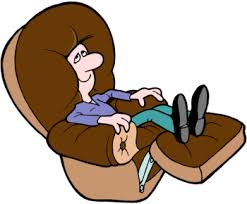
go way back.
= = = = =
Poking Fun into the Past:
Our Most Beloved Humorist
By Tom Morrow, Mature Life Features
Today’s humorless woke culture makes it almost impossible for anyone to poke fun at anyone in the political spectrum without being shouted down by some portion of the population.
That is to say, it’s a good thing Will Rogers isn’t tossing off his incisive barbs these days when so many folks search for reasons to be offended.

He was born Nov. 4, 1879 in the Cherokee Nation of Indian Territory, now Oklahoma, and fashioned a life as a cowboy, vaudeville performer, stage and film actor, humorist, newspaper columnist, and social commentator.
Rogers often quipped his ancestors did not come over on the Mayflower, but they “met the boat.” He traveled around the world three times, made 71 movies (50 silent films and 21 talkies) and wrote more than 4,000 nationally syndicated newspaper columns. By the mid-1930s, he was among the highest paid Hollywood stars.
He poked fun at Prohibition, politicians, gangsters, government programs, and a host of other controversial topics in a way that found general acclaim from a national audience. He often proclaimed, “I am not a member of an organized political party. I am a Democrat.” In 1901, he and a friend went to work as cowboys in Argentina before setting sail for South Africa, where he was hired at a ranch. It was there that he started his show business career as a trick lariat roper in Texas Jack’s Wild West Circus.
That’s where “I learned the great secret of show business — knowing when to get off the stage. It’s the fellow who knows when to quit that the audience wants more of.” He took his roping act to Australia and returned to the United States in 1904, appearing at the St. Louis World’s Fair before joining the vaudeville circuit, which led him to New York’s Ziegfeld Follies on Broadway.
In 1918, Hollywood producer Samuel Goldwyn gave him a three-year contract at triple his Broadway salary. At the same time, Rogers was on his lecture circuit and wrote his New York Times syndicated column, “Will Rogers Says,” that reached 40 million readers daily. His newspaper column expressed his traditional morality and belief that political problems were not as serious as they sounded. He urged isolationism for the U.S.
During his lectures, Rogers quipped, “A humorist entertains, and a lecturer annoys.” From 1929 to 1935, Rogers’ radio broadcasts sponsored by the Gulf Oil Co. was ranked among the nation’s top programs.
He was an aviation enthusiast and promoted a military air force along with his friend, Army Gen. Billy Mitchell.
Although he supported President Franklin D. Roosevelt’s New Deal, he easily joked about it, saying, “Lord, the money we do spend on government. It’s not one bit better than the government we got for one-third the money 20 years ago.” Rogers increasingly expressed the views of the common man and downplayed academic credentials, noting, “Everybody is ignorant, only on different subjects.”
In 1935, Rogers asked his friend, famed aviator Wiley Post to fly him to Alaska to search for new material for his newspaper column. On Aug. 15, they left Fairbanks for Point Barrow. About 20 miles southwest of their destination they landed to ask directions. Upon takeoff, the engine failed and they plunged into a lagoon. Both men died instantly.
Before his death, Oklahoma commissioned a statue of Rogers, representing the state in Statuary Hall of the U.S. Capitol. Rogers insisted his image be placed facing the House Chamber so he could “keep an eye on Congress.” Capitol tour guides say each president traditionally rubs the statue’s left shoe for good luck before entering the House Chamber to give the annual State of the Union address.
Many landmarks are named in the humorist’s honor: Will Rogers World Airport in Oklahoma City, the Will Rogers Turnpike between Tulsa and Joplin, MO, and 13 Oklahoma public schools. U.S. Highway 66 is known as The Will Rogers Highway with a dedication plaque at the roadway’s western terminus in Santa Monica. There have been two U.S. Postage stamps dedicated in his honor and the U.S. Navy’s Benjamin Franklin class submarine, USS Will Rogers, was launched in 1966.
Among his more widely known sayings are, “All I know is what I read in the newspapers,” and “When I make a joke no one gets hurt; when Congress makes a joke it becomes law.” Probably his most famous quote is the epitaph in his Clairmont, OK, tomb stone: “I never met a man I didn’t like.”
Falling . . .
. . . isn’t the problem.

It’s what happens when you stop.
= = = = =
The Man Who Flew Into History
By Tom Morrow, Mature Life Features
An argument could be made that the biggest load of World War II landed on shoulders of 30-year-old U.S. Army Air Corps’ Col. Paul Warfield Tibbets Jr. He commanded and trained an entire bomb group before personally piloting the B-29 that dropped the first atomic bomb Aug. 6, 1945, on Japan.
After flying 43 combat missions over Europe, he returned to the United States in February 1943 to help with the problem-ridden development of the Boeing B-29 Superfortress bomber. In September 1944, he was named commander of the 509th Composite Group, which a year later would drop atomic bombs on the Japanese cities of Hiroshima and Nagasaki. Tibbets was selected for these duties because he was recognized as the best flier in the Army Air Corps.
The 509th was a self-contained unit comprising 1,700 men and 15 B-29s with a high priority for unlimited military supplies. Tibbets chose Wendover on the Utah-Nevada border for his base because of its remoteness. In January 1945, Tibbets moved his wife and family with him to Wendover because he felt that allowing married men to be accompanied by their families would improve morale.
While he had been briefed briefly on the Manhattan Project, which was designing the bomb that his crews would carry to Japan, not even he knew the full scope of their mission. Hundreds of runs were made over the Mohave Desert and Salton Sea in Southern California dropping replicas of the nuclear bombs credited with ending World War II.
To explain the presence of all the highly-technical civilian engineers who were working on the highly secret project, he had to lie to his wife, telling her they were “sanitary workers.” It worked because Tibbets discovered that his wife had recruited a scientist to unplug a drain in their apartment.
Tibbets named his bomber “Enola Gay” after his mother while it was still on the assembly line at the Martin plant in Bellevue, Nebraska, just south of Omaha. At 2:45 a.m. Monday, Aug 6, 1945, the Enola Gay lifted off from Tinian, the Mariana Island just 1,500 miles from Japan for the six-hour run to Hiroshima. With Tibbets at the controls, the 10,000-pound Little Boy was dropped at 8:15 a.m. After a second atomic bomb was dropped two days later on Nagasaki, Japan surrendered.
Tibbets was awarded the Distinguished Service Cross and celebrated as a national hero back home. He was promoted to brigadier general in 1959. “I’m proud that I was able to start with nothing, plan it and have it work as perfectly as it did … I sleep clearly every night.” He went on to say, “I knew when I got the assignment it was going to be an emotional thing. We had feelings, but we had to put them in the background. We knew it was going to kill people right and left. But my one driving interest was to do the best job I could so that we could end the killing as quickly as possible.”
A Hollywood film, “Above and Beyond” starring Robert Taylor, was made in 1952 about Tibbets leadership in the development of the 509th Bomb Group in Utah and on Tinian.
He died Nov. 1, 2007, in Columbus, Ohio, and his ashes were scattered over the English Channel, which he had flown across so many times on bombing raids over Europe during World War II. He opted for that instead of a military grave or headstone because he was as concerned such a memorial might become ground zero for anti-nuclear weapons protests, anti-war protesters, or any other kind of revisionist historian looking to make a stand against what he saw as the right history.
If Your Flight . . .
. . . is delayed or cancelled,
shouldn’t the airport

give you a refund for parking?
= = = = =
Golden Age Depends Upon Your Age
By Tom Morrow, Mature Life Features
We often hear the phrase “that was back in the ‘golden age’ of” – fashion, cars, Hollywood, you pick it.
High on the list of the most commonly discussed golden age deals with communication and spans a wide variety of topics: magazines, newspapers, radio and television.
Remember the heydays of Collier’s, Saturday Evening Post, Life, and Look? If you don’t, you didn’t arrive on earth until after the 1950s because these poplar weekly publications were the People magazines of their day. News magazines such as Time and U.S. News & World Report were vogue by mid-20th century.
One could say the golden age of newspapers stretched from the late 1800s through the first half of the 20th century. Every major city in America had at least two newspapers. New York City had seven until the late ‘70s. Chicago still has three.
Today, Los Angeles has just one, down from three just a couple of decades ago.
Interestingly enough, overseas cities such as London, Paris, Melbourne, Sydney, and Berlin still have more than four. Most of those cities sell their newspaper via street vendors. Door-to-door delivery seems to be an American thing.
The automobile’s golden age began in the 1920s and lasted through the ‘60s. Some f the most inventive vehicles were born and sold during this era.
There was the Stanley Steamer. Yes, it was powered by steam and went very fast. There was the luxurious hand-built Duesenberg, which was a “real doozie.” There were a number of electric-powered cars way back then – one-third of all cars on the road in 1900 were powered by electricity.
One of America’s first transportation companies, Studebaker, built horse- and oxen-drawn wagons during the Civil War and many of the so-called “Prairie Schooners” for the great migration to settle the West.
A friend writes that his family owned a 1929 four-door Studebaker-Erskine, named after Erskine, the president of Studebaker during the late ‘20s. The sedan was turned into scrap metal during WWII since gas-ration cards limited gasoline availability.
Those of you who have been around since the ‘30s may recall the Packard, Willys, Kaiser, Frasier, Crosley, and the short-lived the Tucker. One of the best-built but ugliest might have been Ford’s Edsel. Its gruesome grille might have had something to do with its short life.
Radio’s ruled the air waves from the late ‘20s through the 1940s. Many of television’s star performers, sit-coms and drama formats were developed during this period.
Many of us rushed home from school to listen in on “The Lone Ranger,” “Sky King,” “Sergeant Preston of the Yukon,” and “Straight Arrow.” On Sunday afternoons it was “The Shadow,” and “Nick Carter, Private Eye.” Weeknights it was “Johnny Dollar” and “Lux Radio Theater.” Every night “Fibber McGee & Molly,” “Bob Hope, “Jack Benny, “George Burns & Gracie Allen” made us laugh.
Today’s television programming is far-reaching. There’s very little that you can think of that isn’t available on a wide variety of “streaming” channels.
On-demand programming has new movies available while they’re still in the theaters – if you can find one that hasn’t closed down. Cable TV offers 24-hour news and talking heads spewing all sorts of opinions.
The not-too distant generation might look at the present time as TV’s golden age with sets bigger, better and lower-priced than ever before. Added to this is the array of computers, cell phones, and video games.
They might say this was the “Golden Age of Indulgence.”
(Tom Morrow’s books are available at Amazon.com and on Kindle.)
You Don’t Have To . . .
. . . believe everything you hear

to repeat it.
= = = = =
It’s old-farts’ discount
today at Fry’s.
= = = = =
How Rockefeller Came to Mean Rich
By Tom Morrow
John Davison Rockefeller Sr., one of the original six moguls who built America, is considered by many to have been the world’s wealthiest man ever with an estimated worth of some $410 billion in current dollars.
He was born July 8, 1839, and, with the founding of the Standard Oil monopoly in his 20s, he controlled the American petroleum industry for most of his adult life. That made him one of the so-called “robber barons” of our nation’s history.
The company’s origins date to 1863 when he hooked up with a couple of partners in the oil-refining business in Cleveland. Seven years later, after some ownership shifts, he incorporated Standard Oil and focused on refining oil rather than drilling for it.
Oil was used throughout the country as a source for fueling lamps until the introduction of electricity and then as a fuel and lubricant with the invention of the automobile.
As the need for kerosene and gasoline grew, his company controlled as much as 95 percent of all oil refining in the United States.
By establishing a maze of refining, marketing and affiliated companies, he also gained enormous influence over the railroad industry, which transported his oil around the country. Standard Oil became the first great business trust in the United States and, in 1911, the U.S. Supreme Court ruled it violated federal anti-trust laws and ordered it be dismantled.
It was broken up into 34 separate entities that included companies that eventually would become ExxonMobil and Chevron, among others. Individual pieces of the company were worth more than the whole and shares of these doubled and tripled in value in their early years,
Rockefeller became the country’s first billionaire with a fortune worth nearly 2 percent of the national economy. In 1913, his peak net worth was estimated at $336 billion (in 2007 dollars). He spent the last 40 years of his life in retirement at his estate in Westchester County, NY.
His fortune was used to create the modern systematic approach of targeted philanthropy. His foundations pioneered the development of medical research and were instrumental in the near-eradication of hookworm and yellow fever in the United States.
Religion was a guiding force throughout his life and he believed it to be the source of his success. He supported many church-based institutions and was a faithful congregant of the Erie Street Baptist Mission Church, where he taught Sunday school and served as a trustee, clerk and occasional janitor. He adhered to total abstinence from alcohol and tobacco all his life
He also was considered a supporter of capitalism based on a perspective of social Darwinism and was quoted often as saying, “The growth of a large business is merely a survival of the fittest.”
At age 86, Rockefeller penned the following words to sum up his life:
I was early taught to work as well as play,
My life has been one long, happy holiday;
Full of work and full of play
I dropped the worry on the way
And God was good to me every day.
(Tom Morrow’s books are available at Amazon.com and on Kindle.)
You’re Never . . .
. . . too old
to learn

something stupid.
= = = = =
Wanna reminisce?
Check in with
Flashbacks at 3:30
= = = = =
Turning Away from
Mauthausen Concentration Camp
Was Not an Option
By Fyllis Hockman
While the architectural grandeur and resounding history of the four Central European capitals – Prague, Vienna, Bratislava, and Budapest – were overwhelming and wondrous, the biggest impact on our Grand Circle Danube River Cruise was made at the Mauthausen Concentration Camp, one of the first to be built and the last to be liberated.
My first visual exposure to the horrors of the Holocaust came as a teen-ager in newsreel depictions of the emaciated survivors with their sunken eyes and gaunt bodies liberated from some camps at the end of World War II.
It helped me understand what my mother told me about the Holocaust. Six decades later, I came to understand even more.
Mauthausen, one of the largest of the camps, was built high up an Austrian hill in Linz, where Hitler was once a resident, near a large quarry. The rationale behind concentration camps evolved over the war years from imprisoning people, enslaving them and engendering fear among the general populace to simply one of extermination.
Mauthausen was considered a Level 3 Camp. The guiding principle was simple: everyone was to be killed some way or other. The SS excelled at methods of mutilation and annihilation.
The roots of this genocide, according to our guide, were fostered in and fueled by anti-Semitism.
Many bodies fed “the stairs of death” leading to and from the quarry where malnourished and mistreated prisoners were forced to carry heavy stones up very high stairs and often died in the process. Others were simply pushed down the steps. These stairs still jut out of their peaceful and bucolic setting as cold reminders of the past.
Prisoners also were forced outside during winter and had cold water poured over them. This was a particularly appealing entertainment for the SS guards who delighted in “showering” people to death – outside the actual gas chamber showers, that is.
Another favorite SS sport was to entice prisoners into situations where they might appear to be escaping – and then shoot them. Any soldier who shot an inmate trying to escape got extra days off.
Others prisoners, sick and beaten, simply died during daily roll call, a grueling process of standing in the heat or cold for four to five hours and being forced to do exercises when most of them could no longer stand.

Students tour Mauthausen
In the barracks, hundreds were housed in such degraded conditions the term unsanitary does not begin to describe them.
On a wall is written the “wheezing, hissing, moaning, sobbing, snoring” that filled the night-time air in 20 languages: “The noise fused into a single, terrible sound produced as if by a giant monstrous being that had holed up in the dark.” Another wall writer wrote: “Anyone who hadn’t been brutal when they entered the world became brutal here.”
Our tour took us to the gas chambers where thousands were killed and the ovens where their remains were burned, with a side visit to the infirmary where unspeakable experiments were carried out.
Despite being within earshot of the thousands of prisoners suffering and screaming, the neighbors in the surrounding community claimed ignorance of what was happening. Some complained about the noise, but not about why it was occurring.
The grandmother of our guide, who was seven at the time, said she could smell the stench of the burning bodies. She knew something bad was happening but nobody talked about it.
Of the 200,000 prisoners who occupied Mauthausen from 1938 to 1945, about half were killed. There were only 20,000 survivors when liberation finally came on May 5, 1945. Some 80,000 were already too ill to benefit from the end of the war.
Most of the guards went home after the war suffering no consequences and little was said about what they had done. No one talked about it. According to our guide, it took Austria four decades to acknowledge its part in the Holocaust.
There were several teen-aged school groups visiting the camp and I felt thankful they were learning of these atrocities. The Holocaust will be relegated to the status of other historical occurrences the young will hear about in class but will not relate to. Who really cares about the Crusades?
It’s Been Awhile . . .
. . . since our last talk.

I was away on a family visit highlighted by my brother’s birthday, clan picnic, return to old stomping grounds, fabulous food and muchmuchmuch cooler weather. Air Canada flights to and from Toronto were not as tedious as anticipated although both were delayed.
Memories slammed back into mind immediately because I lived in Canada’s largest city and my reporting duties required sessions there on and off for several years after moving away.
Major impetus for the trip was to attend brother Lou’s 84th. It was preceded by the annual Scaglione picnic, which has been organized by cousins I’ve never met. It was a blast because most of them had heard of me — “You’re father and my aunt were first cousins, which makes you . . .” It was a fun day out in a grassy park near Niagara Falls and everyone brought food that was shared and sumptuous.
An added fillip was the slice of raspberry pie I had each morning. Lou’s long-time friend has a bumper crop of raspberries from his backyard bushes and his wife has made dozens of pies and given them to friends. My timing made me a beneficiary. Raspberries and mangos are my top-level favorite fruit. Strawberries and apricots are pretty good, too.
Son Michael from San Diego joined us for the visit. Daughter Cris got detoured by Covid. Like all visits, it ended too soon, but it was good to get back home. The A/C is beating the THE HEAT, so life is good. Altho I still miss all the things I missed about back home before I went back home.
MTC
Good OL’ . . .
. . . Thirsty Thursday again,

BUT this time
it ties in with a marketing event —
Cheeseburger In Paradise.
So enjoy the food, booze and entertainment.
= = = = =
There’s an inmate here
who obviously is
the sap in the family tree.
= = = = =
Kansas City Links
Memories of Two States
By Sandy Katz
KANSAS CITY, Mo. —- Famous mice, presidents, cartoonists, jazz artists, and shopping-mall entrepreneurs mix and mingle through the history of this border-straddling metropolis that sprouted out of a trading post just east of the Kansas border on a bend of the Missouri River.
The first bridge to span the mighty Missouri was built here shortly after the Civic War, boosting business in the cattle industry as the railroad spread west.
Then, J. C. Nichols imported millions of dollars worth of century-old statuary to Kansas City and created the Spanish-style Country Club Plaza in 1922 amidst pig farms on the city’s outskirts. It was the first shopping center in the world designed to accommodate shoppers arriving by automobile. The 1914 Union Station, the nation’s second-largest train station, retrieved its elegance with a $250 million restoration begun a couple of dozen years ago.
Kansas City’s allure is best described by Rogers and Hammerstein in their song from the musical “Oklahoma:” “Everything is up to date in Kansas City.”
Getting up to date with Kansas City can be an enlightening tour.
For example, Walt Disney, who graduated from Kansas City Art Institute, fed a small mouse while at work in his Laugh-O-Gram studio. The little critter was the inspiration for the renowned Mickey Mouse.
A couple of museums in the 18th and Vine Historic District house memorials to and memorabilia from jazz and baseball “Who’s Who” who gathered there, including Charlie Parker, Count Basie, Lester Young, Satchel Paige, James “Cool Papa” Bell, and Josh Gibson.
From the Roaring ’20s to early ’40s, it was an entertainment center with no equal as more than 100 nightclubs, dance halls and vaudeville houses featured jazz.
A trip to neighboring Independence, M0, is a must to visit The Truman Presidential Museum and Library, which follows the history of the 33rd U.S. President, Harry S. Truman, who grew up and retired here.
Among the exhibits in a scale model of the Oval Office is his famous sign, “The Buck Stops Here.” Written on the other side is “I’m From Missouri.”
Just up the road a piece on the Kansas side of the border in Leavenworth, more widely known for its “Big House,” the first U.S. federal penitentiary
Got To Talking . . .
. . . about the old days
in a phone chat with a long-time colleague
when we tumbled onto the topic of
some major stories we both covered,
and some how got onto the recollection about
how dogs used to ride along on fire trucks.

He said he found out why:
they were used to find the fire hydrants.
= = = = =
 Mature Life Features