Archive for the ‘News / Events’ Category
Bocce ball. . .
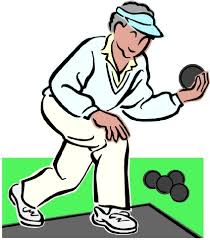
. . .again Friday.
Be on the team bus at 11 a.m.
That’s all for today.
Seems Like Just Yesterday. . .
. . . but it was two weeks ago that
the Super Supper Shuttle launched its maiden trips.

And it’s here again this Friday.
If you haven’t marked down its schedule, do it now.
It’s free and operates on the 2nd and 4th Friday of each month
Departure from Verena at Gilbert is at
3 p.m., 3:30 p.m., 4 p.m., 4:30 p.m., and 5 p.m.
Departure from restaurants is at
3:15 p.m., 3:45 p.m., 4:15 p.m., 4:45 p.m., 5:15 p.m, and final pickup at 5:45 p.m.
Be at the pickup point on time or be left behind and wait for the next one.
Restaurants this month are
Wendy’s Hamburgers,
Chili’s Grill & Bar
Texas Roadhouse
Cafe Zupas.
= = = = =
When the cops arrest a mime,
do they tell him or her
that they have the right to remain silent?
= = = = =
Some Things Never Change
With inflation catapulting prices to stratospheric and shoving 401(k)s into the economic mud, it’s a bit comforting to learn that some things have become cheaper.
Take the humble and ubiquitous nail.
A Wellesley College economist has drafted its history from 1695 when it cost about 12 cents, to 2020, when the price per nail was half that. The reasons are a bit convoluted and his history indicates that the price per nail almost hit 20 cents in the late 1700s and sank to a low of 2 cents during World War II.
Until the 1700s, nails were hand-forged by blacksmiths hammering a rod of iron into the proper shape. As late as the 1800s, they could make one nail a minute, compared with modern machines that spit out 2,000 nails a minute.
The first U.S. patent for cut nails – a machine cut them from a thin strip of iron – was issued in 1795. It pumped out 6,000 nails an hour. This mirrored the Industrial Revolution, which saw nail production move from blacksmith to machines progressively powered by water, steam and electricity.
If you’re wondering why such importance is relegated to such a minor piece of hardware, you might recall how Benjamin Franklin regarded its importance:
For want of a nail, the shoe was lost
For want of a shoe, the horse was lost
For want of a horse, the rider was lost
For want of a rider, the battle was lost
For want of a battle, the kingdom of was lost
…all for want of a nail.
Nails are used to fasten one or more pieces of something together. The most common objects they are hammered into are made of wood. They also are used throughout the construction industry in concert, plaster, plastic and drywall. As proclaimed in the message above, that missing nail would have fastened a metal horseshoe to a horse’s hoof.
What once was a cut piece of metal with one end flattened into a head, has morphed into roofing nails, finishing nails, box nails, flooring nails, masonry nails, two-headed nails and screw nails, among others. But its original design, which has been documented to at least as far back as 3400 B.C. in ancient Egypt, still holds fast.
The description of nails in pennies does not spring from their cost. It denotes their length. For example, a 2-penny nail means its length covers the width of two pennies.
Bocce . . .
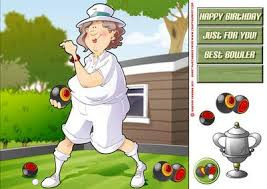
. . . isn’t just a man’s game.
Women play it very well, too.
So sign up for Friday’s session.
The bus leaves at 11 a.m.
for the nearby courts.
= = = = =
Never Go to The Grocery Store Hungry
Friends and family have plenty of advice on how to save money shopping for groceries: get less of the fatty types of meat, buy larger packages of breakfast cereal, purchase bigger eggs and get your vegetables at the farmer’s market.
A simple tip I learned all by myself years ago is to never go to the grocery store hungry. You wind up making too many impulse buys. Make a list of what you need and stick to it.
Buy only groceries at a grocery store. Most non-food items are more expensive than elsewhere.
Check the weight of prepackaged products, such as potatoes. What’s labeled a “10-pound bag” can vary a lot in actual weight. Keep in mind that while the price of your favorite snack may not have gone up, its weight has gone down. Always check the unit price, and the sizes. Just because two containers are the same size doesn’t mean they have the same amount of goods inside.
Don’t buy the larger cuts of meat just because they’re marked on special. Check the per-pound price. You don’t have to pick up three pre-packaged pork chops if there are just two of you at home. Ask the butcher for two chops. You might get better meat buys at a local meat market. The service probably will be better since the butcher will grind up a pound and a half of lean round steak for you, or cut it into strips for a stir fry.
Check the supermarket products on sale. When items you normally eat are offered at clearance prices, stock up by putting them in your freezer. Check the deli for sales items.
If you’re buying sugar for any reason — baking, for example — don’t buy anything pre-sweetened because the price for these products is much higher than the sugar.
And check the prices rung up by the cashier on the way out to make sure they’re correct.
The Follow-up . . .
. . . to Monday’s introductory session
with the pharmacists from Val Vista Pharmacy across the street
that was planned for later this week
has been cancelled.
Keep your eyes open for the flier announcing its new date.
= = = = =
Doug and Elie have asked that

anyone wishing to have their Sunday meat grilled
should sign in with the concierge
by the previous Wednesday.
= = = = =
Check Over-The-Counter Medication
Some over-the-counter medications can make the summer heat more dangerous. Antihistamines, found in cold and allergy medicines, can make the body sweat less, potentially accelerating heat-related illnesses. These medications cause the mucus membranes in the body to dry up. Since sweat is one of the body’s first defenses against heat, this could be serious.
Diuretics and some diet pills can also be potential problems. These drugs make you shed water faster than normal, either by increased urination or sweating. On hot days, this makes the body more prone to dehydration.
Experts recommend people taking these medications be extra cautious during the summer by avoiding strenuous exercise in the heat of the day, drinking plenty of water, and watching for the danger signs of heat-related injuries.
= = = = =
A Bit O’ Blarney . . .

. . . may still be in the works
during Sunday evening’s
Irish beer and spirits tasting
beginning at 5 p.m. in the bistro.
Don’t miss it.
= = = = =
Among the things I was tutored on
while visiting a Tijuana colleague over the years
was a simple dining trick.
I eat my tacos over a tortilla
and whenever I spill anything,
I’ve made another taco.
= = = =
Western Attractions Going Electric
If you’re traveling through the western states this summer, there are some handy spots to plug in your electric vehicle while enjoying the views.
You can re-charge your vehicle at Old Faithful and Canyon Village when you drive up to Yellowstone National Park’s Mammoth Hot Springs. You can also charge up on your way south by stopping at Nevada’s gold-rush boomtown of Virginia City.
There are plug-ins at both the North Rim and South Rim of the Grand Canyon, giving you time and opportunity to hike, take a tour shuttle or just enjoy the panorama during your visit.
California’s attractions that offer handy charging stations include Yosemite National Park, Carmel by the Sea, Death Valley National Park and Point Reyes National Park.
= = = = =
Why Is it . . .
. . . that the most boring conversations begin with,

“I don’t want to bore you with my problems,
but . . .”
= = = = =
Everyone seemed to enjoy St. Paddy’s Day doings
so don’t forget the Irish spirits-and-beer-tasting at
5 p.m. Sunday in the bistro.
= = = = =
3 Little Questions Can Improve Health
If you can read and understand this clearly, you’re already a step ahead of many adults in the battle to stay healthy. Health literacy, which refers to the ability to read, understand, and act upon health information, has been identified as a hidden health crisis that affects all ages, races, and income levels.
This often-overlooked area of the health-care field puts one out of three people at risk for poor health outcomes. Health-care costs for individuals with low literacy skills have been estimated to be four times higher than for those with higher literacy skills. And patients with low literacy skills face a 50 percent higher risk of hospitalization compared with patients with adequate literacy skills.
Research suggests that people with low reading levels make more medication and treatment errors and lack the skills needed to successfully negotiate the health-care system. This affects the elderly because two-thirds of adults 60 years of age and older reportedly have either inadequate or marginal literacy skills.
The literacy problem can stem from poor reading comprehension, the complexity of medical information, the format in which it is delivered, or any combination of these. Studies show that anyone can have difficulty understanding health-care information. Even college-educated people who can understand complicated verbiage prefer to have medical information stated simply.
Medical terms often come across to patients as if the doctor is speaking another language. A sampling of some used by doctors and health-care providers include:
–dysfunction, a medical term that can replace problem;
–landmark, a conceptual term for turning point;
–cognitive, a term that can replace learning, and
–progressive, a value-judgment description that can mean getting worse or getting better._
A tool has been developed to make clear communication easier. It’s available on line at http://www.AskMe3.org. This program promotes three simple, but essential, questions patients should ask their doctor, nurse, pharmacist or other health-care provider in every health-care situation.
1. What is my main problem?
2. What do I need to do?
3. Why is it important for me to do this?
= = = = =
Erin Go Bragh!!!
Ireland’s Legendary Saint
St. Patrick’s Day was made a religious celebration in the 17th century to commemorate his death on March 17 in the year 461.
Dates and developments in his life are sketchy and it is not clear when St. Patrick was born. Nor is the date of his death confirmed by all historians.
Much of what we know about him comes from the “Confessio,” a book he wrote during his final years. It reads in part, “My name is Patrick. My father was Calpornius … his father was Potitus, . . . who lived at Bannavem Taburniae. . . and that is where I was taken prisoner. I was about sixteen at the time. I was taken into captivity in Ireland, along with thousands of others.”
He served as a sheep herder for six years until a vision led him to escape to a ship that carried him back to England. After becoming a cleric. he decided to return to Ireland. The Irish were pagan at the time and this former slave is credited with planting Christianity in that land. He’s now venerated as Ireland’s patron saint.
He used t three-leaf clover, known as a shamrock, to explain the trinity to the unbelievers.
The wearing of the green has nil to do with St. Patrick but is a tenet of Irish folklore that the color makes you invisible to leprechauns, who love to pinch you when they’re around.
Now, for a dram o’ Paddy’s
= = = = =
Corn beef ‘n’ cabbage today and the festivities begin at 2 p.m.
If You Haven’t . . .
. . . gotten out of the house for a bit,
just pin a $1 bill to your collar

for The Wearin’ o’ the Green on St. Paddy’s Day.
As for me,
I’m gonna pour a wee dram o’ good ol’ Paddy Irish whiskey.
= = = = =
Cut Through Long-Term-Care Costs
It may turn out that you need long-term care for only a short time, but it’s a critical health-care term in all our lives. It normally deals with the last months of your life and those around you.
Researchers agree on one thing: most people are not well-informed about long-term care and its implications for both their physical and fiscal health.
The problem grows larger as our population ages — current 65-year-olds are expected to live another quarter century — and as myths and misconceptions about this misunderstood matter grow more widespread.
Almost 70 percent of Americans are worried about paying for long-term care, according to a National Council of Aging report, compared with some 55 percent who are concerned about paying for their retirement. Four out of 10 people 65 years of age or older believe Medicare or Medigap (Medicare supplemental insurance) pays for long-term nursing-home stays, according to a Financial Planning Association study.
The reality is that Medicare will pay for a limited number of days for “short term” nursing-home care under certain circumstances. It does not pay for long-term custodial care.
Another popular myth is that Medicaid picks up the tab for long-term care. It does pick up 50 percent of the tab if you’re poor enough to qualify. In addition, your income from Social Security and any other pension must go toward the bill.
Adding more pain to the process is the confusion within the long-term-care-insurance industry. Premiums veer drunkenly in all directions.
For example, a 70-year-old person buying a comprehensive policy with a four-year benefit period, 60-day elimination period, $100 daily benefits and inflation protection can pay between $2,700 and $4,000 a year, depending on what company is chosen. The annual cost of a similar policy in another state with a lifetime-benefit term and 20-day elimination period can range from $4,600 and $5,500.
The National Council on the Aging has some tips to help you shop for long-term-health-care insurance.
The first thing to do is take your time and find a reputable independent sales person who can sell policies for several companies. Check the stability of the companies whose policies you’re considering. Then read a specimen policy contract thoroughly and make sure you understand what you’re buying. You don’t need multiple policies. One good policy is enough.
= = = = =
For Those Who Keep Asking . . .
. . . there is a Roman Catholic Mass

scheduled for the 2nd floor theater
at 10 a.m. Friday.
= = = = =
If at first you don’t succeed,
just remember that
you’re like the rest of us.
= = = = =
Let’s Drink to Our Health
Results of several studies and surveys in various parts of the globe support the view that the moderate use of alcohol actually is good for your health and longevity. We’re talking about moderate drinking, which translates into an average of one or two drinks a day.
One drink is defined as an ounce of liquor, four ounces of wine, or 12 ounces of beer. This is not to be mistaken as a promotion for the use of alcohol. If you don’t drink, don’t start. If you do drink, keep it minimal.
Studies have revealed that women who drink an average of half a drink a day have a 14 percent lower risk of developing high blood pressure than non-drinkers. Those who average one drink a day lower their risk of hypertension by 20 percent compared with non-drinkers.
A study of more than 38,000 men over a dozen years indicated that those who have a drink three or more times a week reduce their risk of heart attack compared to those who drink less. Those who average one drink a day are more than 30 percent less likely to die after a heart attack than teetotalers.
People 65 and older who down more than 15 drinks a week are 40 percent less likely than abstainers to have silent strokes, but they are at greater risk for brain shrinkage. Harvard researchers even found a slight reduction in Parkinson’s disease rates among moderate beer drinkers.
Despite the data supporting the cardiovascular-health benefits of moderate drinking, physicians are loathe to prescribe a glass of wine after dinner to improve your well-being. There simply isn’t enough information to encourage patients who do not drink alcohol to start.
When discussing the benefit or bane of alcohol, medical experts argue that its use can lead to abuse, while exercise, proper diet, and cholesterol-controlling drugs can achieve and maintain a quality level of health. Supporters of the moderate use of alcohol suggest it dovetails smoothly into the litany of a health lifestyle: don’t smoke, be active, maintain a healthy weight, and eat a balanced diet — with a daily glass of wine.
= = = = =
Activity Review Meeting . . .
. . . sked for 4:30 p.m. Tuesday
is cancelled
because Mary Weaver took her family to Disneyland this week.
So enjoy the monthly party
that begins at 3:30 p.m. in the dining room
for folks with birthdays in March.
= = = = =
Exercise More Than Calorie Burner
As people age, the most significant benefits of regular exercise may have little to do with burning up calories. As you grow older, physical activity not only lowers body weight but it also cuts cardiovascular and blood-pressure perils, has positive effects on the immune system, and can reduce the risk of certain cancers, say medical experts.
Exercise also strengthens the heart, helps the lungs function better, enables the blood to carry more oxygen, makes muscles stronger, and improves motion in the joints. There is evidence that exercise also enhances your mood and counters mild to moderate depression. Active people also have a lower risk of stroke.
If physical activity hasn’t been part of your life for some time, don’t despair. Research has revealed that starting an exercise program at any point in life boosts health.
The Centers for Disease Control and Prevention and the American College of Sports Medicine set the standard for physical activity in 1995, recommending at least 30 minutes a day of moderate exercise on most or all days of the week in increments as short as 10 minutes.
A study of various combinations of high and moderate exercise intensity and duration combined with a 30 percent reduction in calories consumed revealed that the intensity level produced no significant differences in weight loss. What did make a difference was time.
Many older people who want to exercise are discouraged by poor health and the toll of aging.
This doesn’t have to be the case if the person’s physician has given the green light to exercise. Almost any form of physical activity can improve overall health and the cardiovascular system. This includes walking, gardening, pushing a stroller, swimming, jumping rope and riding a bike.
= = = = =
 Mature Life Features