Archive for the ‘Travel’ Category
OK, So The Dining Services Meeting . . .
. . .has been resked for
2 p.m. next Tuesday
in the 2nd floor theater.
So now get down to
3 p.m. Thirsty Thursday because this will be
Nick’s last turn behind the bistro bar.
= = = = =
Nevada’s Other Side Also a Good Bet
By Beverly Rahn, Mature Life Features
ELY, Nevada — If you want to get away from it all, this is the place.
As we zipped along Highway 50 — “The Loneliest Road in America” — that bisects this state, we saw how this land looked when pioneers bumped over it in Conestoga wagons.
We drove for hours through cactus-dotted plains under horizon-less skies just a half day from two of the glitter-gulch capitals of the world — Las Vegas and Reno. This is a land of wild mustangs and wrecked Mustangs. It’s where the deer and the antelope still play under an assortment of rainbows prancing with storms that clamber over the mountains.
We embarked on our week-long trip through rural Nevada from Reno and drove 320 miles east to Ely and 280 miles south on Highway 93 to Las Vegas.
While the land is harsh, the folks are friendly. We learned quickly the difference between a fairy tale and a cowboy story. A fairy tale begins with ‘Once upon a time.’ A cowboy story starts with, ‘Now listen, this is no bull—-.’
Planning to stretch our legs a mite on a fuel stop in Austin, we pulled over to a fence and saw a sign that said “Don’t even think of parking here.” We moved on because it was quite a clear statement in a land that has nothing but space.
In Eureka, we parked under the courthouse balcony that was used for, among other things, public hangings during the town’s heyday when it was the leading lead producer in the world. There were 13 smelters operating in this Pittsburgh of the West during the 1870s.
We took some time to hunt for pine nuts. These nuts, about the size of your little fingernail, were harvested by Native Americans each year after the first frost. They thrashed the pinon (pine) trees to tumble these seeds out their cones. The nuts were, and still are, roasted, salted or mashed into a meal or butter.
Midway through our trek, we cruised into Ely, birthplace of the late First Lady Pat Nixon and home to a Basque community (and its gusto food) that was born when these Pyrenees people were imported to tend to the flocks of sheep raised here.
We had called well ahead to make arrangements to ride the Ghost Train of Old Ely and wave to the call girls who greeted us you as the train chugged by the pleasure houses on the edge of town. We used our Golden Age passports at nearby Great Basin National Park to tour the Lehman Caves. This was another stop in the past that included several museums and a leap into prehistory to tour petroglyphs (stone etchings) across the ribbon of road and an expanse of desert from Fallon Naval Air Station.
The next morning, we took a side trip to Rachel, which is on the real loneliest road in America — Highway 375. The settlement perched on the edge of Nellis Air Force Bombing and Gunnery Range and Area 51/Groom Lake, is reportedly a major Earth terminal for unidentified flying objects (UFOs). The social center of the community is the Little A’Le’Inn, where we ordered an alienburger that tasted “out of this world,” of course.
Lore has it that it’s easy to identify aliens in the Little A’Le’Inn: they enter the watering hole and sit at a table for hours without ordering anything to eat or drink.
Gliding by sparkling Lake Mead as we dropped down into Las Vegas the next morning gave us the time cushion to adjust to our return to the clattering casinos of Reno’s neon neighbor.
It seems odd that a state in which most of the homes and buildings we saw dated back to the 19th century has enacted laws that prohibit anyone from disturbing anything that’s more than 50 years old. My husband, who’s older than that, says he likes the idea.
Anyone Still Interested . . .
. . . in writing their life story

can get started in the weekly writing class
at 1:30 p.m. in the 2nd floor multi-purpose room.
= = = = =
I’ve always felt it’s
better to be thought of as being
abreast rather than behind.
= = = = =
Getting to Know the British Mind
By Igor Lobanov, Mature Life Features
British dramatist George Bernard Shaw is credited with remarking that “America and Britain are two nations divided by a common language.” But different word usage is perhaps the lesser part of the split. If you’re contemplating a trip to the British Isles, learning about differences in how we and the English think and act may help make the trip more enjoyable.
Pittsburgh native Jane Walmsley, who is married to a Brit and has lived and worked as a television broadcaster, producer and journalist in England for more than two decades, has compiled several different customs and characteristics that set Yanks and Brits apart.
Starting with the way we look at life. Americans, Walmsley notes, think death can be delayed by aerobics, prune juice, and plastic surgery. Britons live life with a certain detachment and let events run their course and are “never be seen to try too hard.” Simply, that means never run for a bus or skip afternoon tea.
Americans want lots of choices, she says, and want the right to substitute a tossed salad for French fries. In short, we like to live life a la carte. The English keep their number of choices limited – “dresses come in four sizes, shoes one width, ice cream in three flavors.” They believe that too many options sew confusion.
She sees Yanks as having a go-for-it mentality and adoring movers and shakers, even flawed ones. Many ask, “If I can have it all, why haven’t I got it?” Brits prefer to relax and enjoy working within life’s natural boundaries and find a lot of satisfaction from small successes.
Then there is regionalism. As Walmsley explains, the British Isles is about the size of Pennsylvania encompassing 11 distinct and potentially warring parts. These include Scotland, Wales, Ulster (Northern Ireland), Republic of Ireland, West Country (Cornwall, Devon, Somerset), North (Manchester, Liverpool, Leeds), Northeast (the Newcastle-upon-Tyne area), Midlands (Birmingham), East Anglia (Norfolk, Suffolk), South, and Central London.
In summation, Walmsley opines that the only two things that really matter for the British are the Royal Family and the pub, which is the great leveler. What really matters for an American is even simpler, and also a leveler, is ice cream.
In another view, Roger Axtell, author of numerous books/guides on differences in international behavior, points out the really basic difference between the Brits and the Yanks: the way we hold a fork while eating.
In England, they keep the fork firmly in the left hand. By contrast, “We appear juggler-like, cutting the food with the fork in the left hand, dropping the knife, flipping the fork to the right hand, holding it like a pen and finally eating.”
Our zigzag eating style has had its ups and downs. Down (and out) were many U.S. secret agents in enemy territory during World War II who accidentally fell back into their early-childhood table manners.
It’s A Brand New Week . . .
. . .and coming up are a social hour Tuesday at 3:30 p.m.
for everyone marking birthdays this month

followed by an Activity Review meeting at 4:30
then there’s the Talking Stick Casino outing
departure at noon Thursday
and the Goldfield Excursion leaving Verena at noon Friday.
Just some of the goings-on squeezed in between everything else.
= = = = =
It’s well and widely known that babies are delivered by storks,
but has anyone ever seen a heavy kid dropped off by a crane.
= = = = =
Save a Buck in Bucks County
“If you can’t find it at Rice’s Market, you can’t find it anywhere,” we were told before we visited this bustling Babylon of bargains in New Hope, PA.
Proclaimed to be “the biggest flea market in the whole world,” it’s within a two-hour drive of Manhattan, Baltimore, Atlantic City and Philadelphia. Among our bargains were a knapsack and several eel-skin wallets (for gifts) for less than one-third the price we had seen in retail stores.
Rice’s Market opened more than a century ago a dozen miles from the New Jersey border in a pocket of eastern Pennsylvania’s Bucks’ County that is packed with pastoral land and crisscrossed by country roads.
This mecca for black-belt shoppers, bargain hunters and browsers is less than an hour away from Reading, the city that is to outlet shopping what Bethlehem is to Christianity.
But Bucks County is more than a magnet for shoppers. It became one of the nation’s first destinations to take aim at the ecotourism market by promoting the environment and tourism in cooperation with the National Trust for Historic Preservation.
Some of the millions of visitors who flock to the Liberty Bell-Independence Hall complex in downtown Philadelphia take the time to relax out here among the few remaining vestiges of colonial America. While America’s future was charted in the Pennsylvania state house, the nation’s past is preserved in customs, traditions and historic sites throughout this region that has become a getaway for urban-bound residents of such metropolitan complexes as Philadelphia, New York, and Washington, D.C.
Bucks County rolls some 50 miles up the Delaware Valley from the northern rim of Philadelphia County. William Penn made his home here more than 300 years ago. It also features the 19th century residence of author Pearl S. Buck, who won both the Nobel and Pulitzer prizes. Bucks County is the sort of place you can spend a jingle-bells Christmas or a sun-speckled summer vacation.
Doylestown, the governmental seat and “capital” of this county peppered with bed-and-breakfasts that remind you of grandma’s house, is the site of the intriguing 44-room Henry Chapman Mercer home. It was made of poured concrete shortly after the turn of the century as a showplace for the exotic and eclectic Mercer-designed-and-made wall and floor tiles that line corridors winding through several floors from the main hall’s dozen exits.
Less than 30 minutes away is Washington’s Crossing, where the general who was to become our first president led his troops across the Delaware River on a cold Christmas Day before the Battle of Trenton.
Another plus for this region is the fact that it’s perched on the edge of Mennonite country, with its eye-catching quilts and home-made mouth-watering foods such as shoo-fly pie.
Food Service Meeting . . .
. . . sked for 2:30 p.m. has been
CANCELLED.
Nothing new till next month.
= = = = =
Breath-holding Utah Sights to Behold
By Fyllis Hockman
Mature Life Features
Full four-wheel drive didn’t seem to be enough to hold us from dropping 1,300-feet from the narrow cliff-side ledge as I clung to my heart. Gaping at the towering walls adorned with sharp pinnacles leaping skyward, it looked like the earth had been splashed with multi-hued red dyes, all running together.
Such is life among the five national parks of southern Utah — Arches, Canyonlands, Capitol Reef, Bryce and Zion that share uncompromising splendor, history of both the earth and the country, and a sense of personal sanctuary. After more than 150 million years, they are still works in progress.
Arches National Park is a mecca of some of nature’s most intriguing architectural designs that span space and confound logic for which no man-made blueprint was ever drawn. With more than 900 such structures, it boasts the largest concentration of natural arches in the world. The trail to Delicate Arch, one of its most famous, requires hiking slick rock at seemingly 90-degree angles at times. The visual wonder makes it worth the climb.
Nearby Canyonlands requires a four-wheel drive vehicle. The view from Island in the Sky at 6,000 feet embraces 2,000-foot cliffs rising out of a magnificently painted landscape.
The panorama at Grandview Point stretches across countless canyons providing a broad view over the entire park. “Scenic Overlook” signs become redundant. Shafer Trail, a dirt road that’s rough in spots and very rough in others, is bordered on one side by perpendicular cliffs and on the other by a sheer 1,300-foot drop.
Although geologic history is stressed in every park, it’s what defines Capitol Reef that ranges from 80 million to 270 million years old.
A stroll along the nearby Grand Wash River bed, so narrow in parts you can touch both canyon walls at the same time, evoked old western film images of the lonesome cowboy out on the trail. Butch Cassidy used to ride along this stream bed (it had water in it then) and hide among the cavernous cliffs overhead. It’s now called, not surprisingly, Cassidy Arch.
Bryce Canyon is synonymous with hoodoos — phantasmagorical images emerging from weird and wonderful rock formations. There are thousands of the little (and not so little) guys in all shapes, colors and sizes. Rain and ice have sculpted these fanciful folk out of the rusted limestone.
Arriving at Zion reinforces the idea that each park is unique. At the other parks, your line of sight extends out toward the horizon as well as down into the canyons. At Zion, you look straight up, and up, and up. The soft-running Virgin River is responsible for creating the huge rock gorges that encircle the park. It took only 5 million to 16 million years to do so.
Feels Like . . .
. . . a laid-back week to close out the month.

So gear up for a busy Thursday,
which offers a Mad Money review at 2 p.m. in the 2nd floor theater,
followed by our regular Thirsty Thursday respite at 3 p.m. in the bistro
before the Lou Malati’s Pizzeria tasting
in the dining room at 5 p.m.
Check your monthly calendar and fliers in the mail room for further details.
= = = = =
San Diego Cradles California History
There’s more to San Diego than the zoo.
The history of California and, as follows, that of the western United States is rooted in a promontory overlooking the bay that Spanish conquistadors first sailed into what has become the nation’s southwestern-most metropolitan complex of more than 3 million people.
Whether you drop down into San Diego on I-5 from the Los Angeles megalopolis or slide in along I-8 from the great Southwest, the two freeways meet at the Presidio.
Parked around a solid early-Californio tower is what is now a 40-acre Presidio Park that anchors the 21-mission chain that forms the backbone of the Golden State.
The park is the home of the museum that honors Franciscan Friar Junipero Serra who planted a cross on the hill that might have been intended to be the site of the first U.S. mission but gave way to rebellious Kumeyaay Indians who resented the Spaniards’ iron hand.
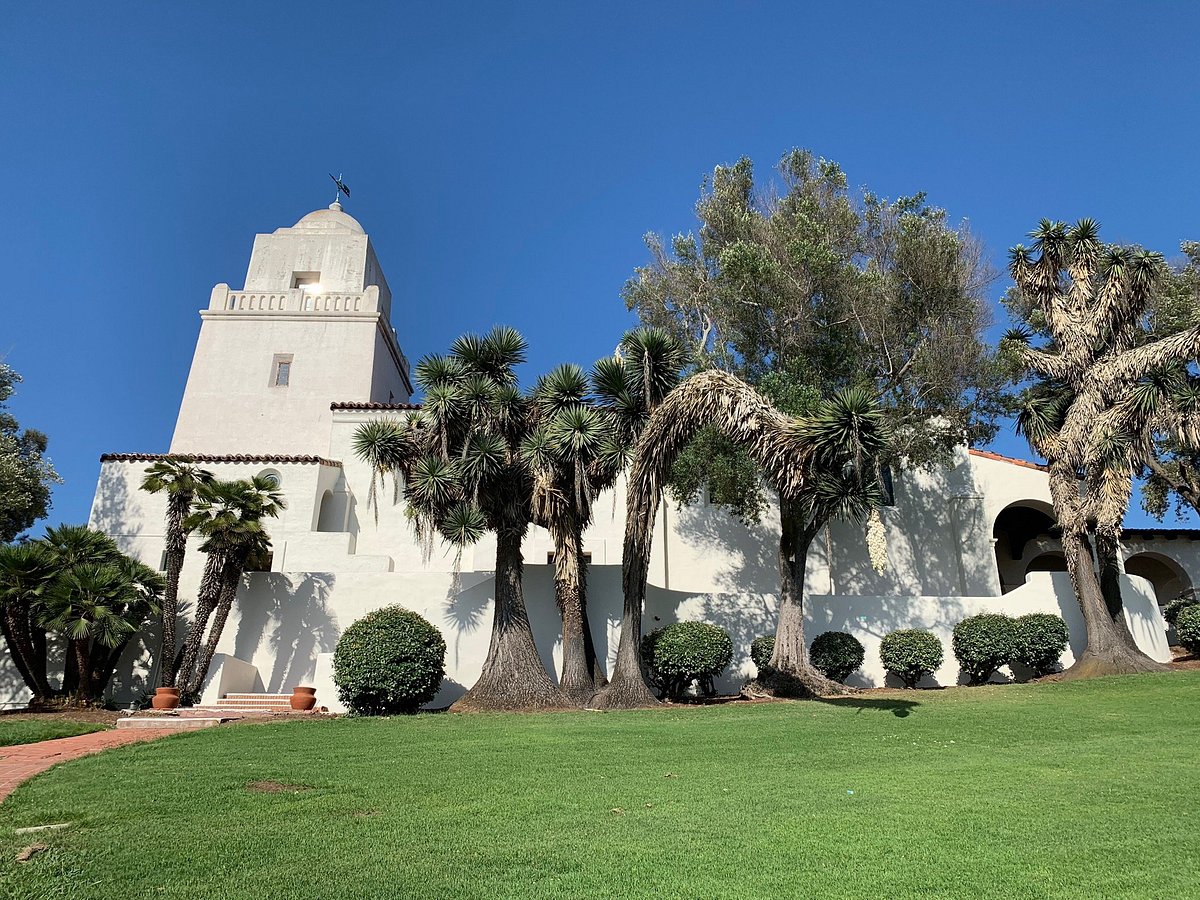
The first permanent mission, San Diego de Alcala, was built about five miles up the San Diego River in 1769 to soften relations between the intruders and the natives.
The growth of Alta California grew out of the presidio, however, as the Franciscans accompanied the Spanish soldiers and built the mission chain over the next half century until Mexico won independence from Spain in 1821.
The Mexican government secularized the missions a decade later and rich rancheros came north to claim the spoils. San Diego’s Old Town at the base of the hill crowned by the Presidio became a trade center as Mexico encouraged foreign trade. Today, it attracts both locals and tourists to its shops, restaurants and 19th century shop workers, such as blacksmiths and woodworkers.
Presidio Hill became a military fort and garrison in the nid-1840s after a combined force of Commodore Robert Stockton and Gen. Stephen Kearney won control of Alta California.
The Mormon Battalion Monument honors the Mormon men and women who volunteered to enlist in the U.S. Army during the Mexican-American War, effectively opening stage routes west and securing those Mexican territories for the States. Brigham Young was looking for help with his westward migration plans and enlisting his followers in the army paid for wagons, horses, and other necessities for his grand exodus.
Accompanying the 550-man battalion were 33 women, many serving as laundresses, and 51 children. They earned the church a total of $30,000 in donated salaries, the only religiously based military unit ever established in U.S. history.
Marked trails all around the Mormon monument take you past ruins of the original structures, a bronzed statue of the Friar Serra, and the Indian – an statue of a Kumeyaay brave with a freshly killed cougar.
Chorale Call
Verena Voices is still open for,

and will continue to seek, more voices — both female and male.
If you enjoy singing in the shower,
take you talent to
the weekly choir practice
2 p.m. Tuesdays – 2nd floor theater.
= = = = =
Something You All Gotta Check Out
Save yourself the trouble of trundling through airports
and visit your hometown, favorite city or international landmark you’d like to see
by typing in your search engine
“drive and listen” or “live webcam (and the city you’d like to visit)”
and enjoy the trip. It’s captivating and fun.
= = = = =
It’s The Weekend . . .
. . . so take it EZ
and drop by to schmooz
around Sunday’s ice cream
+ + + +
Happiness is
not having to set the alarm clock.
= = = = =
Roman Festival Brightens
Umbrian Hillside
Why not drop around on Sunday, Riccardo suggested, “We’ll have a few artichokes.”
The retired Alitalia pilot and his wife, Mariolina, were our landlords when we arrived in the medieval central-Italy castle-town of Panicale and became our friends before we left. They opted out of big-city living in Rome and built a picture-book home in a hill-clinging olive grove just below the town’s centuries-old walls.
This fortress overlooks Lake Trasemino, the peninsula’s fourth largest lake, to the north; the manicured Tuscan countryside to the west, and the rolling Umbrian hills to the south and east.
As every hiker knows, you walk a hill at your own pace. That’s why no one hurries. Everything here is up hill. So it was about a 25-minute walk to Riccardo’s.
We knew we were in for something special as we approached the lane sloping into their farmyard. It was like breaking into an opera. About three dozen people wearing the full array of bright yellows, reds, greens – pick a color – were milling about chittering, chattering, and chanting in that Italian sing-song from which arias emerged. The accompaniment was provided by Riccardo’s tractor as it hauled dead olive branches to a pile resembling a titanic tumbleweed.
We became a member of the cast immediately because our chore was to pluck mint leaves off the plant stems and chop the stocks off the artichokes – shopping-cart-sized mounds of them. The leaves were minced with garlic and olive oil and the artichokes were given a good slam on the ground to soften them because the centers were opened up and crammed with the mint leave-garlic-oil mixture.
Through all this, you had to balance wine – almost everybody brings their own to determine whose is best for bragging rights – with oil-drenched bread, cheese, fresh fava beans, and more wine before the fire was ready.
The giant pile of shrubbery is burned and the ashes raked into a flat lava-like bed of coals. Then you had to tuck your artichoke into the coals to cook. Again, the operatic metaphor arose as each person displayed a distinctive dance pirouetting around the blistering mound. It takes about 45 minutes for the artichokes to cook in this manner, which gave everyone time to sample more wine with the sausages and pork barbecued on a fire fed with larger chunks of trimmed olive wood.
Then flowed the desserts, all of them home-made.
During Our . . .
. . .table conversation t’other day,
one of the guys said
there was a time when
he was addicted to the hokey pokey . . .

but he turned himself around.
Travel Insurance Sometimes Isn’t
Among the many lessons a lot of folks learned during the coronavirus shutdown is that travel insurance doesn’t always cover everything. Many would-be travelers found out that the trip-cancellation coverage they thought they had, they didn’t. Everyone learned that a world-wide pandemic changed all the coverage rules.
Some airline and cruise customers were fortunate enough to receive refunds for their fares. Most of these ticket holders, however, have been given vouchers that precluded them from making insurance claims to recoup their loss.
The real lesson here is ask questions and more questions when you buy the coverage. Some insurers do not provide coverage for mishaps suffered during such activities as skiing or scuba diving while you’re on your trip. You also have to determine if your policy covers you for any misadventure or cancellations caused by any act of terrorism.
Before putting together a travel-insurance plan, check with your health-and-medical insurance agent to see what coverage travels with you. Then be aware that trip cancellation insurance pretty well settles around injury, sickness or death of you, members of your family or a travel companion. You also have to make sure you define any and all coverage you want, ranging from emergency medical evacuation to lost luggage.
Why Is It . . .
. . . that people
who know it all,

never know
when to shut up?
On a Mission to Travel
Grand Canyon, Old Faithful, Hoover Dam, Mount Rushmore are but a few of the famous U.S. tourist attractions. Among the many overlooked possibilities for those seeking diversion is California’s Mission Trail – the 21- mission El Camino Real that became the foundation of the Golden State.
It’s a 600-mile journey north from the beaches of San Diego to the wine-making Sonoma Valley. It includes the nation’s second-largest urban center surrounding missions San Gabriel and San Fernando and one of the country’s most sung-about city, San Francisco. Each complex is different and offers a range of experience, from scenic to serene to historic to mid-town hurly-burly.
Historic Palomar Observatory
By Tom Morrow
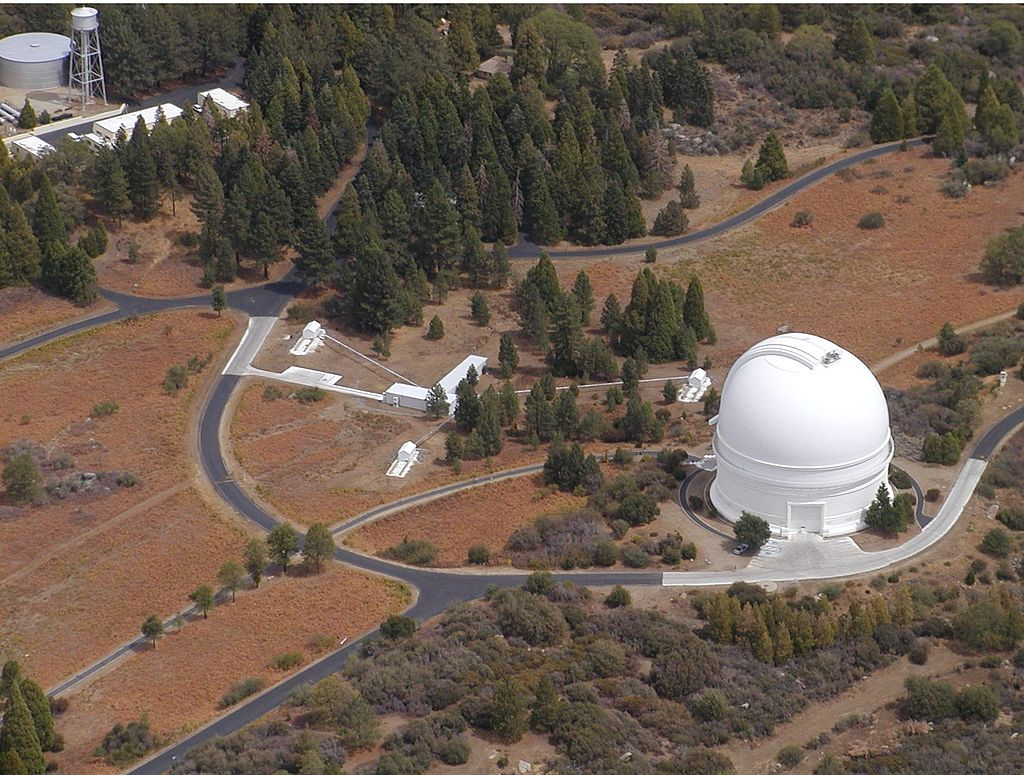
With a $6 million grant from the Rockefeller Foundation, astronomer George Ellery Hale orchestrated the planning, design, and construction of the world’s largest astronomical telescope on Palomar Mountain about an hour northesat of San Diego, CA.
It took 20 years to complete the Hale telescope that was double the diameter of the 100-inch-diameter reflecting telescope in the Mt. Wilson Observatory north of Los Angeles. The Palomar project pioneered many new technologies in telescope-mount design and in the fabrication of its aluminum coated “honeycomb” Pyrex mirror. Since its completion in 1949, Palomar in active use as one of the world’s largest and most-sophisticated land-mounted telescopes.
For more than 30 years, the Hale Telescope represented the technological limit in building large optical telescopes until the Soviet Union built a six-meter (236 inches) one in 1976. Palomar remained the world’s second largest until 1993 with the construction of the two 300-plus-inch Keck optical telescopes atop Mauna Kea in Maui..
Palomar is operated by the California Institute of Technology and continues to conduct research programs that cover the vast range of our observable universe, including near-Earth asteroids, outer Solar System planets, Kuiper Belt objects, a variety of star formations, and black holes. Research research partners include the Jet Propulsion Laboratory,, Yale University, and the National Optical Observatories of China.
The first telescope built on the Observatory complex was an 18-inch Schmidt camera put into operation in 1936. In addition to the giant 200-inch Hale Telescope, there are the 48-inch Schmidt Telescope, Palomar 60-inch Telescope, and 12-inch Gattini Telescope, all of which are involved in continual research. The 48-inch and 60-inch telescopes operate robotically and are active in deep-space exploration.
While Palomar Observatory is a research facility, there are selected Observatory areas open to the public during the day. Visitors can take self-guided or guided tours of the 200-inch telescope daily from 9 a.m. to 3 p.m. The observatory is open seven days a week except for Dec. 24-25 and during inclement weather.
 Mature Life Features