Why Is it . . .
. . . that the most boring conversations begin with,

“I don’t want to bore you with my problems,
but . . .”
= = = = =
Everyone seemed to enjoy St. Paddy’s Day doings
so don’t forget the Irish spirits-and-beer-tasting at
5 p.m. Sunday in the bistro.
= = = = =
3 Little Questions Can Improve Health
If you can read and understand this clearly, you’re already a step ahead of many adults in the battle to stay healthy. Health literacy, which refers to the ability to read, understand, and act upon health information, has been identified as a hidden health crisis that affects all ages, races, and income levels.
This often-overlooked area of the health-care field puts one out of three people at risk for poor health outcomes. Health-care costs for individuals with low literacy skills have been estimated to be four times higher than for those with higher literacy skills. And patients with low literacy skills face a 50 percent higher risk of hospitalization compared with patients with adequate literacy skills.
Research suggests that people with low reading levels make more medication and treatment errors and lack the skills needed to successfully negotiate the health-care system. This affects the elderly because two-thirds of adults 60 years of age and older reportedly have either inadequate or marginal literacy skills.
The literacy problem can stem from poor reading comprehension, the complexity of medical information, the format in which it is delivered, or any combination of these. Studies show that anyone can have difficulty understanding health-care information. Even college-educated people who can understand complicated verbiage prefer to have medical information stated simply.
Medical terms often come across to patients as if the doctor is speaking another language. A sampling of some used by doctors and health-care providers include:
–dysfunction, a medical term that can replace problem;
–landmark, a conceptual term for turning point;
–cognitive, a term that can replace learning, and
–progressive, a value-judgment description that can mean getting worse or getting better._
A tool has been developed to make clear communication easier. It’s available on line at http://www.AskMe3.org. This program promotes three simple, but essential, questions patients should ask their doctor, nurse, pharmacist or other health-care provider in every health-care situation.
1. What is my main problem?
2. What do I need to do?
3. Why is it important for me to do this?
= = = = =
Erin Go Bragh!!!
Ireland’s Legendary Saint
St. Patrick’s Day was made a religious celebration in the 17th century to commemorate his death on March 17 in the year 461.
Dates and developments in his life are sketchy and it is not clear when St. Patrick was born. Nor is the date of his death confirmed by all historians.
Much of what we know about him comes from the “Confessio,” a book he wrote during his final years. It reads in part, “My name is Patrick. My father was Calpornius … his father was Potitus, . . . who lived at Bannavem Taburniae. . . and that is where I was taken prisoner. I was about sixteen at the time. I was taken into captivity in Ireland, along with thousands of others.”
He served as a sheep herder for six years until a vision led him to escape to a ship that carried him back to England. After becoming a cleric. he decided to return to Ireland. The Irish were pagan at the time and this former slave is credited with planting Christianity in that land. He’s now venerated as Ireland’s patron saint.
He used t three-leaf clover, known as a shamrock, to explain the trinity to the unbelievers.
The wearing of the green has nil to do with St. Patrick but is a tenet of Irish folklore that the color makes you invisible to leprechauns, who love to pinch you when they’re around.
Now, for a dram o’ Paddy’s
= = = = =
Corn beef ‘n’ cabbage today and the festivities begin at 2 p.m.
If You Haven’t . . .
. . . gotten out of the house for a bit,
just pin a $1 bill to your collar

for The Wearin’ o’ the Green on St. Paddy’s Day.
As for me,
I’m gonna pour a wee dram o’ good ol’ Paddy Irish whiskey.
= = = = =
Cut Through Long-Term-Care Costs
It may turn out that you need long-term care for only a short time, but it’s a critical health-care term in all our lives. It normally deals with the last months of your life and those around you.
Researchers agree on one thing: most people are not well-informed about long-term care and its implications for both their physical and fiscal health.
The problem grows larger as our population ages — current 65-year-olds are expected to live another quarter century — and as myths and misconceptions about this misunderstood matter grow more widespread.
Almost 70 percent of Americans are worried about paying for long-term care, according to a National Council of Aging report, compared with some 55 percent who are concerned about paying for their retirement. Four out of 10 people 65 years of age or older believe Medicare or Medigap (Medicare supplemental insurance) pays for long-term nursing-home stays, according to a Financial Planning Association study.
The reality is that Medicare will pay for a limited number of days for “short term” nursing-home care under certain circumstances. It does not pay for long-term custodial care.
Another popular myth is that Medicaid picks up the tab for long-term care. It does pick up 50 percent of the tab if you’re poor enough to qualify. In addition, your income from Social Security and any other pension must go toward the bill.
Adding more pain to the process is the confusion within the long-term-care-insurance industry. Premiums veer drunkenly in all directions.
For example, a 70-year-old person buying a comprehensive policy with a four-year benefit period, 60-day elimination period, $100 daily benefits and inflation protection can pay between $2,700 and $4,000 a year, depending on what company is chosen. The annual cost of a similar policy in another state with a lifetime-benefit term and 20-day elimination period can range from $4,600 and $5,500.
The National Council on the Aging has some tips to help you shop for long-term-health-care insurance.
The first thing to do is take your time and find a reputable independent sales person who can sell policies for several companies. Check the stability of the companies whose policies you’re considering. Then read a specimen policy contract thoroughly and make sure you understand what you’re buying. You don’t need multiple policies. One good policy is enough.
= = = = =
For Those Who Keep Asking . . .
. . . there is a Roman Catholic Mass

scheduled for the 2nd floor theater
at 10 a.m. Friday.
= = = = =
If at first you don’t succeed,
just remember that
you’re like the rest of us.
= = = = =
Let’s Drink to Our Health
Results of several studies and surveys in various parts of the globe support the view that the moderate use of alcohol actually is good for your health and longevity. We’re talking about moderate drinking, which translates into an average of one or two drinks a day.
One drink is defined as an ounce of liquor, four ounces of wine, or 12 ounces of beer. This is not to be mistaken as a promotion for the use of alcohol. If you don’t drink, don’t start. If you do drink, keep it minimal.
Studies have revealed that women who drink an average of half a drink a day have a 14 percent lower risk of developing high blood pressure than non-drinkers. Those who average one drink a day lower their risk of hypertension by 20 percent compared with non-drinkers.
A study of more than 38,000 men over a dozen years indicated that those who have a drink three or more times a week reduce their risk of heart attack compared to those who drink less. Those who average one drink a day are more than 30 percent less likely to die after a heart attack than teetotalers.
People 65 and older who down more than 15 drinks a week are 40 percent less likely than abstainers to have silent strokes, but they are at greater risk for brain shrinkage. Harvard researchers even found a slight reduction in Parkinson’s disease rates among moderate beer drinkers.
Despite the data supporting the cardiovascular-health benefits of moderate drinking, physicians are loathe to prescribe a glass of wine after dinner to improve your well-being. There simply isn’t enough information to encourage patients who do not drink alcohol to start.
When discussing the benefit or bane of alcohol, medical experts argue that its use can lead to abuse, while exercise, proper diet, and cholesterol-controlling drugs can achieve and maintain a quality level of health. Supporters of the moderate use of alcohol suggest it dovetails smoothly into the litany of a health lifestyle: don’t smoke, be active, maintain a healthy weight, and eat a balanced diet — with a daily glass of wine.
= = = = =
Activity Review Meeting . . .
. . . sked for 4:30 p.m. Tuesday
is cancelled
because Mary Weaver took her family to Disneyland this week.
So enjoy the monthly party
that begins at 3:30 p.m. in the dining room
for folks with birthdays in March.
= = = = =
Exercise More Than Calorie Burner
As people age, the most significant benefits of regular exercise may have little to do with burning up calories. As you grow older, physical activity not only lowers body weight but it also cuts cardiovascular and blood-pressure perils, has positive effects on the immune system, and can reduce the risk of certain cancers, say medical experts.
Exercise also strengthens the heart, helps the lungs function better, enables the blood to carry more oxygen, makes muscles stronger, and improves motion in the joints. There is evidence that exercise also enhances your mood and counters mild to moderate depression. Active people also have a lower risk of stroke.
If physical activity hasn’t been part of your life for some time, don’t despair. Research has revealed that starting an exercise program at any point in life boosts health.
The Centers for Disease Control and Prevention and the American College of Sports Medicine set the standard for physical activity in 1995, recommending at least 30 minutes a day of moderate exercise on most or all days of the week in increments as short as 10 minutes.
A study of various combinations of high and moderate exercise intensity and duration combined with a 30 percent reduction in calories consumed revealed that the intensity level produced no significant differences in weight loss. What did make a difference was time.
Many older people who want to exercise are discouraged by poor health and the toll of aging.
This doesn’t have to be the case if the person’s physician has given the green light to exercise. Almost any form of physical activity can improve overall health and the cardiovascular system. This includes walking, gardening, pushing a stroller, swimming, jumping rope and riding a bike.
= = = = =
Take Your Pets . . .

. . .to the 2nd floor theater
at 2 p.m. Monday for
peticures and doggone good service
by a team of professional petcare-ist groomers .
= = = = =
Seniors Straining Economic Support
The globe is heading toward a challenging population problem that could develop into a calamity. We’re aging.
There were slightly more than 900 million people – about 12 percent — around the world aged 60 years and older in 2015. This number is expected to increase to 1.4 billion by 2030. By 2050, one out of five people – 2.1 billion scattered all over the globe — will be 60 or older.
Almost 90 percent of the Japanese believe this is a problem. Only one out of four Americans think this way.
Since most of these oldsters will be out of the work force, they will have to have fashioned their own retirement plans or be supported by somebody. Most people in most countries think the government should take care of its elderly. This socialism brush could be wider than anticipated and affect how the nations of the world are governed.
This rapidly aging population is creating a mounting set of unprecedented issues, including a rapidly spreading and more diverse set of diseases, increased spending of time and money on health and long-term care, labor shortages, and steadily rising inflation chewing away at old-age income.
Adding calluses to the problem is the fact that the $2.9 trillion in Social Security reserves reported in 2020 is expected to be depleted by 2034. When that happens, benefits payments could be slashed by as much as 25 percent. This is happening because fewer workers are supporting a growing number of Social Security recipients.
= = = = =
Keep In Mind . . .
. . . Mary is taking her family
on a Disneyland visit this week
and won’t be back until St. Patrick’s Day
= = = = =
You Can’t Hide From the Sun
A neighbor who passed by with a bandaged nose reminded me of a life-long friend who died recently.
The outsized bandage was a result of what was simple visit to their dermatologist too have a mole removed. As it turned out, the biopsy indicated there was cancer and it went deeper than everyone anticipated. As a result, the neighbor will require some facial reconstruction after the area heals.
That reminded me of a friend who underwent a series of sometimes painful removal of cancerous lesions, some of which required digging some serious holes in their arms, back, neck and cheeks.
This damage to both those people was caused by exposure to the sun.
Summer’s approach reminds members of mankind to acquire an attractive tan. As long as they don’t get sunburn, they feel all is well. What they’re doing is sauteing their skin.
Exposure to the sun’s ultra violet rays can do hidden damage that may take years to emerge. Medical experts expect more than 4 million cases of skins cancer to be diagnosed each year. One out of five adults will develop some form of skin cancer by the time they reach 70 years of age. As many as half of these cases can progress to melanoma, the most serious stage of skin cancer.
You can protect yourself by being sun smart.
You wouldn’t go out in the rain without an umbrella or raincoat to keep you from getting wet, so why do you head outdoors without any protection from the constant outpouring of ultra violet rays. A dermatologist told me long ago that she applies sun screen to her skin, just like lotion, after she takes her shower. She pointed out that those harmful rays pass through the windows of her house, her car, her office and the shops she visits.
A friend told me his dermatologist strongly recommended surgery, “To sew a cap on my head.”
Those skin-damaging rays also pour through the clouds when you think the sun don’t shine. They even sneak through clothing that isn’t sun-protection-factor (SPF) rated.
Sitting in the shade may not be all that safe either. Water, sand, pavement and any other smooth surface reflects those damaging UV rays.
It’s About Time . . .
. . . for the rest of the country
to move their clocks ahead one hour

for what is called Daylight Saving Time.
Those of you new to Arizona can drop the habit
because we don’t toy with our timepieces.
Some of us do have to adjust the times
we call our folks in the rest of the country —
and a lot of Canada, too.
= = = = =
Aquamation Gaining Support
A global awareness of a totally new approach to funeral practice was unleashed when it was announced several months ago that South Africa’s Archbishop Desmond Tutu had died and was laid to rest behind his pulpit in Cape Town.
The 90-year-old cleric gained renown for denouncing bigotry and racial tyranny as well as giving speeches and writing articles about the need to take action to combat climate change and protecting the environment.
To cap his environmental crusade, he requested that his body be aquamated, described as a greener alternative to cremation.
Few folks knew what he meant.
Aquamation is a cremation method using water that funeral parlors are touting as environmentally friendly.
The process, known more scientifically as “alkaline hydrolysis,” is simply body disposal by water rather than fire.
The body of the deceased is immersed for three to four hours in a mixture of water and strong alkali-like potassium hydroxide in a pressurized metal cylinder that is heated to around 150 degrees Celsius (122 degrees Fahrenheit).
Everything is liquefied but the bones, which are then dried in an oven, reduced to dust and placed in an urn with the coarse, sand-like remains of the body. The water can be processed through normal wastewater-treatment facilities.
This method of body disposal was developed in the early 1990s to discard the carcasses of animals used in experiments. It was used later to dispose of cows during the mad-cow-disease epidemic that lasted until the turn of the century.
Then U.S. medical schools began using aquamation to dispose of donated human cadavers and the practice slowly made its way into the funeral industry, according to a 2014 research paper.
The process also is used to dispose of animal carcasses in slaughterhouses, where it is considered to be more efficient and hygienic.
Advocates claim a liquid cremation consumes less energy than a conventional one and emits fewer greenhouse gases.
= = = = =
SUPER SUPPER SHUTTLE

gets launched and is scheduled for the
second and fourth Friday of each month
Shuttle leaves Verna at Gilbert
3 p.m. 3:30 p.m. 4 p.m. 4:30 p.m. 5 p.m.
Shuttle departs restaurants
3:45 p.m. 4:15 p.m. 4:45 p.m. 5:15 p.m. 5:45 p.m.
= = = = =
This month you can chow down at
Wendy’s
Chili’s Grill & Bar
Texas Roadhouse
Café Zupas
Be at the pickup point ready to hop on because the schedule is tight.
Sweet Springtime
It’s the time of year for a ritual that predates by centuries the arrival of European settlers in the New World.
The indigenous folk of this continent had been producing the comfortably sweet product for centuries but how they came to make use of sap running out of maple trees is clouded in several legends. Until the Europeans used a tube to tap into the tree trunks, the native people sliced a tomahawk into the tree and caught the clear liquid in a birch bark bucket.
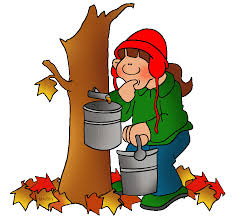
The maple syrup ingathering season runs from late February to early April, when the days are balmy and the nights freeze.
Snow still covers the underbrush of southern Canada and the northern states when folks gather in maple groves to collect and save the sweetness for their kitchens. Corporate mechanized production that accounts for some 5 million gallons each year has replaced much of the old time fun.
Us kids in northern Ontario used to run into the nearby woods and snag sap icicles to suck on the way to school.
Canada produces more than 80 percent of the world’s maple syrup. The province of Quebec whose border is just an hour from my home town, accounts for 90 percent of that amount.
Memories still linger of a time when we would collect the pails of sap and take them to the boiling kettle where 40 gallons of clear sap was processed into one gallon of caramel colored maple syrup. To keep us kids happy, the adults would toss a ladle-full of the brown bubbling syrup onto the snow and watch us scramble for fists-full of snow-taffy.
The finished syrup would be ladled, scooped and poured into 16-ounce mason jars with the time-honored screw-on caps. When we got the syrup home, our mothers would set aside a pint of the liquid to make a pound of maple sugar they would save for special occasions – or sprinkle over tea when their friends would visit.
Desert dune-buggy treks can’t match the excitement that built up as we climbed aboard a horse-drawn sled heading for the sugar shack, where the scent of burning cedar logs mingled with the singularly sweet aroma of hot thickening maple syrup.
I could warm my hands and feet over the crackling fire. If I was lucky, the adults would let me swab the sides of the huge boiling kettle with slabs of pork fat lashed to long poles. This prevented the sugar from becoming spongy and bubbling over like bread dough. And it gave me the opportunity to scoop up some hot bubbling sweetness in my long-handled tin cup.
I would dash outside and pour the searing sweetness onto a patch of crystal white snow that hardened immediately into sheets of snow taffy. I called it my own form of Baked Alaska.
Tribal history has it that some warriors were honing their tomahawk throws for accuracy when one hit a maple tree and a clear liquid began to flow from the gash.
Moqua, the spouse of the mighty Iroquois hunter Woksis, had been resting by a nearby tree on her way to get some water in a nearby creek. When she saw the clear liquid that had formed into a small pool at the base of the tree, she scooped it up and used it for cooking.
Her husband was so pleased with the sweetness of the venison he was served that night that he relayed the word to other hunters and tribes encountered on his hunting forays. They tried it, and liked it.
Some tribes rendered the sap into sugar cakes because they were easier to transport than liquid syrup. They also used it for trade – a form of money, if you will. The sweetness was use to flavor food, in much the same it is used today.
When the first European settlers arrived, they saw the natives transforming sap into syrup by tossing red-hot stones into hewed-out logs filled with the “sweet water.” These pioneers bored holes into the maples and squeezed in small tubes, or taps, to channel the dripping sap into wooden buckets.
 Mature Life Features