Super Bowl Sunday . . .

. . . is next Sunday,
so it’s not too late
to get in on a scoreboard lottery.
Crooks Crouch in Cyberspace
The COVID-19 shutdowns, changing regulations and general pandemonium have made it easier for cyberspace vultures to plunder your lifetime savings.
High on the list of scams is a caller pretending to be from a bank or credit-card company seeking to straighten out some issue or threaten you with penalties for a reported late payment. Be wary of similar snail-mail correspondence.
Don’t call the numbers left by the caller or letter writer. Use the contact numbers you have on your bank or credit card statements if you feel you need to follow through on the matter.
Other crooked calls claim you’re late with tax payments, you’ve won a major prize, or face legal prosecution for some fictitious matter.
There’s also the caller checking on a reported attack on your credit line and asks to verify personal information ranging from address to Social Security, credit-card and bank account numbers.
Be suspicious of any unidentified emails that creep into your computer or cell phone.
Bob Pakenas Sez . . .

Have a cool shmooz at our weekly ice cream social Sunday p.m.
Longevity Opens New World
The current senior mantra is “Things Will Never Be the Same” because of the changes wrought by the COVID-19 plethora of political proclamations designed to protect us from ourselves. But a deeper and more profound change was already under way before the pandemic encircled the globe.
The population is getting older. By 2030, the senior population around the world is expected to top 1.5 billion from the current 900 million. China’s over-65 phalanx that accounts for less than 10 percent of its population now is predicted to account for a quarter of its population in just three decades. By the end of this decade, more than 20 percent of the North American population will be 65 years or older. By 2060, one out four people will be in that age bracket.
This phenomenon is occurring for a few reasons. One is the graying of the post-World War II baby boomers, the 77 million Americans born between 1946 and 1964. Added to that is the fact that we’re living longer while the birth rate is diminishing. The 1950 U.S birth rate was 25 per 1,000 people compared with 12 per 1,000 last year.
By the beginning of the 2030s, workers will account for only 30 percent of the population. This shrinking workforce means a shrinking source of payroll taxes to finance Social Security and Medicare benefits for the aging population that no longer will be working. Counterbalancing this trend are recent reports that three-quarters of the current labor force plan to keep working past the age of 65. But pundits still predict Social Security benefits will have to be cut by at least 20 percent by the mid-2030s.
All of this movement not only affects financial-support programs, it puts a strain on the health-care industry, which already is looking at a shortage of more than 120,000 doctors and some 100,000 nurseds assistants and other medical aides over the next 10 years.
Whenever You Start Thinking . . .
. . . about looking for the person
who’ll change your life,

just look in the mirror.
Bocce ball fans meeting 11 a.m. beside the swimming pool
Second Opinion Always Helps
Getting a thoughtful and valid second opinion is becoming increasingly important in our fast-moving world of medical testing, innovation and disease control. Too many patients follow doctor’s orders without question regardless of the diagnosis.
After a series of tests and X-rays, a late relative’s primary care physician diagnosed spinal pressure as the cause of severe neck pain and numbness in the patient’s right shoulder and arm and referred him to a surgeon. The surgeon inspected the medical record, examined the patient and recommended a procedure that would fuse a handful of vertebrae to solve the problem. The operation was performed and, while the pain disappeared, the patient’s right hand became almost useless because of nerve damage caused either by the spinal pressure, the surgery or both.
The relative moved to a different city and, after arranging an introductory appointment with a local doctor, had his medical records sent to the physician. During his first visit, the patient was dumbfounded to hear that he might have a combination of some serious and complicated disabilities and disease, including Lou Gehrig’s disease (ALS), lymph cancer and neurological damage. His new doctor recommended a series of tests and referred him to a handful of specialists.
As it turned out, he did have cancer and ALS, both of which should have been unearthed during the process that led to his surgery just over a year earlier. Consensus at this stage was that the surgery was unnecessary and the cancer might have been curtailed. A second opinion at that time might have added years to his life.
It’s up to you to seek out a second diagnosis whether your primary care physician likes it or not. The situation doesn’t have to be life-threatening. It may be a change in your medication, the possibility of expensive surgery, or the feeling that you’re symptoms are being given trivial treatment. When you do face this issue, check with your health-care insurer to determine what they cover. You can ask your doctor for a referral as well as talk to family and friends about doctors they’ve seen.
When you’ve arranged to meet with another doctor, have your medical records sent to their office and prepare a list of questions you want answered. Your family doctor might have some questions to add. What happens if the new diagnosis differs drastically from the first? Then look to getting a third and fourth opinion.
My Brother Said. . .
. . . the cops knocked on his door the other day
and told him there were reports
that his dogs were chasing people on bikes.
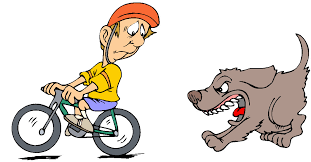
My brother said that was impossible
because his dogs don’t own any bikes.
Daily Life Changed Already
There was a never-ending stream of predictions and prognostications about how our lives would change as we emerged from of the COVID-19 shut-downs. Some have already happened.
Folks who never gave a thought to having groceries delivered have settled into this convenience for the rest of their lives. They’ve discovered the ease of shopping online and dropping by the source to have their order deposited in their trunk in minutes instead of spending an hour or two pushing a cart up and down aisles after competing with countless other vehicles to find a parking spot.
Many have realized the added comfort of having their goods dropped off at their doorstep. They’ve decided to forego the hassle of having to jostle through traffic and crowds to get their goods.
Shaking hands is disappearing. We’re learning to meet and greet each other with a fist bump or touching elbow to elbow.
Calling or emailing your doctor also is a novel approach to good health. Telemedicine has made giant strides in the few months this pandemic has been in force. Much is due to the fact that insurance companies have begun to pay for these cyberspace calls. Getting a diagnosis and medication has, in many cases, become as easy as making a phone call.
The home office and workshop have become a bigger part of working lives. Employees have discovered the comfort and convenience of not having to wear a shirt and tie and climbing into the car to spend a couple of hours on the freeway to get work. And they don’t have to drop off the kids at a chld-care center.
Employers have seen how they don’t have to provide expensive equipment and space to have their work produced, whether its schematics or sales. Computers provide the capability to have all this and more achieved remotely. Researchers report that more than one-third of office work can be performed at home. And those downtown office buildings are staying dark.
Got To Thinking . . .
. . .t’other day that
it’s OK for a gal
to wear her guy’s T-shirts, dress shirts, sweaters and such

but should he wear on of her dresses
it’s “we gotta talk” time.
Future of Telemedicine is Now
Telemedicine – the practice of getting diagnosis and treatment via your laptop or cell phone – has been gaining traction. Accelerating this drive is the unavailability of health care in rural (and some urban) areas because of the diminishing number of doctors as the over-65 crowd grows at the rate of 10,000 people a day.
One out of five residents live in areas identified as being short of health professionals. The advantage of being able to contact a doctor remotely became evident during the COVID-19 pandemic when people were confined to quarters.
Telemedicine opens the door to specialists as well as second medical opinions without taking up too much consulting time by the health experts contacted. It also reduces the stress on the patient as well as eliminating the need to travel to an appointment, which requires the patient to find a driver in many cases. Seniors fretting about their lack of computer equipment or skills find a telephone conversation may work as well.
Medicare has expanded its coverage of medical treatment by phone or computer. While not all health-insurance companies are following suit, several recognize telemedicine helps reduce the cost of health care. For example, it allows primary care physicians to schedule appointments at any time and not just the traditional “office hours” and reduces unnecessary office and emergency-room visits. It also lowers the cost of patient no-shows.
A barrier in the way of expanding telemedicine are reimbursement rules that require treatment to be conducted in specific sites, such as the doctor’s office or a health center. Government licensing laws also get in the way. Federal law requires telemedicine health-care providers to be fully licensed to practice medicine in the state where the patient is physically located. Health-care systems that have locations in more than one state may need to obtain multiple licenses.
If You Want People . . .
. . . to remember you,

borrow some money from them.
Don’t Choke on Pension Lump Sum
A couple we know lived through a lesson for all of us when the topic of pensions arises. The question focused on was whether they should take their pension cash with them when they retire or leave it with the company so they can receive monthly payments during their senior years.
They worked for different companies but both retired before the traditional 65-years-of-age so they could travel and enjoy life and living while they were still mobile and in relatively good health. They agreed that the wife would take her money and her husband would leave his with the firm because the total was much bigger and offered a much-more substantial monthly income.
They reached their decision after contacting a financial advisor to see what opportunities were available for investing the lump-sum pension check while still having money available for travel or medical expenses. They had set aside a sizable kitty over the years in bank certificates of deposit to cover day-to-day expenses until they could draw Social Security benefits.vEvery facet of their financial lives had been probed and programmed.
Except for one drastic occurrence.
Shortly after the husband quit working, a couple of deaths in the families that owned the controlling interest in his former company suddenly made it easy prey for a takeover. This resulted in a split in ownership/management philosophy. After a rapid series of internal battles, the company was sold. The new owners divvied it up into a handful of several divisions and sold each piece by piece.
And through all this, the original company pension was defunded and disappeared. The golden years planned by the couple were turned to trash.
This story is not to be taken as an endorsement of taking out retirement income in a lump sum. It does shine light on one of the perils of walking off the job without such an enticing check. A MetLife study revealed that one out of every five retirees who did leave the job with a lump-sum retirement payment spent it all in less than six years.
During Our . . .
. . .table conversation t’other day,
one of the guys said
there was a time when
he was addicted to the hokey pokey . . .
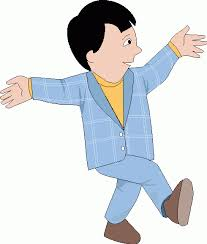
but he turned himself around.
Travel Insurance Sometimes Isn’t
Among the many lessons a lot of folks learned during the coronavirus shutdown is that travel insurance doesn’t always cover everything. Many would-be travelers found out that the trip-cancellation coverage they thought they had, they didn’t. Everyone learned that a world-wide pandemic changed all the coverage rules.
Some airline and cruise customers were fortunate enough to receive refunds for their fares. Most of these ticket holders, however, have been given vouchers that precluded them from making insurance claims to recoup their loss.
The real lesson here is ask questions and more questions when you buy the coverage. Some insurers do not provide coverage for mishaps suffered during such activities as skiing or scuba diving while you’re on your trip. You also have to determine if your policy covers you for any misadventure or cancellations caused by any act of terrorism.
Before putting together a travel-insurance plan, check with your health-and-medical insurance agent to see what coverage travels with you. Then be aware that trip cancellation insurance pretty well settles around injury, sickness or death of you, members of your family or a travel companion. You also have to make sure you define any and all coverage you want, ranging from emergency medical evacuation to lost luggage.
Why Is It . . .
. . . that people
who know it all,

never know
when to shut up?
On a Mission to Travel
Grand Canyon, Old Faithful, Hoover Dam, Mount Rushmore are but a few of the famous U.S. tourist attractions. Among the many overlooked possibilities for those seeking diversion is California’s Mission Trail – the 21- mission El Camino Real that became the foundation of the Golden State.
It’s a 600-mile journey north from the beaches of San Diego to the wine-making Sonoma Valley. It includes the nation’s second-largest urban center surrounding missions San Gabriel and San Fernando and one of the country’s most sung-about city, San Francisco. Each complex is different and offers a range of experience, from scenic to serene to historic to mid-town hurly-burly.
How Can . . .
. . . a stationery store

move?
When It’s Time to Give up the Car Keys
A relative’s family keep casting hints and harpoons about his diminishing driving skills – loss of hearing, slow reaction time, eyesight not what it used to be, confusion in traffic, and on and on and on. So he lets his children drive him wherever he has to go – mainly medical appointments, although they do get out for dinner now and then. But when everyone’s away, he shuffles out to the garage, climbs in behind the wheel and takes the family flivver for a drive — around the block, around the parking lot of a neighboring mall and back into the garage.
He hasn’t told his family about these excursions but he could point out to them that older drivers are involved in fewer collisions and traffic fatalities on average than 70-plus-year-old motorists just a few years ago. One reason is safer cars. But the trend is important because the number of older drivers is growing as the population ages. And thanks to lifestyles, diet and medical advances, today’s geriatric drivers are healthier and more fit than their predecessors just a generation or two ago.
As long as you feel capable of driving and handling traffic situations, you should feel comfortable keeping your keys. You can take stock on when it might be time to give up your car keys.
Ask yourself if you can still read traffic signs readily and if you get lost or confused, especially in heavy traffic. Make sure your bad back doesn’t stop you from looking around to see if all is clear when you want to change lanes. Do family and friends still ride with you when you’re driving? And do you still like to drive?
Giving up our car keys means giving up our independence to most of us. But the money you save on car payments, insurance, fuel, maintenance, parking and tolls can pay for more than enough cab rides. You can still go where you want to go whenever you want to, and you don’t have to drive.
My Tablemate . . .
. . . was wondering out loud yesterday
if eating a clock

would be consuming too time.
Seeing is Relieving
Several years ago, a colleague joined a group of friends huddled around their hot chocolates on a frigid January day. After sweeping the snow off his overcoat, he took off his hat and tossed his sunglasses in it for safekeeping. Someone asked him why he was wearing sunglasses in winter. He explained that sunglasses don’t keep you cool in the heat of summer. They protect your eyes from the sun’s ultra-violet rays that can damage your eyes and help cut down the glare dancing off the season’s snow.
Many ophthalmologists recommend wearing sunglasses all year long whether it’s cloudy or sunny. Dermatologists also recommend using sun screen at all times to protect your skin from the sun’s damaging rays – even when it’s cloudy.
Eye-care experts have assembled a few simple steps to follow that focus attention on your eyesight.
They suggest you start with a good pair of walking shoes to get out for walks since even regular moderate exercise slows the development of glaucoma and cataracts as well as such sight-robbing diseases as diabetes and high blood pressure. Keep a pair of sunglasses right beside the shoes so you wear them when you head out the door.
While you’re out, you might visit your nearby drug store and pick up some eye drops. The pharmacist can suggest which might work best to protect you from dust, dirt and heat while keeping our eyes moist and comfortable.
When you get back home, check the lighting in all parts of the house and yard. Both harsh lighting and poor lighting can give you headaches. So can improper positioning of your television set and computer screen. Too high, low, close or far can also cause headaches as well as erode the health of our eyes. A good pair of readers will help for computer work by reducing eyestrain.
As with any health-related matter, start probing the problem and seeking solutions by discussing the matter with your family doctor.
 Mature Life Features