Archive for October 2022
It Seems Like . . .
. . .a million years ago,
but I recall being awakened one morning
by my neighbor mowing his lawn.
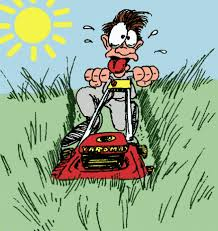
It was too early too get up,
so I just let him mow around me.
2 Can Live in Sin More Cheaply Than 1
It may not be entirely due to the fact that it’s no longer necessary to be married to be politically correct, but the number of older couples living together without a marriage license has almost doubled over the past 2 1/2 decades, according to Census Bureau figures.
Taxes, divorce settlements, probate laws and pension requirements are all cited as possible sources of penalties if cohabiting couples decide to get married officially.
Elderly people who receive Supplemental Security Income can lose this benefit if they combine incomes through marriage. A partner with a sizeable estate can wreck a cozy financial tax-shelter structure built over the years by the person he or she is living with if they decide to become legal spouses.
Latest figures indicate there are some 5 million couples older than 50 years of age living together without taking the trip to the altar or justice of the peace. This is almost 10 times more than the total at the turn of this century.
Among the reasons for remaining single while living together is the need to avoid tension among children that might result when a parent — widowed or divorced – remarries. In many cases, couples who take up cohabitation discover their financial disparities early. The woman may still be working and the man retired but expects his spouse to support his champagne tastes on his beer-budget retirement income.
Many financial issues involve divorced individuals, especially those who receive court-ordered benefits resulting from the split. Widows and widowers may lose Social Security benefits due their deceased spouse if they remarry before they turn 60.
Wills and other legal documents can help in the disposition of assets when one or both partners die. But all financial issues should be discussed with children so they — yours and your partner’s — will not be surprised when one of you dies.
Compounding all these rules and regulations are a tangle of federal, state and regional laws that you have to check. For example, some states don’t recognize cohabitation as legal.
Never Let It Be Said . . .
. . .is a mantra that has survived through the ages,

so I will never say it again.
Seniors Straining Economic Support
The globe is heading toward a challenging population problem that could develop into a crisis, or even a calamity. We’re aging.
There were slightly more than 900 million people – about 12 percent — around the world aged 60 years and older in 2015. This number is expected to increase to 1.4 billion by 2030, an increase of more than 16 percent. By 2050, one out of five people – 2.1 billion scattered all over the globe — will be 60 or older.
Since most of these people will be out of the work force, they will have to have fashioned their own retirement plans or be supported by somebody. Most people in most countries think the government should take care of its elderly. This socialism brush could be wider than anticipated and affect how the nations of the world are governed in the near future.
This rapidly aging population is creating an unprecedented set of problems, including a rapidly spreading and more diverse set of diseases, increased spending of time and money on health and long-term care, labor shortages, and steadily rising inflation chewing away at old-age income.
Adding calluses to the problem is the fact that Social Security payments will probably be lowered when the surplus in the trust funds is depleted. The $2.9 trillion in reserves reported in 2020 is expected to be spent by in 2034. When that happens, benefits payments will probably be slashed by about 25 percent if adjustments aren’t made in the meantime. This is happening because of the millennial surge into retirement age and the dwindling labor force that has Social Security support deducted from their paychecks.
Simply, fewer workers are paying for more Social Security recipients. While every elected official in Washington and every economist in the country knows the problem exists, no one has made any moves to fix all or part of it.
Not only are populations around the world aging, they’re having fewer kids. That means a diminishing number of workers burdened by a growing number of seniors.
The Best Part of Growing Old . . .
. . . comes after you’ve I’ve seen it all and done it all,

and you have time to remember it all.
Heart Attack Can’t Wait for Donors
You catch someone by surprise and they’re likely to blurt out that you almost gave them a heart attack. If they did suffer an attack, they would be among the more than 800,000 people who are struck by such a sudden attack every year.
The lucky ones are among the more than 300,000 heart transplant patients.
However, almost 400 people died last year because there’s a shortage of organ donors. While the public overwhelmingly supports organ donation – more than 90 percent said they would donate a family member’s organs if that was their wish — slightly more than half the adults have granted permission to have their organs donated after they die.
Heart disease is the leading cause of death, accounting for one out of four fatalities in this nation.
A coronary attack can be silent and unobtrusive or strike like a sledge hammer. One-third of its victims don’t experience any chest pain, leading to misdiagnosis of their problem. Global studies indicate folks with symptoms such as sweating, fainting, vomiting, nausea and shortness of breath are more likely to have their condition misdiagnosed and are three times more likely to die in hospital than patients suffering the tell-tale chest pain.
A myocardial infarction, the high-fallutin’ label for a heart attack, normally occurs when a blood clot or fatty build up in an artery blocks a vessel to the heart. This deprives the organ of the oxygen and nutrients it needs. This leads to a feeling of deep pressure or tightness of the chest.
Any chest discomfort or pain that lasts for more than a few minutes requires immediate medical attention. Less common symptoms include pain or discomfort in the back, neck or jaw, between the shoulder blades, your left shoulder and in one or both arms. Other red flags include shortness of breath, cold sweat, nausea, vomiting, a feeling of indigestion, dizziness or light-headedness, sudden fatigue or weakness, and a sense of impending doom.
If any of these last for more than five minutes, call 911.
Medical Mistakes Can Be Fatal
Errors in medical treatment, diagnosis and medication result in close to half a million deaths a year in this country.
These medical errors are the third leading cause of death, behind heart disease and cancer. These errors are blamed on hide-bound medical theories, lack of up-to-date information, laziness, stubbornness and stupidity, unskilled staff, system failure, and just plain honest mistakes. All doctors are human, and the long-known tenet still holds true – to err is human.
Figures on the number of deaths resulting from medical mistakes vary widely because views vary widely on just what is a medical error. One reason for the discrepancy in the number of medical-error deaths is that physicians, funeral directors, coroners and medical examiners rarely note on death certificates that human errors and system failures may be involved.
Proponents of medical safety point out patients can take steps to protect themselves.
Ask questions.
Ask about the benefits, side effects and disadvantages of a recommended medication or procedure. Get a second opinion from another doctor: A good doctor will welcome confirmation of his diagnosis. Bring in an advocate. Sometimes it’s hard to process all the information by yourself. Take a family member or friend to your appointment, someone who can understand the information and suggestions given and ask questions.
Overheard The Woman . . .
. . . at a nearby table today,

tell her meal mate
that she ran into her ex-husband on her morning shopping trip,
Then she backed up and ran into him again.
Aging Politicians Ignore
Aging Population
While there have been loud voices bemoaning the fact that we’re not paying enough attention to climate change, there isn’t even a whimper about what’s happening to our population change. It’s paradoxical that the greying heads in government are paying little attention to the graying of their constituents.
The voters’ rolls are aging at the rate of 10,000 over-65ers every day. You’d think that all those silver-haired politicians would be looking hard at how to accommodate the needs of folks who are growing old just as they are. Even the aging talking heads on television seem ignorant of what’s concerning a growing segment of their viewers.
The apparent reasoning for this blindness to a massive problem is the mantra that 70 is the new 50. And the spreading myth that age is simply a state of mind. Several studies topple this trend in thinking by supporting what we’ve always known – ailing and aching increase as you get older.
No matter how Pollyannaish we may feel, our odds of falling victim to such widespread debilitations as Alzheimer’s disease increase the longer we live. While health-care is high on the list of promises by those seeking votes, the focus usually is on the young who have inadequate coverage rather than the elderly who cannot care for themselves.
Another major concern is the strength and stability of Social Security. Predictors tell us there will be about two workers supporting each recipient by the early 2030s. This was not in any forecasts when there were more than 45 workers for each recipient of benefits when the program was instituted back in the 1930s.
 Mature Life Features