A Good Way . . .
. . . to make a small fortune on Wall Street

is to start out with a large one.
Legs Support Your Health
Hockey Hall-of-Famer Gordie Howe reportedly said it years ago: “The legs go first.”
Maintaining leg strength and flexibility ranks high on the list of physical activities that will slow the aging process and ward off illness. Simple things, such as walking, swimming, jogging, hiking, and biking, not only lengthen one’s life but make those extended years more comfortable and enjoyable.
While watching television, stand up from the chair. If you can do this, and sit back down, without requiring any form of support, you’re doing OK.
Then sit on the edge of the chair and extend one leg out in front of you. Reach down with both hand and try to touch the toes on your extended leg without bending the knee. Now try it with the other leg. Work on this until you can get your fingers within four to six inches – or closer — from your toes.
I Got Musing . . .
. . .the other morning
about what type of work I might do

and I could see myself hanging mirrors
Exercise Exorcizes Pain
Your muscles, ligaments, and tendons have to be stretched regularly to remain limber and
lubricated. You can start before you get out of bed by lying on your side, pulling your knees up in a fetal position and pushing your butt toward your heels for about 10 seconds. This stretches and pulls your spine into proper position. Do this a couple of times on both sides.
When you get out of bed, kneel on the floor and place your palms on the floor under your shoulders and arch your back toward the ceiling for about five or 10 seconds. Reverse the motion and push your back downward while you push your head toward the ceiling. Hold this for five or 10 seconds. And repeat the sequence three or four times.
Now lay stomach down on the floor and do a half-body push-up. Press your hips on the floor and stretch your head and neck toward the ceiling. Hold this position for five or 10 seconds
and repeat the exercise a three or four times.
Now you can stand up. Spread your legs apart as far as you can without hurting yourself and, while keeping your knees straight, bend forward as far as you can. If your hand touches the floor, fine. Hold this for five or 10 seconds and repeat a few times.
If any of these, or any exercises, cause you pain, either modify the motion or quit.
.
The People Here . . .
. . .are treating me like one of the family,

but I’m not going to put up with that much longer.
Shredding Saves
If you don’t anticipate receiving a shredder for Christmas or your upcoming birthday, you might settle for scissors to cut up documents, cards and statements sought by identity thieves.
Or you might trot out and buy your own shredding machine to get rid of anything with your signature, Social Security and driver’s license numbers, PINs, birth date, and numbers of credit cards, insurance policies, and bank and credit union accounts.
And start shredding immediately.
Start with three-month-old credit-card statements you don’t need for taxes or proof of purchase. Do the same with credit-card receipts that have appeared on those monthly statements. If you have a computer with Internet connection, you can shred those receipts as soon as the transactions appear in your online statement. Don’t forget ATM , bank deposit and withdrawal slips.
What you must keep, however, are documents required for taxes, medical records, and papers linked with mortgage payments and home maintenance and repairs.
The Lady At The Next Table . . .
. . .looked surprised

when I told her
she’d painted here eyebrows too high.
Don’t Answer Ringing in Your Ears
Any ringing, whistling, whooshing or hissing sound in one or both ears when there is no external source of noise could be a sign of tinnitus. Up to 15 percent of adults have prolonged tinnitus that often requires medical evaluation. The problem can interfere with sleep, concentration and daily activities.
Tinnitus often is caused by age-related hearing loss. Exposure to loud noises also can damage hearing and lead to tinnitus. It can be caused by something as simple as a buildup of wax blocking the ear canal. Some medications, certain antibiotics, and cancer drugs can cause or worsen tinnitus. Aspirin taken in excessive amounts can cause temporary ringing in the ears.
There is no cure. A medication change or removal of earwax may diminish symptoms for some people. Beneficial treatment strategies include:
— Amplifying hearing with a hearing aid;
— Avoiding excessive noise, such as using ear plugs when operating noisy machines and tools;
— Avoiding such stimulants as caffeine, nicotine and decongestants;
— Adding soothing background noise, such as quiet music or a fan, and
— Using sedatives or antidepressants when the condition interferes with sleep or causes a high level of anxiety or stress.
Apropos Of Nothing . . .
. . . I got to thinking
that if you took the shell off a snail,
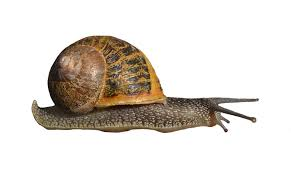
you’d just make it more sluggish.
Make a Fist to Fight Arthritis
To avoid stiffening and soreness in your hands, or alleviate it if that’s already started, clench your hands into a fist.
It’s one of several easy exercises you can repeat two or three times that are recommended by
orthopedic experts for everyone to maintain flexibility and use of your hands.
The idea is not to force any movement, especially if you’re suffering from any form of arthritis.
After making a fist, you should straighten out all your fingers and thumb as far as possible. Then spread apart all your fingers and thumb as far as you can.
Close your fingers, aim your hand at the ceiling and point your thumb to the side. Then hold your hand out in a hand-shake position and roll your thumb from an outstretched position to touch the base of your little finger. Then cup your hand and touch the tip of each finger with the tip of your thumb.
If There’s A Will . . .

. . .you’ll find out
how many relatives you have.
A Rose by Any Other Name is – Who?
Remembering names is a lifelong thorn in most people’s side.
A co-worker years ago leaped over the remember-names hurdle by greeting everyone with, “Hello, Judge.” Another colleague made up his own name for people around him, claiming he never used names “your mother called you.”
The initial step to take to remember a name is to pay attention when you’re being introduced. This becomes difficult at a wedding, funeral, service club luncheon or any gathering with a lot of unfamiliar faces.
To help imprinting a name in your mind, repeat the name when you’re introduced. “Nice to meet you, Mike,” will help you remember his name. You may be able to link him to a childhood friend, relative or movie star with the same name. It can help if his or her name has a visual connection. Lily can be linked easily to the flower, Jay with a bird, and Rocky with the movie of the same name.
If you’ve forgotten their name, say so and tell them you’re name.
If You Are . . .
. . . what you eat.

They must be feeding dope
to the guy down the hall.
Coffee Worth the Break
Caffeine can be good for you. Moderation matters in all corners of our lives but up to three cups of coffee a day can be healthy.
Critics warn that caffeine dehydrates your system, increases hypertension and the risk of heart attack, cuts down on your ability to sleep, is linked to gout attacks, raises blood pressure, and brings on anxiety, heartburn and stomach problems. While coffee fans admit much of this may be true, there’s a growing list of benefits for those who drink coffee.
It’s been discovered that an eight-ounce cup of java contains more disease-fighting antioxidants than a regular serving of oranges or blueberries. Coffee drinkers reportedly have a lower risk of such chronic conditions as diabetes and heart disease as well as less cognitive decline as they age. Researchers have found that seniors who have as many as four cups of coffee a day cut in half their risk of heart disease compared with those who take in less caffeine.
Caffeine interacts with many medications so go over your list of prescriptions and supplements with your primary care physician to make sure coffee is compatible.
It Seems Like . . .
. . .a million years ago,
but I recall being awakened one morning
by my neighbor mowing his lawn.
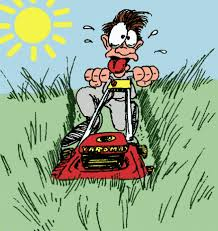
It was too early too get up,
so I just let him mow around me.
2 Can Live in Sin More Cheaply Than 1
It may not be entirely due to the fact that it’s no longer necessary to be married to be politically correct, but the number of older couples living together without a marriage license has almost doubled over the past 2 1/2 decades, according to Census Bureau figures.
Taxes, divorce settlements, probate laws and pension requirements are all cited as possible sources of penalties if cohabiting couples decide to get married officially.
Elderly people who receive Supplemental Security Income can lose this benefit if they combine incomes through marriage. A partner with a sizeable estate can wreck a cozy financial tax-shelter structure built over the years by the person he or she is living with if they decide to become legal spouses.
Latest figures indicate there are some 5 million couples older than 50 years of age living together without taking the trip to the altar or justice of the peace. This is almost 10 times more than the total at the turn of this century.
Among the reasons for remaining single while living together is the need to avoid tension among children that might result when a parent — widowed or divorced – remarries. In many cases, couples who take up cohabitation discover their financial disparities early. The woman may still be working and the man retired but expects his spouse to support his champagne tastes on his beer-budget retirement income.
Many financial issues involve divorced individuals, especially those who receive court-ordered benefits resulting from the split. Widows and widowers may lose Social Security benefits due their deceased spouse if they remarry before they turn 60.
Wills and other legal documents can help in the disposition of assets when one or both partners die. But all financial issues should be discussed with children so they — yours and your partner’s — will not be surprised when one of you dies.
Compounding all these rules and regulations are a tangle of federal, state and regional laws that you have to check. For example, some states don’t recognize cohabitation as legal.
Never Let It Be Said . . .
. . .is a mantra that has survived through the ages,
so I will never say it again.
Seniors Straining Economic Support
The globe is heading toward a challenging population problem that could develop into a crisis, or even a calamity. We’re aging.
There were slightly more than 900 million people – about 12 percent — around the world aged 60 years and older in 2015. This number is expected to increase to 1.4 billion by 2030, an increase of more than 16 percent. By 2050, one out of five people – 2.1 billion scattered all over the globe — will be 60 or older.
Since most of these people will be out of the work force, they will have to have fashioned their own retirement plans or be supported by somebody. Most people in most countries think the government should take care of its elderly. This socialism brush could be wider than anticipated and affect how the nations of the world are governed in the near future.
This rapidly aging population is creating an unprecedented set of problems, including a rapidly spreading and more diverse set of diseases, increased spending of time and money on health and long-term care, labor shortages, and steadily rising inflation chewing away at old-age income.
Adding calluses to the problem is the fact that Social Security payments will probably be lowered when the surplus in the trust funds is depleted. The $2.9 trillion in reserves reported in 2020 is expected to be spent by in 2034. When that happens, benefits payments will probably be slashed by about 25 percent if adjustments aren’t made in the meantime. This is happening because of the millennial surge into retirement age and the dwindling labor force that has Social Security support deducted from their paychecks.
Simply, fewer workers are paying for more Social Security recipients. While every elected official in Washington and every economist in the country knows the problem exists, no one has made any moves to fix all or part of it.
Not only are populations around the world aging, they’re having fewer kids. That means a diminishing number of workers burdened by a growing number of seniors.
The Best Part of Growing Old . . .
. . . comes after you’ve I’ve seen it all and done it all,

and you have time to remember it all.
Heart Attack Can’t Wait for Donors
You catch someone by surprise and they’re likely to blurt out that you almost gave them a heart attack. If they did suffer an attack, they would be among the more than 800,000 people who are struck by such a sudden attack every year.
The lucky ones are among the more than 300,000 heart transplant patients.
However, almost 400 people died last year because there’s a shortage of organ donors. While the public overwhelmingly supports organ donation – more than 90 percent said they would donate a family member’s organs if that was their wish — slightly more than half the adults have granted permission to have their organs donated after they die.
Heart disease is the leading cause of death, accounting for one out of four fatalities in this nation.
A coronary attack can be silent and unobtrusive or strike like a sledge hammer. One-third of its victims don’t experience any chest pain, leading to misdiagnosis of their problem. Global studies indicate folks with symptoms such as sweating, fainting, vomiting, nausea and shortness of breath are more likely to have their condition misdiagnosed and are three times more likely to die in hospital than patients suffering the tell-tale chest pain.
A myocardial infarction, the high-fallutin’ label for a heart attack, normally occurs when a blood clot or fatty build up in an artery blocks a vessel to the heart. This deprives the organ of the oxygen and nutrients it needs. This leads to a feeling of deep pressure or tightness of the chest.
Any chest discomfort or pain that lasts for more than a few minutes requires immediate medical attention. Less common symptoms include pain or discomfort in the back, neck or jaw, between the shoulder blades, your left shoulder and in one or both arms. Other red flags include shortness of breath, cold sweat, nausea, vomiting, a feeling of indigestion, dizziness or light-headedness, sudden fatigue or weakness, and a sense of impending doom.
If any of these last for more than five minutes, call 911.
 Mature Life Features