Medical Mistakes Can Be Fatal
Errors in medical treatment, diagnosis and medication result in close to half a million deaths a year in this country.
These medical errors are the third leading cause of death, behind heart disease and cancer. These errors are blamed on hide-bound medical theories, lack of up-to-date information, laziness, stubbornness and stupidity, unskilled staff, system failure, and just plain honest mistakes. All doctors are human, and the long-known tenet still holds true – to err is human.
Figures on the number of deaths resulting from medical mistakes vary widely because views vary widely on just what is a medical error. One reason for the discrepancy in the number of medical-error deaths is that physicians, funeral directors, coroners and medical examiners rarely note on death certificates that human errors and system failures may be involved.
Proponents of medical safety point out patients can take steps to protect themselves.
Ask questions.
Ask about the benefits, side effects and disadvantages of a recommended medication or procedure. Get a second opinion from another doctor: A good doctor will welcome confirmation of his diagnosis. Bring in an advocate. Sometimes it’s hard to process all the information by yourself. Take a family member or friend to your appointment, someone who can understand the information and suggestions given and ask questions.
Overheard The Woman . . .
. . . at a nearby table today,

tell her meal mate
that she ran into her ex-husband on her morning shopping trip,
Then she backed up and ran into him again.
Aging Politicians Ignore
Aging Population
While there have been loud voices bemoaning the fact that we’re not paying enough attention to climate change, there isn’t even a whimper about what’s happening to our population change. It’s paradoxical that the greying heads in government are paying little attention to the graying of their constituents.
The voters’ rolls are aging at the rate of 10,000 over-65ers every day. You’d think that all those silver-haired politicians would be looking hard at how to accommodate the needs of folks who are growing old just as they are. Even the aging talking heads on television seem ignorant of what’s concerning a growing segment of their viewers.
The apparent reasoning for this blindness to a massive problem is the mantra that 70 is the new 50. And the spreading myth that age is simply a state of mind. Several studies topple this trend in thinking by supporting what we’ve always known – ailing and aching increase as you get older.
No matter how Pollyannaish we may feel, our odds of falling victim to such widespread debilitations as Alzheimer’s disease increase the longer we live. While health-care is high on the list of promises by those seeking votes, the focus usually is on the young who have inadequate coverage rather than the elderly who cannot care for themselves.
Another major concern is the strength and stability of Social Security. Predictors tell us there will be about two workers supporting each recipient by the early 2030s. This was not in any forecasts when there were more than 45 workers for each recipient of benefits when the program was instituted back in the 1930s.
I’ve Quit . . .
. . . giving advice
because my train of thought
goes off track too easily.
Wanna Make a Buck? Sucker a Senior.
Seniors – more than 1 million of them – are bilked out of some $3.5 billion dollars a year. Related costs, such as health care, social services, investigations, legal fees, prosecution, lost income and assets, reach the hundreds of of dollars annually. And for each case of reported financial abuse, there are an estimated four or more that go unreported.
Family members and caregivers are the culprits in more than half of these cases, and the most likely victim is between 70 and 89 years of age, white, female, frail and cognitively impaired, trusting of others, and may be lonely or isolated. In fact, elder financial abuse has become the crime of the 21st century.

This is a growing problem made greater by the growing number of older Americans, the relative wealth of this group, and the availability of technology that makes such abuse somewhat easier.
Family members and caregivers who financially exploit the elderly usually are dependent
upon them financially and their thievery may be influenced by such problems as alcohol and
drug abuse as well as a sense of entitlement — the culprits believe they have a right
to the money parents or charges have accumulated.
Among the reasons the elderly under report incidents of financial abuse are a fear of government interference, parents protecting their children and family members, embarrassment and self-blame, and fear of being placed in a facility or being harmed physically by the perpetrator.
Has it Occurred to You . . .
, , , that, if you’re not getting older,
you’re dead?
Future of Telemedicine is Now
Getting cured in cyberspace sounds like science fiction but it’s already here. Telemedicine – the practice of getting diagnosis and treatment via your laptop or cell phone – has been gaining traction rapidly as the way to monitor and maintain your health.
Accelerating this drive to remote medical servicing is the unavailability of health care in rural (and some urban) areas because of the diminishing number of doctors as the over-65 crowd grows at the rate of 10,000 people a day. As it stands, one out of five residents live in areas that have been identified as being short of health professionals.
Telemedicine opens the door to specialists as well as second medical opinions without taking up too much consulting time by the health experts contacted. It also reduces the stress on the patient as well as eliminating the need to travel to an appointment, which requires the patient to find a driver in many cases.
Seniors fretting about their lack of computer equipment or skills find a telephone conversation may work as well. Medicare has expanded its coverage of medical treatment by phone or computer. While not all health-insurance companies are following suit, several recognize telemedicine helps reduce the cost of health care.
For example, it allows primary care physicians to schedule appointments at any time and not just the traditional “office hours” and reduces unnecessary office and emergency-room visits. It also lowers the cost of patient no-shows.
A barrier in the way of expanding telemedicine is the reimbursement rules that require treatment to be conducted in specific sites, such as the doctor’s office or a health center to qualify. Government licensing laws also get in the way.
Federal law requires telemedicine health-care providers to be fully licensed to practice medicine in the state where the patient is physically located. Providers in health systems that have locations in more than one state may need to apply for and pay to maintain multiple licenses.
One Point In Favor of Aging . . .
. . . is that it’s better to be
over the hill

rather than under it.
What The Heck Is In A Name Anyway?
Some people never get my name right. While there have been several requests about how to pronounce my first name, it’s my last name that gives them the most trouble.
In English, you just pronounce every letter – Scag-lee-owe-knee. In Italian, the “gl” is swallowed and the name comes out Scal-YO-knee. It works the same as gnocci — nyoki
Even after several attempts, most seem to prefer spelling my last name ending with an “i” – Scaglioni. My insurance company persisted for years to keep spelling it that way even though it was spelled correctly on the policy.
Getting my name right has given many editors head-scratching sessions to make sure the by-line on my stories was spelled correctly. For many years, they preferred the shortened Cec Scaglione. One article in my Detroit paper appeared under the by-line of Ceg Scaglione until a sharp-eyed editor caught it and corrected it for the later editions.
Early in my career, I received a check from a Toronto magazine made out to Cec Scogbone. I managed to get it cashed at my bank so it didn’t become a problem. I get a lot of correspondence with the “g” dropped – Scalione. A credit-card company I was enlisted with a while ago persisted in sending me a monthly statement addressed to Scaslione. They even came up once with Schelione.
A welfare agency I did a story about sent me a thank-you note with the name Scageclone. A complimentary note for a story I wrote was addressed to Mr. Scheline. A Methodist bishop sent a letter to my boss lauding the effort of Mr. Ceg Scaliogre.
Some Coincidences . . .
. . . arising out of 9/11. First of all,

the Twin Towers look like a number 11 poking up through
the New York skyline;
add all three digits in the date 9 +1+1 = 11;
the date has the same three digits as the emergency number 911, and
the first plane that tore into the buildings was
American Airlines flight 11.
There’s more but that’s enough for now.
My Shower Is . . .
. . . much more accommodating
since I put a bar in it,

however,
I keep running out of scotch.
Bank Fees Like Fleas

It used to be that robbers hit the banks for their money. Now, the banks are coming after you for yours. Only it’s not called robbery. It’s called fees.
When banks were deregulated more than a couple of decades ago, they were set free to compete for your dollars.
The lawmakers who lauded their magnanimous act proclaimed that the need to compete for
customers would force banks to improve services for the depositor, lower interest rates for
borrowers, and generally make one’s banking experience more personal and profitable.
What happened was banks began charging fees for services that were free before deregulation.
Make too many deposits in your bank, you could be charged for that. Too many telephone calls? There’s also a fee for that – even if you only get a recording. At many banks, charges vary for talking with a real live person, whether by visiting the building or by telephone.
However, if you don’t use your banking service enough, there’s a “dormancy” fee. Some banks
attach a monthly fee – for using your money – if your account is inactive. This definition varies
from institution to institution so you should ask your bank about its policy. If you find it unsatisfactory, close the account.
Before doing that, however, ask if there’s an account-closing fee. And, before you open an
account at another bank, ask them the same question.
In their campaign to convince you that they’re really doing you a service by closing down a
nearby branch office and making much-less-labor-intense – and therefore less costly – electronic banking available, banks merrily overlook burdening you with bothersome details.
For example, downloading cash from automated teller machines (ATMs) is undoubtedly handy.
In most cases, you’ll get it even if it means you’re overdrawing your account. There’s a fee for
that.
There’s no warning. You won’t know about it until you see your monthly statement.
Banks claim they want you to have the convenience of getting cash as you need and want it. But they don’t warn you that you’re overdrawing. You have to monitor your balance to avoid the overdraft charge.
While we’re on ATMs, it’s wise to use your own bank’s because many financial institutions are
adding their own charges for ATM users who belong to a different bank.
The banks’ back shops are getting better at maximizing charges. They clear your largest checks
first to get the most out of overdraft fees.
Let’s say you have $1,000 in your account and you’ve written three checks – one for $1,100 and
the other two for $150 and $100. The bank most likely will clear the largest check first, charging
an overdraft fee. Then it charges overdraft fees as it clears each of the other two checks that are written on your now-overdrawn account, rather than clear the two smaller checks first and
leaving you with only one overdraft fee
An Interesting Something . . .
. . . popped into my head
t’other morning on my bike ride.

At my age, I feel like I’ve come out of “Star Wars” being born “A long time ago in a galaxy far away…”
Always the Season
to Protect Your Identity
Identity theft, which is easier to commit successfully than credit-card fraud because the criminal only has to steal your name and not your card, accounts for almost half of the thousands of consumer-fraud complaints made to the Federal Trade Commission each year.
Almost 10 percent of the population becomes victims of identity thieves each year. These are just the ones we know of because they are reported to the FTC. You can lose your identity in an instant – the time it takes for a crook to memorize your birth date or Social Security number as you give it to a shop clerk, for example.
You can take a few simple steps to foil these vultures.
Old-fashioned thieves steal your identity by pilfering through your wallet or purse. Modern Internet hackers can get your most personal information, such as your name, Social Security number, address, and other valuable data, to use to make purchases and loans in your name.
Many steal identities from mailboxes – more than 100,000 residential mailboxes are raided every day in this country – or they fish bank and credit-card statements from trash. You face more than a financial loss when any of this happens to you. Since you’re the person who’s named on the debt, you’ll have to pay bills you never incurred.
An identity thief may use your name but another address so you won’t be aware of the debt made in your name because statements will be sent to that other address and your credit will be trampled.
It’s a long and frustrating road to reclaim your rightful identity and credit rating. A bad credit rating is like an old-fashioned hangover – only time is a cure.
One self-defense weapon you might acquire is a paper shredder to shred all documents and statements with your name, address and ID numbers. This includes bank and credit-card statements, offers by credit-card companies for pre-approved cards, any statements from book clubs or magazine subscriptions, and personal numbers that come with catalogs and merchant mailings.
The prime rule in self-protection is never give anyone your Social Security number. And don’t carry your card with you. Only government agencies, credit-reporting firms, banks and the Internal Revenue Service can use your Social Security number. Anyone else who wants it can be told it isn’t required.
A Lesson You Learn . . .
. . . as you slip into your senior years is

it’s really really good to wake up and pee
and really really much better
than peeing and then waking up
Getting There is Getting Rougher —
and You Suffer
After several years of covering the airline industry as a business writer for a daily metropolitan newspaper, working for an airline company for a handful of years, and a million or so miles on commercial airlines, my view of airline companies has not changed.
They do not view you as a welcome passenger they can whisk off to exotic lands and happy holidays. You are simply a vacant seat if you’re not on one of their aircraft. They may make apologetic announcements when they delay or cancel your flight, but they really aren’t sorry.
The unfortunate part is that bad customer behavior is inflicted upon the airline staffers who do care – flight attendants and gate agents.
Ever see how the baggage handlers handle your luggage? Ever hear pilots discuss the uncomfortable conditions they cause when they decide to delay or cancel your flight? Ever stumble upon a sympathetic ticket agent willing to give you a refund when your flight is canceled?
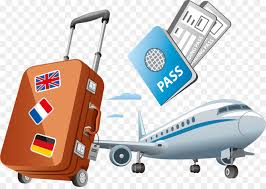
Nothing’s really changed as airlines moan and groan about the sudden onrush of travelers and staff shortages because they can’t rehire personnel fast enough after the COVID-19 pandemic slowdown. More than one out of four flights is either cancelled or delayed for a planeload of reasons – backups in the system, staff shortages, weather, mechanical problems, runway crowding, pick a problem.
You have to prepare for discomfort as well as delays if you intend to fly somewhere on a commercial airliner. This is after putting up with TSA frisking at the airport that you arrived at three hours before takeoff time before you even get on an airplane. Then there’s taxi time and gate-waiting time and on and on and on.
On board, you pay for a pillow and blanket. Don’t even think about getting a snack. Pack your own lunch at home and take an empty plastic bottle so you can fill it at an airport fountain before taking flight.
More than 900 flights are cancelled every day, according to Federal Aviation Administration data.
That may sound like a lot, but let’s look at the daily picture. The FAA handles more than 45,000 flights every day taking almost 3 million passengers into and out of the more than 9,500 airports U.S. airports – 14,500 are small private airports. There are as many as some 5,400 aircraft buzzing overhead at any given time.
There are bound to be problems. So you have to prepare for the worst when you embark on a trip to the airport to board an airplane.
For Those Who Missed It . . .
. . . here’s your favorite server Brook sending you a song.

And we’re heading into another busy Verena week headed by Monday night football in the dining room, writing class and wellness presentation highlighted on Tuesday, free blood pressure checks for anyone and everyone Wednesday, another health and wellness session on Thirsty Thursday, a Hale Theater outing Friday with flashbacks Saturday afternoon wrapping up a week that included fitness periods, shopping trips and assorted games.
 Mature Life Features