Posts Tagged ‘#aging’
All Those Youngsters . . .
. . . dancing around us

want to live forever,
they just don’t want to get old
like us.
It’s Interesting . . .
. . . to note that
most people don’t realize
they have to get old

if they want to live a long life.

Don’t . . .
. . . kid yourself – –

you ain’t gonna live forever,
so you better start
enjoying yourself.
A Lady Friend . . .
. . . of a friend of mine
no longer proclaims
60 is the new 40
because she just lost her driver’s license.
I Looked . . .
. . . in the mirror today

and realized
I still have the body of a 20-year-old.
I’ve just stretched it out of shape a bit
here and there over the years.
= = = = =
AGING IS ALL
IN YOUR HEAD
Mature Life Features
It’s always interesting to note that colleges and corporation spend time and money, and the government sometimes spends our money, to learn things everyone already know.
A recent example are results of a couple of surveys that reveal the less intelligent people are, the smarter they think they are. In other words, stupid people don’t know they’re stupid.
But the discussion here deals with something else everyone knows – you’re only as old as you feel. That’s what is indicated by survey by a breakfast-cereal company. In a telephone survey of people over 40 years old, 80 percent of the respondents said they feel young. Also, 66 percent said the prime of life is between the ages of 30 and 50 years. And the characteristics of a person in his or her prime of life are physical energy, according to 35 percent of those surveyed; emotional maturity, 34 percent; financial security, 22 percent, and youthful appearance, 6 percent.
While 70 percent of those surveyed felt the thing they could do to feel their best is to exercise regularly, more than half – 55 percent – admitted they don’t exercise enough. Almost 80 percent of the respondents feel better about themselves than they thought they would upon reaching their particular age.
When asked what they might choose to do to improve themselves, 29 percent said they’d like to enhance their energy levels. The same percentage said expand their minds by learning something new, 23 percent said they’d like to reduce stress, and 15 percent opted for improving their physical appearance.
Among the things they liked about getting older, “getting a better perspective on life” and “more leisure and family time” outranked retirement and career accomplishments.
Overheard The Woman . . .
. . . at a nearby table today,

tell her meal mate
that she ran into her ex-husband on her morning shopping trip,
Then she backed up and ran into him again.
Aging Politicians Ignore
Aging Population
While there have been loud voices bemoaning the fact that we’re not paying enough attention to climate change, there isn’t even a whimper about what’s happening to our population change. It’s paradoxical that the greying heads in government are paying little attention to the graying of their constituents.
The voters’ rolls are aging at the rate of 10,000 over-65ers every day. You’d think that all those silver-haired politicians would be looking hard at how to accommodate the needs of folks who are growing old just as they are. Even the aging talking heads on television seem ignorant of what’s concerning a growing segment of their viewers.
The apparent reasoning for this blindness to a massive problem is the mantra that 70 is the new 50. And the spreading myth that age is simply a state of mind. Several studies topple this trend in thinking by supporting what we’ve always known – ailing and aching increase as you get older.
No matter how Pollyannaish we may feel, our odds of falling victim to such widespread debilitations as Alzheimer’s disease increase the longer we live. While health-care is high on the list of promises by those seeking votes, the focus usually is on the young who have inadequate coverage rather than the elderly who cannot care for themselves.
Another major concern is the strength and stability of Social Security. Predictors tell us there will be about two workers supporting each recipient by the early 2030s. This was not in any forecasts when there were more than 45 workers for each recipient of benefits when the program was instituted back in the 1930s.
Has it Occurred to You . . .
, , , that, if you’re not getting older,
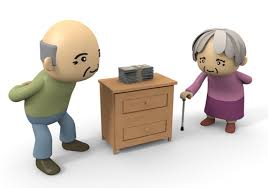
you’re dead?
Future of Telemedicine is Now
Getting cured in cyberspace sounds like science fiction but it’s already here. Telemedicine – the practice of getting diagnosis and treatment via your laptop or cell phone – has been gaining traction rapidly as the way to monitor and maintain your health.
Accelerating this drive to remote medical servicing is the unavailability of health care in rural (and some urban) areas because of the diminishing number of doctors as the over-65 crowd grows at the rate of 10,000 people a day. As it stands, one out of five residents live in areas that have been identified as being short of health professionals.
Telemedicine opens the door to specialists as well as second medical opinions without taking up too much consulting time by the health experts contacted. It also reduces the stress on the patient as well as eliminating the need to travel to an appointment, which requires the patient to find a driver in many cases.
Seniors fretting about their lack of computer equipment or skills find a telephone conversation may work as well. Medicare has expanded its coverage of medical treatment by phone or computer. While not all health-insurance companies are following suit, several recognize telemedicine helps reduce the cost of health care.
For example, it allows primary care physicians to schedule appointments at any time and not just the traditional “office hours” and reduces unnecessary office and emergency-room visits. It also lowers the cost of patient no-shows.
A barrier in the way of expanding telemedicine is the reimbursement rules that require treatment to be conducted in specific sites, such as the doctor’s office or a health center to qualify. Government licensing laws also get in the way.
Federal law requires telemedicine health-care providers to be fully licensed to practice medicine in the state where the patient is physically located. Providers in health systems that have locations in more than one state may need to apply for and pay to maintain multiple licenses.
One Point In Favor of Aging . . .
. . . is that it’s better to be
over the hill

rather than under it.
What The Heck Is In A Name Anyway?
Some people never get my name right. While there have been several requests about how to pronounce my first name, it’s my last name that gives them the most trouble.
In English, you just pronounce every letter – Scag-lee-owe-knee. In Italian, the “gl” is swallowed and the name comes out Scal-YO-knee. It works the same as gnocci — nyoki
Even after several attempts, most seem to prefer spelling my last name ending with an “i” – Scaglioni. My insurance company persisted for years to keep spelling it that way even though it was spelled correctly on the policy.
Getting my name right has given many editors head-scratching sessions to make sure the by-line on my stories was spelled correctly. For many years, they preferred the shortened Cec Scaglione. One article in my Detroit paper appeared under the by-line of Ceg Scaglione until a sharp-eyed editor caught it and corrected it for the later editions.
Early in my career, I received a check from a Toronto magazine made out to Cec Scogbone. I managed to get it cashed at my bank so it didn’t become a problem. I get a lot of correspondence with the “g” dropped – Scalione. A credit-card company I was enlisted with a while ago persisted in sending me a monthly statement addressed to Scaslione. They even came up once with Schelione.
A welfare agency I did a story about sent me a thank-you note with the name Scageclone. A complimentary note for a story I wrote was addressed to Mr. Scheline. A Methodist bishop sent a letter to my boss lauding the effort of Mr. Ceg Scaliogre.

 Mature Life Features