Archive for the ‘Travel’ Category
Try the Wright Stuff at Outer Banks
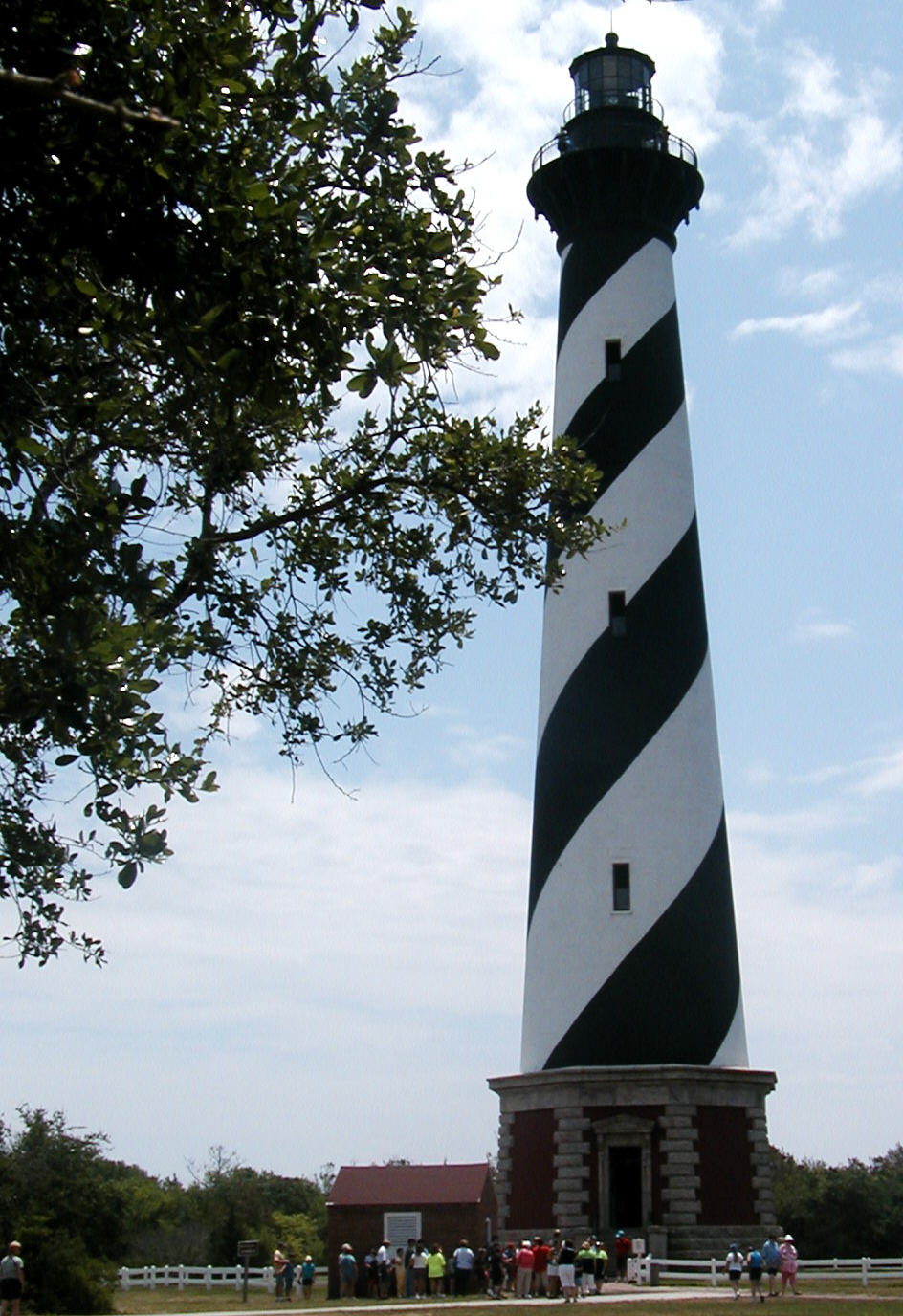
The storied Cape Hatteras lighthouse stands as high as a 20 story building, making it the tallest brick lighthouse in the nation.
Story & photo by
Cecil Scaglione
Mature Life Features
NAG’S HEAD, N.C. —- It was the Wright place and the Wright time for 73-year-old Charles Dettor and his 66-year-old wife, Ruth, to learn how to fly.
The couple donned helmets and hang-gliding harness on the largest living sand dune in America to emulate the Wrights’ historic moment more than a century earlier just up the road at Kill Devil Hills. That’s where a memorial to Orville and Wilbur Wright’s famous flights is operated by the National Park Service.
It was the wide-open rolling dunes, privacy, and persistent wind at Kill Devil Hills that opened the skies for air travel. Not Kitty Hawk farther down the road. Any local will tell you bluntly – you don’t even have to ask – that Kitty Hawk gets all the glamor because the Kill Devil Hills telegraph station was closed that December day in 1903 when the Wright brothers completed their four controlled flights. So they made their announcement to the world through the Kitty Hawk telegraph office. And that’s how that locale blew into history.
The brisk breezes that still lure hang gliders to this ring of barrier islands sheltering the North Carolina shore are what give the place its spanking-clean look. Everything is scoured by sand. Cookie-cutter salt-box houses on stilts and lattice-wrapped carports stretch along the 75-odd miles of beachfront. They come in all shades of gray – tan, white, ecru, taupe, azure, cream, yellow, and aqua, but still look gray – and straddle both sides of Highway 12, the asphalt spine that stretches south from just below the Virginia border to Ocracoke Island just past that storied point of fact and fiction, Cape Hatteras.
It’s a 90-minute drive from the Norfolk airport to the Sanderling, our lodgings just a few miles south of Currituck Lighthouse that warns ships away from the northern end of these Outer Banks. It’s a restful resort that wraps itself in the ambience of the area that’s a mix of edgy New England coolness and soft warm touch of the South. Each room has its own balcony so you can watch the sun rise out of the Atlantic and set into Currituck Sound. And it has its own fine dining room, the Left Bank, where the menu ranges from sweetbreads to softshell crab. These latter delicacies are served in most diners, saloons, and eateries all along the Banks. We learned in the nearby town of Manteo (pronounced MAN-ayo), on Roanoke Island, how they’re farmed.
“They’re called peelers,” our guide explained as as we kayaked along the Manteo waterfront. They’re trapped in wire cages much like lobster and, since crabs molt only under a full moon, light bulbs are placed over the traps to confuse the crustaceans. As soon as the peelers shed their carapaces, the crab catchers pick them out and trim them ready for sale.
Across the cove from the town’s core is the Elizabeth II – the original. It’s a three-masted barque that, with a crew of 12, sailed to Roanoke Island as part of a British squadron on a clandestine mission to collect intelligence about the motives of the Spaniards in the New World. The vessel flies the British flag of the period: a red St. Andrew’s cross in a white square at the top inner corner with a field of alternating white and green stripes, “green being the color of the Protestant Queen Elizabeth manipulating her way through a Roman Catholic Spanish world,” according to a re-enactor on board.
He explained that Sir Richard Grenville left 108 men on the island before returning to England for supplies. The crew explored the region and determined that Chesapeake Bay was much better suited for settling because Roanoke was wrapped in too many shifting sand bars and navigational hazards.
As part of the community’s efforts to nurture its roots with the past are the Elizabethan Gardens opened in 1954 as a living memorial to the original settlement. It features a niche dedicated to Virginia Dare, the first English-speaking child born in North America. It also serves as a reminder that the settlement had to become self-supporting with the original mariners carting over cattle, sheep, and even honeybees, which did not exist here before the British arrived. These sailors had to maneuver their way through the sinister shifting shoals that gave this stretch of coastline the name, The Graveyard of the Atlantic.
Adding to the dangers over the years was Edward Teach, the notorious pirate known as Blackbeard who used the area below Cape Hatteras as a hideout because his shallow-draft ships could slide in and out over the sand bars that the heavier British warships couldn’t manage. The Ocracoke Lighthouse, shortest in the state, marks the inlet Teach had mastered. It’s a few miles south of the Cape Hatteras Lighthouse, which is the tallest brick lighthouse in the nation. A few miles farther north is the fourth lighthouse on the North Carolina coast. The Bodie Lighthouse guards the Oregon Inlet, that leads to Roanoke Island and is where the sport-fishing fleet anchors.
Mature Life Features, Copyright 2005
Independent Identity Cornwall’s Charm
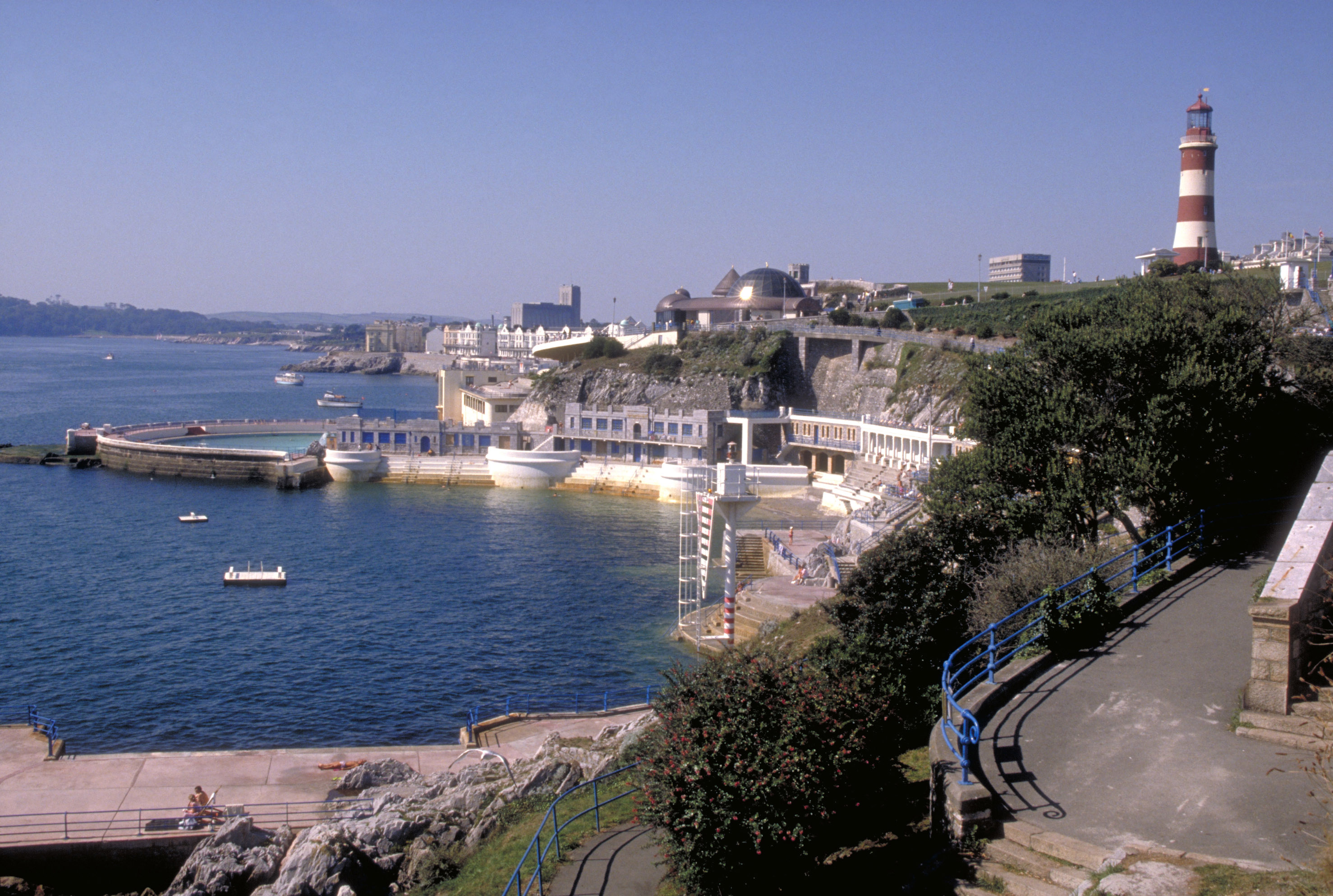 Bordering Plymouth Sound is the port’s promenade called The Hoe that includes a bowling green like that used by Sir Francis Drake before sailing against the Spanish Armada in 1588.
Story & Photo
By Pat Neisser
Mature Life Features
PENZANCE, Cornwall — England’s southwestern tip is the magical territory where Gilbert and Sullivan set their classic fun-poking operetta, The Pirates of Penzance, and the village of Mousehole is celebrated in the tale of Tom Bawcock and his cat, Mowzer. It’s a scene fostered by a citizenry battling and beating the elements that prides itself with its own identity and keeps a wary lookout for doubters. The fishermen are serious about their livelihood and don’t brook interference. But once they’ve finished their tough day, they’re ready to befriend the visitor. The Cornish peninsula is less crowded than better-known areas of the country and its towns hug the sea with an age-old love-hate relationship. I took the train from Southampton to Exeter in County Devon and drove to Penzance after an overnight stay. Cornwall’s and Devon’s history goes back more than 4,000 years but written records reach back to 30 B.C. when seafaring visitors came looking for tin. The Spanish invaded in 1595 but were driven back into the sea, marking the last landing on English soil by invaders. Cornish miners emigrated to California and Colorado to teach silver miners a thing or two and took with them the famous Cornish pasty meat pies. Penzance and its sister villages along the coast are loaded with things to do. Even if you aren’t fond of pilchards (large sardines) don’t miss a visit to the Pilchard Factory and Museum in next-door Newlyn where we were shown how the fish are salt-cured and packed for shipping all over the world. In Newlyn, one of the largest fishing harbors in England with eateries scattered along the beaches, we visited Trinity House National Lighthouse Centre to learn how the famed lighthouse saved so many sailors. A highlight of our visit was the Eden Project, which is housed in acres of environmental domes, each offering a different climate. Actors and scientists interact to explain the place of man and nature in the environmental universe. Next we visited the tiny coastal communities of Fowey, home to Daphne Du Maurier and her famous acting and writing family, and St. Ives, which romance novelist Rosamunde Pilcher calls home and where Barbara Hepworth created many of her magnificent sculptures. St. Ives is a fairy-tale seaport town with lanes that wind up and up. One of its most famous creations is the Tate Gallery St. Ives that shows modern art from local as well as international artists. Tropical plants, such as palm trees and cacti, cover this part of England thanks to the nearby Gulf Stream, bringing a California look to the terrain. Finally, it was back to neighboring County Devon and the south-coast seaport of Plymouth. This was Sir Francis Drake’s place of business and the site of the Mayflower’s departure. We stood on the famous steps where the pilgrims boarded their ship. The old town near the water is filled with 17th century memorabilia.
Mature Life Features, Copyright 2004
Take the Red Eye …
… if you’re traveling during the summer — or any peak travel season — to avoid getting jammed into a packed jetliner wedged between a dozen or so screaming, yelling, crying, complaining and bawling kids. Toddlers may be cute when they’re playing hideyseek around the airport boarding gate but they can throttle any pleasure out of your flight because you can’t escape the destruction they do to the decibel level at 35,000 feet.
This jaunt was our first summer one in a few decades and I discovered they’re also making the little people a lot louder these days. The red-eye out was peaceful and permitted us passengers to nod off for a few hours so we could enjoy the arrival day OK. We began the return flight to the West Coast from Back East at 3 p.m and were left with no doubt it’s the last midsummer flight we consider for leisure travel. It was even difficult to read.
I did learn something else. While the arm rests in middle seats can be lifted out of the way simply by pulling up, the ones on the aisle always stubbornly refused to budge for me. A friendly fellow passenger showed me there’s a little button at the rear underside of the aisle armrest that you push to pull the armrest out of the way. It makes getting in and out of the seat much easier.
The hiatus in Pennsylvania and Canada was wonderful fun but it’s grand to be back home.
R & R time really means …
… relatives and reminisces, which is what Bev is relishing this week. It’s my turn next week back in Toronto. Her aunt and uncle have been doppling us with fresh fruit and fantastic home-made — really made at home here — Pennsylvania-Dutch desserts — can you get a whiff of shoo-fly pie??? — between jaunts here there and everywhere that reverberates Bev’s early years in this region. We also lunched and lollygagged with her other aunt and uncle and with a friend she made at her first job out of high school.
Yesterday was a quick jaunt up to Hershey, which prompted me to start the argument: who came up with chocolate kisses first? Was it Perugia with its baci (kiss) and did Hershey copy it, or vice versa? Today (Saturday) we’re sked for a gathering of the clan at a Kutztown tavern. Eldest will be in late 80s and youngest in early 20s. We’ll report later because we’re set to go.
Rambling and rogue thunderstorms are forecast for this area for the next three days. If we can get by Syracuse Monday in half-decent weather, that’ll be a plus. Our trip down here Monday was the first time in more than a dozen trips we’ve ever had decent weather getting through and by that town.
Surprisingly pleasant…
… the hot muggy weather just hit us today here in eastern Pennsylvania.
Toronto’s layover was a gem. Bright and cool — AND NO MOSQUITOS — and Lou’s 75th birthday gathering could not have moved into history so well. Everyone schmoozed with everyone else and the food and family and friends were all mellow.
Drive to PA was eventless — took about 9 hours — and we’ve managed to squeeze in a quick tourist jaunt to Jim Thorpe (hadn’t been there before). Took some fotos and had some excellent food and then slept it all off before the heat hit today. It was 97 when I checked at 2:20 p.m. and the humidity was off the charts. Bev drove for about 15 minutes through an intense thunderstorm with rain drops that sounded like hail on the windshield. Seems to be cooling off in the evening.
Time for a change…

…not only for this blog but for us, too.
We’ve taken the luggage down to get ready for an about-a-month-long visit Back East.
We have our house sitters lined up and calls made to credit-card companies to let them know we’ll be on the road and alerted the alarm company, cops, relatives and neighbors so all we have to do now is decide what color slacks and tops we want to take. And how many.
We’re traveling in middle of summer — ugh — the unpredictable-weather and busiest-travel time of year to attend brother Lou’s 75th birthday. We agreed several months ago we’d attend his and he’s to attend my 80th later this year. We’ll be in Toronto for a few days for the festivities, drive to visit Bev’s folks in the Reading, Pa., area for a week, and back to Toronto to hang around with Lou and Jean, play some cards, sip some scotch, drink some wine, and snag a table in some of Toronto’s fine restaurants. In Pa., we’ll do our usual shopping at the Bethlehem of outlets — at the Vanity Fair complex in West Reading — and get our Amish-food fix at one of the several such eateries peppered over the rolling countryside.
We don’t worry about gaining weight during these sessions because we do a lot of walking. As those of you who are familiar with the cities back there, they’re more conducive to walking around than the stretched-out metros of the Southwest, like Phoenix and San Diego and Los Angeles, where it’s normally long-haul to walk anywhere from where you are.
As always, we anticipate a fine R & R (relatives and reminiscing) time but do not look forward to the airport and airplane crunching and scrunching both going and coming. But the excitement of being there and enjoying the folks is beginning to build. And we’ll take a few photos to accompany the travel pieces we write when we return home.
— Cecil Scaglione
A Cruise on the Wild Side
 By Joan Rattner Heilman

Mature Life Features
SEA OF CORTEZ —- Pulling a skintight wetsuit onto an imperfect body is not very encouraging. Not only was I going to be seen in that outfit by my fellow passengers on our small cruise ship, but I had to maneuver my way along the deck, climb into an inflatable boat, motor out to a small island, and then jump overboard.
Then we were going to swim with a gang of sea lions.
Once I slid over the side and into the water feet first, none of my vanities mattered anymore. Schools of fantastically colorful fish swam beneath my flippered feet. Then, with a whoosh, a baby sea lion came by to play, swimming around and around in joyful circles. Then another, and another, splashing to the surface, diving down into the water. Wherever I went, they followed, a bunch of youngsters out for a good time. Their huge parents, tusks gleaming, watched benignly from the rocky island nearby.
One of the pups, a handsome little brown and shiny fellow with short black whiskers, came alongside, turned upside down, his face next to mine, and presented his neck to be scratched. After obliging, I put my arm around him and it was like hugging a big wet soft golden retriever. We both fell in love and our parting half an hour later was poignant.
We were on a week-long ecocruise on the vermillion waters that separate Baja California from mainland Mexico. It has been called the Mexican Galapagos but its the Gulf of California on U.S. maps. Cabo San Lucas is perched on the southernmost tip of the 700-mile-long peninsula where gulf spills into the Pacific Ocean.
Dolphins raced alongside our small ship most mornings and blue whales spouted off the bow. A large gray whale surfaced next to the ship as we ate breakfast and appeared again in the evening as the sun began to set. We visited pristine desert islands and found turtles among the succulents and cacti. And we were accompanied by an amazing number of seabirds including frigate birds, ospreys, eagles, pelicans, and blue-footed boobies.
Traveling “green” doesn’t necessarily mean roughing it, although there was plenty of physical activity from desert hikes to kayaking and snorkeling in search of wild creatures.
We began and ended the cruise in La Paz, the capital of Baja California Sur. It’s a walkable town with a colorful seaside promenade lined with shops and eateries.
Our other major foray into civilization was up the coast at Loreto, Baja’s oldest permanent settlement, where the first of hte long
Mature Life Features, Copyright 2005
Tantalizing Taos Tempts Tourists
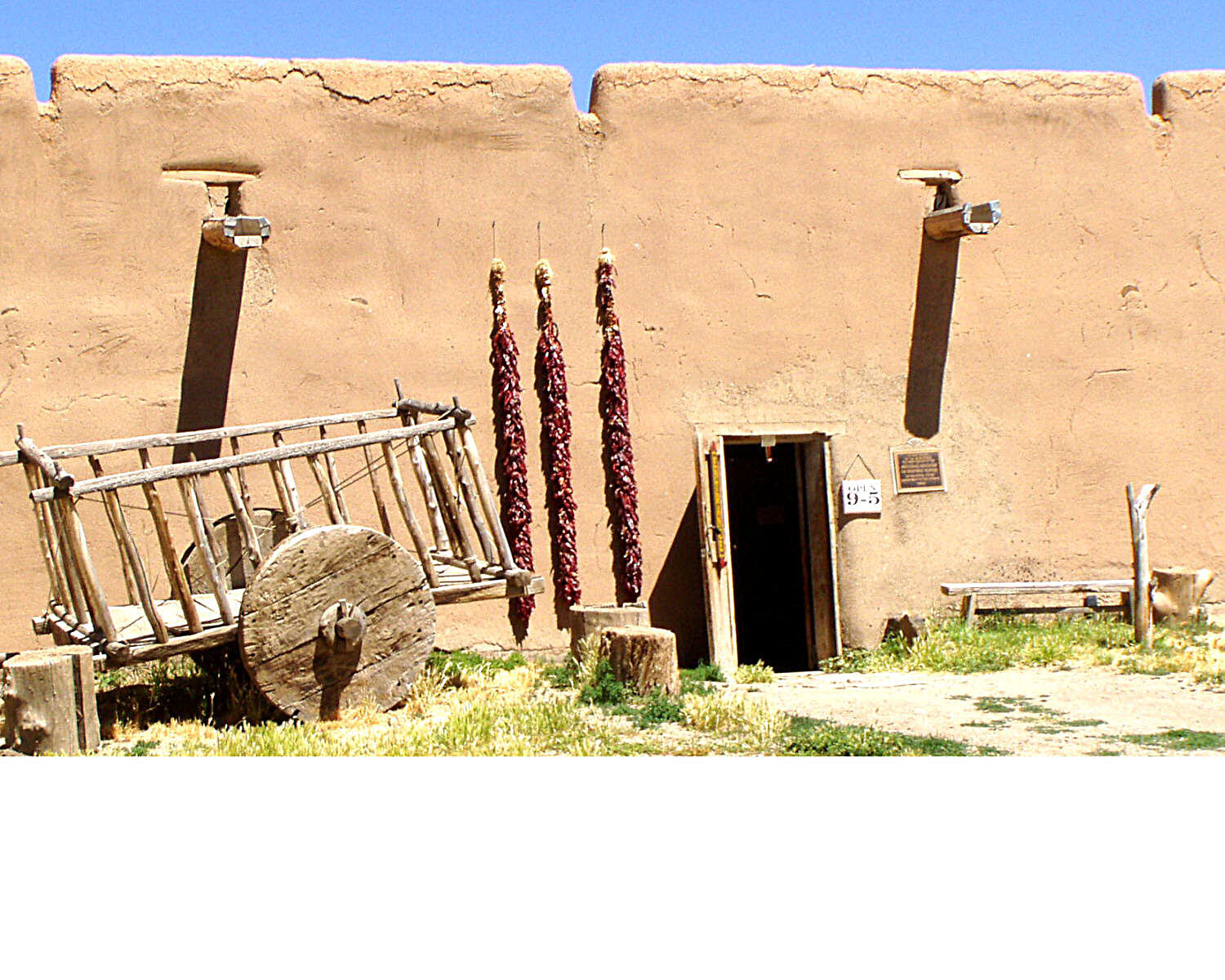
Retired wagon rests by Martinez Hacienda on outskirts of Taos. New Mexico
By Cecil Scaglione
Mature Life Features
TAOS, N.M. —- This citadel community of some 6,000 people nestled in a high-desert valley is gearing up for another onslaught. Over the past four centuries, locals have survived attacks by conquistadors, hostile Native American tribes, scheming land-grabbers, marauding Civil War troops, and hippies. Rather than repel these waves, Taos embraced them and packaged their best qualities to lure more of their newest invaders: tourists.
There’s much more to absorb than artifacts and adobes. You can ski at nearby Snake Dance from Thanksgiving through April. Hike or bike along the rim of the dizzying Rio Grande Gorge a few miles out of town, where it’s unlikely you’ll encounter anyone who’ll smash your serenity or solitude.
Trip over to the village of Arroyo Seco and grab some comforting ice cream before a libation at Abe’s Cantina y Cocina, where the founder’s Japanese flag souvenired from World War II still hangs over the back of the bar.
In early summer, you can discuss the qualities of adobe construction with volunteers scrambling around one of the most-photographed churches on the globe: San Francisco Assisi. Because the church has no foundation, moisture seeps up into the walls and the outer skin crumbles. Volunteer parishioners apply a new coat of mud to the building each June. Building began in the 1700s and the church was completed in 1815. There are no windows because it was also designed as a fortress against vengeful Indians. Inside, where photographs are forbidden, is a picture of a pregnant Mary.
The Native American pueblo, which is open sometimes and sometimes not, that offers a window into tribal customs and culture is still a major attraction here and now houses a casino – the only one in the state that prohibits smoking and alcoholic drinks.
Nearby, the Martinez Hacienda opens a door to the early 1800s when Mexico ruled. Don Antonio Martinez was a trader, as were most early settlers, who began building the
ranch house in 1804 and kept adding to it as he and his family prospered. The trader and his troupe bundled up their pelts and other goods for the annual trek to Mexico City to pay tribute to whoever was the ruler at the time.
Before leaving, you have to sample frito pie, the local junk food. The recipe is simple – taco chips drenched in chile sauce. It comes with red or green sauce. Red is hot. Green is not. Sometimes it’s the other way around. So when you ask for chile in a local restaurant, ask for Christmas so you get both red and green and suit yourself.
Mature Life Features, Copyright 2006
“The King” still Reigns in Faulkner Country
 Elvis at 13
Story & photo
By Sandy Katz
Mature Life Features
TUPELO, Miss. —- The two-room dwelling where Elvis Presley came into this world still stands in a park here. Other local sites important to the formative years of the King of Rock ‘n’ Roll include Milam Jr. High, where he won his first talent contest; the Tupelo hardware store where he bought his first guitar, and Tupelo fairgrounds, where he performed early in his career.
There are other aspects of culture and heritage of the Magnolia State handy, such as the nearby Tupelo National Battlefield, a reminder that many of the Civil War’s fiercest battles were fought on Mississippi soil. North and west of here is Holly Springs with its historic antebellum homes. Between these two communities is Oxford, immortalized in writings of William Faulkner, and the picturesque campus of the University of Mississippi (Ole Miss).
The Depression Era house where Elvis Presley was born in January 1935 was built by his father, a dairy farmer, for $180. Originally wallpapered with newspapers, each room now has flowered wallpaper and one lightbulb. In a 1957 hometown concert, Presley donated the proceeds to buy his birthplace and 15 surrounding acres. Elvis Presley Park now includes a memory walk where residents detail their recollections of the singer, a museum that traces his road to fame through a collection of his clothing from riding boots to a Las Vegas jumpsuit, a chapel, and an “Elvis at 13” bronze statue depicting him as a young boy in overalls with guitar in hand.
An annual Elvis Presley Festival the first weekend in June brings music, food, and fun to downtown Tupelo. Musicians from around the country play the music that influenced Elvis and music that he influenced. Among the festival events are a motorcycle show, pet parade, movie-
poster exhibit, and recliner, walking and bicycle races. When not singing, Elvis collected cars, often giving them away to friends. The Tupelo
Automobile Museum complements the nearby scenic made-for-cruising Natchez Trace Parkway. The 100-plus vehicles in the museum range from seven-horsepower models that could barely make it up hills to juiced-up Thunderbirds, Plymouths and Pontiacs. From the Fabulous Fifties,
there is a Corvette the color of Marilyn Monroe’s Technicolor-red lips, Mercurys and Buicks the color of lemons, and Packards and Edsels that really were lemons.
The Natchez Trace Parkway Visitors Center and Headquarters includes a giant mural depicting the history of the 444-mile route linking Natchez to Nashville. Designated a National Scenic Byway and an All-American Road, it is open year-round for motorists, hikers, and cyclists and offers visitors the opportunity for an unhurried trip through time.
With 64 antebellum properties in a landscape dotted with historic sites, magnificent homes, and wrought-iron fences, nearby Holly Springs draws thousands of visitors annually during the last week in April for the Holly Springs Pilgrimage. Guests are greeted by locals dressed in period costumes who provide detailed history about the homes, such as Walter Place, which was home of General Ulysses S. Grant.
Just off the town square is Graceland too, which attracts music fans to what possibly is the largest collection of Elvis Presley memorabilia on the planet. Owner Paul McLeod, who has been called the world’s number one Elvis fan, has spent more than four decades collecting every conceivable item related to the King. He and his son, Elvis Presley McLeod, offer tours every day around the clock.
Faulkner fans flock to Oxford hoping to tap into what’s left of the Deep South and the Southern psyche. Downtown Oxford still looks like it did when Faulkner used it as a stage for his characters. The Nobel laureate was born in nearby New Albany and spent the last 32 years of his life here at Rowan Oak, a stereotypical antebellum home on the edge of the Ole Miss campus. The house has the rumpled appearance of the author, who wrote here such masterpieces as “Absalom, Absalom,” “Light in August,” “The Sound and the Fury,” and “Fable,” an outline of which scribbled in the author’ hand remains on the study wall. The university library’s Faulkner Room contains his Nobel Prize and some of his original manuscripts.
Mature Life Features, Copyright 2005
Babe Ruth’s Successor in Canada’s Baseball Hall of Fame
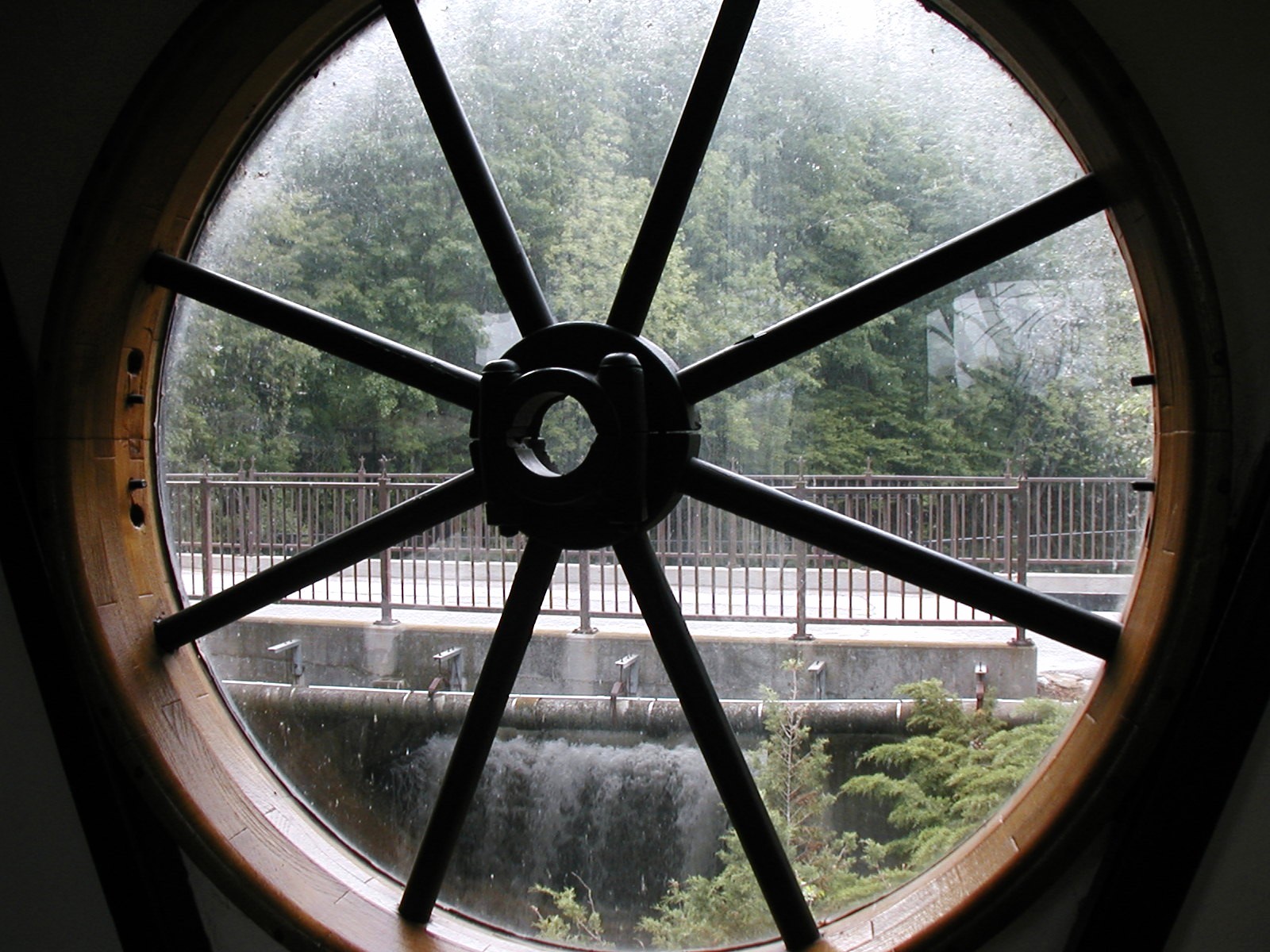
Mill race near Canadian Baseball Hall of Fame
Story & photo by
Cecil Scaglione
Mature Life Features
ST. MARY’S, Ontario —- The chronicles of the Canadian Baseball Hall of Fame have been cast in concrete.
The St. Mary’s Cement Co., which was founded in 1912 and is to Canadian cement what Louisville is to baseball bats, donated 32 acres of land for this museum-and-sports-field complex that opened in 1998.
The Canadian Baseball Hall of Fame opened 15 years earlier in Toronto but was dispossessed in 1989. It had been housed in the American League Toronto Blue Jays’ original home in the lakefront Canadian National Exhibition stadium but didn’t make it into plans for the team’s new home – the massive Skydome built in the lee of the CN Tower, the world’s tallest free-standing structure looming over Lake Ontario.
We stopped by this hidden gem a couple of hours east of Toronto while touring Southern Ontario to dip our toes in the three Great Lakes that lap these shores – Huron, Erie and Ontario.
The sports memorabilia includes the bat used by Babe Ruth to clout his first professional home run during a 1914 game in Toronto. Ruth hit that homer while playing for Providence and it was the only round-tripper he hit in the minors.
One of the Canadian inductees is George Selkirk, who replaced the Babe as the New York Yankees’ right fielder in 1934. He played on five World Championship teams and was a four-time American League All-Star during his nine years with the Bronx Bombers.
Among the more renowned is Fergie Jenkins, who had six consecutive 20-win season with the Chicago Cubs. His 1971 Cy Young award for National League pitcher of the year is on display here. Ferguson Arthur Jenkins, who is also among the luminaries inducted into baseball’s Mecca in Cooperstown, N.Y., was born and raised in Chatham, Ontario, about 50 miles east of Detroit and a major terminal on the underground railway used by slaves fleeing the United States.
Also memorialized here is Jackie Robinson, who played for the Montreal Royals, a Brooklyn Dodgers farm club, before he broke the color barrier in the major leagues.
This bustling industrial town also produced Arthur Meighen, who was prime minister of Canada during the early 1920s, and Timothy Eaton, who launched a coast-to-coast department-store empire.
And it was a brief stopover for Thomas Alva Edison, who worked as an itinerant junior telegrapher for Western Union in his teens.
While many communities lay claim to this vignette, the local version focuses on his inventive bent during his brief career as the night telegraph operator in the town’s first railway station. To prevent night operators from sleeping on the job, they were required to tap out “six” every half hour. He invented a device that automatically sent out the code when a crank was turned and he slept while the night watchman turned the crank every 30 minutes.
One night a message came through to hold a train in a passing track. Edison failed to relay this message to the train crew. Fortunately, the engineers saw each other’s train in time to stop. And the young man slipped out of town before the subsequent inquiry was completed.
Mature Life Features, Copyright 2003
 Mature Life Features