Let’s Drink For Your Health

By Cecil Scaglione
Mature Life Features
It may not be a coincidence that toasts around the world are addressed to your health.
Results of several studies and surveys in various parts of the globe support the view that the moderate use of alcohol actually is good for your well-being and longevity, according to a report by the Center for the Advancement of Health in Washington, D.C.
For example, women who drink an average of half a drink a day have a 14 percent lower risk of developing high blood pressure than non-drinkers. Those who average 1 1/2 a day lower their risk of hypertension by 20 percent compared with teetot0talers.
This does not condone drinking. If you don’t drink, don’t start. If you do drink, we’re talking about moderate drinking, which translates to an average of one or two drinks a day. One drink is defined as an ounce of liquor, four ounces of wine, or 12 ounces of beer.
A study of more than 38,000 men over a dozen years indicated that those who drank moderately three or more times a week had a reduced risk of heart attack compared with those who drank less frequently. A 2001 study revealed drinkers who averaged one a day were more than 30 percent less likely to die after a heart attack than teetotalers. Also, moderate drinkers appear to be more likely than lifelong non-drinkers to seek preventive health-care and participate in other healthy behaviors, according to a study the same year. People 65 and older who downed more than 15 drinks a week were 41 percent less likely to have silent strokes than abstainers but were at greater risk for brain shrinkage.
Harvard researchers report a slight reduction in Parkinson’s-disease rates among moderate beer drinkers. However, a British study suggests the health benefits attributed to moderate drinking do not apply to men younger than 35 and women under 55.
Despite the data supporting the cardiovascular-health benefits of moderate drinking, physicians are loath to prescribe a glass of wine after dinner to improve your well-being. Medical experts argue that alcohol use can lead to abuse while exercise, proper diet, and cholesterol-controlling drugs can achieve and maintain the same level of health.
Supporters of the moderate use of alcohol suggest it dovetails smoothly into the litany of a healthy lifestyle: don’t smoke, be active, maintain a healthy weight, and eat a balanced diet — with a daily glass of wine.
Among both the drinkers and doctors, the age-old white-vs.-red wine debate goes on. A study of 1,565 adults gives the edge to white wine when it comes to boosting lung capacity and function.
Mature Life Features, Copyright 2005
A Cruise on the Wild Side
 By Joan Rattner Heilman

Mature Life Features
SEA OF CORTEZ —- Pulling a skintight wetsuit onto an imperfect body is not very encouraging. Not only was I going to be seen in that outfit by my fellow passengers on our small cruise ship, but I had to maneuver my way along the deck, climb into an inflatable boat, motor out to a small island, and then jump overboard.
Then we were going to swim with a gang of sea lions.
Once I slid over the side and into the water feet first, none of my vanities mattered anymore. Schools of fantastically colorful fish swam beneath my flippered feet. Then, with a whoosh, a baby sea lion came by to play, swimming around and around in joyful circles. Then another, and another, splashing to the surface, diving down into the water. Wherever I went, they followed, a bunch of youngsters out for a good time. Their huge parents, tusks gleaming, watched benignly from the rocky island nearby.
One of the pups, a handsome little brown and shiny fellow with short black whiskers, came alongside, turned upside down, his face next to mine, and presented his neck to be scratched. After obliging, I put my arm around him and it was like hugging a big wet soft golden retriever. We both fell in love and our parting half an hour later was poignant.
We were on a week-long ecocruise on the vermillion waters that separate Baja California from mainland Mexico. It has been called the Mexican Galapagos but its the Gulf of California on U.S. maps. Cabo San Lucas is perched on the southernmost tip of the 700-mile-long peninsula where gulf spills into the Pacific Ocean.
Dolphins raced alongside our small ship most mornings and blue whales spouted off the bow. A large gray whale surfaced next to the ship as we ate breakfast and appeared again in the evening as the sun began to set. We visited pristine desert islands and found turtles among the succulents and cacti. And we were accompanied by an amazing number of seabirds including frigate birds, ospreys, eagles, pelicans, and blue-footed boobies.
Traveling “green” doesn’t necessarily mean roughing it, although there was plenty of physical activity from desert hikes to kayaking and snorkeling in search of wild creatures.
We began and ended the cruise in La Paz, the capital of Baja California Sur. It’s a walkable town with a colorful seaside promenade lined with shops and eateries.
Our other major foray into civilization was up the coast at Loreto, Baja’s oldest permanent settlement, where the first of hte long
Mature Life Features, Copyright 2005
I ran into an old girlfriend the other day …

… whose captivating cleavage first caught my eye, but she turned out to be a big bust.
— Cecil Scaglione, Mature Life Features
Tantalizing Taos Tempts Tourists
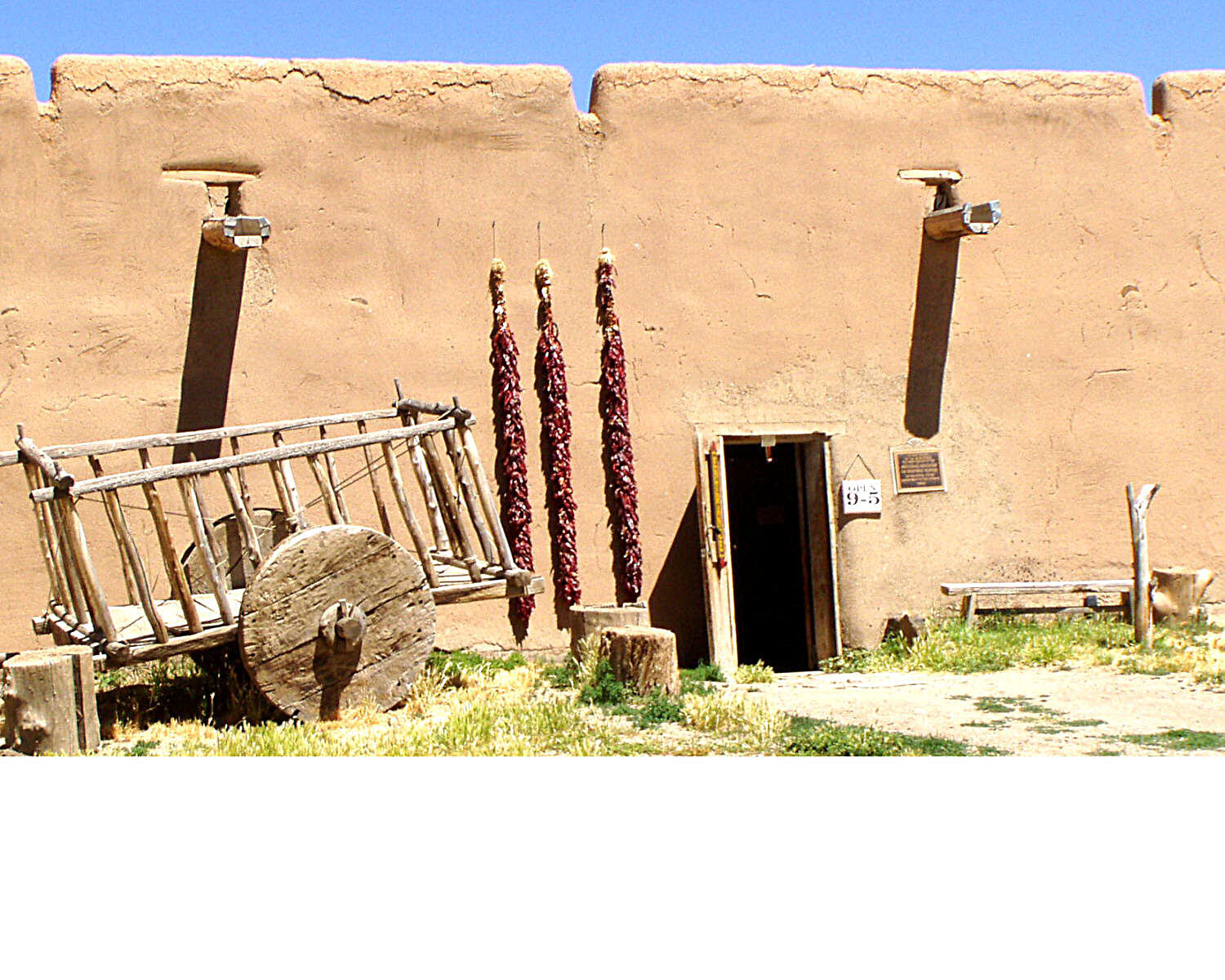
Retired wagon rests by Martinez Hacienda on outskirts of Taos. New Mexico
By Cecil Scaglione
Mature Life Features
TAOS, N.M. —- This citadel community of some 6,000 people nestled in a high-desert valley is gearing up for another onslaught. Over the past four centuries, locals have survived attacks by conquistadors, hostile Native American tribes, scheming land-grabbers, marauding Civil War troops, and hippies. Rather than repel these waves, Taos embraced them and packaged their best qualities to lure more of their newest invaders: tourists.
There’s much more to absorb than artifacts and adobes. You can ski at nearby Snake Dance from Thanksgiving through April. Hike or bike along the rim of the dizzying Rio Grande Gorge a few miles out of town, where it’s unlikely you’ll encounter anyone who’ll smash your serenity or solitude.
Trip over to the village of Arroyo Seco and grab some comforting ice cream before a libation at Abe’s Cantina y Cocina, where the founder’s Japanese flag souvenired from World War II still hangs over the back of the bar.
In early summer, you can discuss the qualities of adobe construction with volunteers scrambling around one of the most-photographed churches on the globe: San Francisco Assisi. Because the church has no foundation, moisture seeps up into the walls and the outer skin crumbles. Volunteer parishioners apply a new coat of mud to the building each June. Building began in the 1700s and the church was completed in 1815. There are no windows because it was also designed as a fortress against vengeful Indians. Inside, where photographs are forbidden, is a picture of a pregnant Mary.
The Native American pueblo, which is open sometimes and sometimes not, that offers a window into tribal customs and culture is still a major attraction here and now houses a casino – the only one in the state that prohibits smoking and alcoholic drinks.
Nearby, the Martinez Hacienda opens a door to the early 1800s when Mexico ruled. Don Antonio Martinez was a trader, as were most early settlers, who began building the
ranch house in 1804 and kept adding to it as he and his family prospered. The trader and his troupe bundled up their pelts and other goods for the annual trek to Mexico City to pay tribute to whoever was the ruler at the time.
Before leaving, you have to sample frito pie, the local junk food. The recipe is simple – taco chips drenched in chile sauce. It comes with red or green sauce. Red is hot. Green is not. Sometimes it’s the other way around. So when you ask for chile in a local restaurant, ask for Christmas so you get both red and green and suit yourself.
Mature Life Features, Copyright 2006
Getting into the Christmas spirit …
… is really difficult when you’re out in traffic.
— Cecil Scaglione
Mature Life Features
“The King” still Reigns in Faulkner Country
 Elvis at 13
Story & photo
By Sandy Katz
Mature Life Features
TUPELO, Miss. —- The two-room dwelling where Elvis Presley came into this world still stands in a park here. Other local sites important to the formative years of the King of Rock ‘n’ Roll include Milam Jr. High, where he won his first talent contest; the Tupelo hardware store where he bought his first guitar, and Tupelo fairgrounds, where he performed early in his career.
There are other aspects of culture and heritage of the Magnolia State handy, such as the nearby Tupelo National Battlefield, a reminder that many of the Civil War’s fiercest battles were fought on Mississippi soil. North and west of here is Holly Springs with its historic antebellum homes. Between these two communities is Oxford, immortalized in writings of William Faulkner, and the picturesque campus of the University of Mississippi (Ole Miss).
The Depression Era house where Elvis Presley was born in January 1935 was built by his father, a dairy farmer, for $180. Originally wallpapered with newspapers, each room now has flowered wallpaper and one lightbulb. In a 1957 hometown concert, Presley donated the proceeds to buy his birthplace and 15 surrounding acres. Elvis Presley Park now includes a memory walk where residents detail their recollections of the singer, a museum that traces his road to fame through a collection of his clothing from riding boots to a Las Vegas jumpsuit, a chapel, and an “Elvis at 13” bronze statue depicting him as a young boy in overalls with guitar in hand.
An annual Elvis Presley Festival the first weekend in June brings music, food, and fun to downtown Tupelo. Musicians from around the country play the music that influenced Elvis and music that he influenced. Among the festival events are a motorcycle show, pet parade, movie-
poster exhibit, and recliner, walking and bicycle races. When not singing, Elvis collected cars, often giving them away to friends. The Tupelo
Automobile Museum complements the nearby scenic made-for-cruising Natchez Trace Parkway. The 100-plus vehicles in the museum range from seven-horsepower models that could barely make it up hills to juiced-up Thunderbirds, Plymouths and Pontiacs. From the Fabulous Fifties,
there is a Corvette the color of Marilyn Monroe’s Technicolor-red lips, Mercurys and Buicks the color of lemons, and Packards and Edsels that really were lemons.
The Natchez Trace Parkway Visitors Center and Headquarters includes a giant mural depicting the history of the 444-mile route linking Natchez to Nashville. Designated a National Scenic Byway and an All-American Road, it is open year-round for motorists, hikers, and cyclists and offers visitors the opportunity for an unhurried trip through time.
With 64 antebellum properties in a landscape dotted with historic sites, magnificent homes, and wrought-iron fences, nearby Holly Springs draws thousands of visitors annually during the last week in April for the Holly Springs Pilgrimage. Guests are greeted by locals dressed in period costumes who provide detailed history about the homes, such as Walter Place, which was home of General Ulysses S. Grant.
Just off the town square is Graceland too, which attracts music fans to what possibly is the largest collection of Elvis Presley memorabilia on the planet. Owner Paul McLeod, who has been called the world’s number one Elvis fan, has spent more than four decades collecting every conceivable item related to the King. He and his son, Elvis Presley McLeod, offer tours every day around the clock.
Faulkner fans flock to Oxford hoping to tap into what’s left of the Deep South and the Southern psyche. Downtown Oxford still looks like it did when Faulkner used it as a stage for his characters. The Nobel laureate was born in nearby New Albany and spent the last 32 years of his life here at Rowan Oak, a stereotypical antebellum home on the edge of the Ole Miss campus. The house has the rumpled appearance of the author, who wrote here such masterpieces as “Absalom, Absalom,” “Light in August,” “The Sound and the Fury,” and “Fable,” an outline of which scribbled in the author’ hand remains on the study wall. The university library’s Faulkner Room contains his Nobel Prize and some of his original manuscripts.
Mature Life Features, Copyright 2005
A Good Thing About NSA Spying …
… was brought out in a Letter to the Editor today:
It’s the only government agency that listens to us.
— (wish I’d said that) Cecil Scaglione
Mature LIfe Features
I ran into an old friend the other day and…
when I visited him later in the hospital,
he said he felt a lot better when I missed him.
— Cecil Scaglione
Mature Life Features
Babe Ruth’s Successor in Canada’s Baseball Hall of Fame
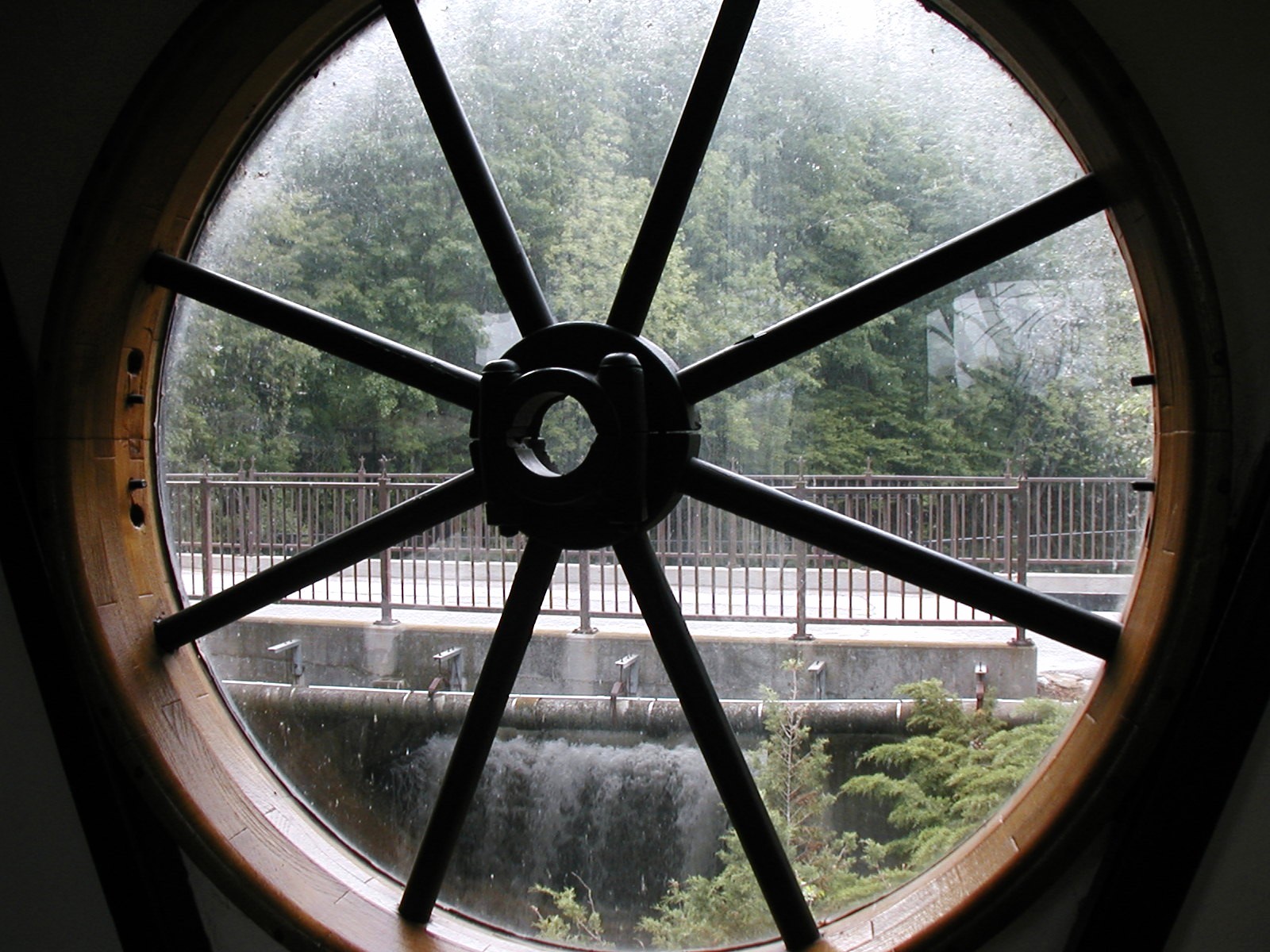
Mill race near Canadian Baseball Hall of Fame
Story & photo by
Cecil Scaglione
Mature Life Features
ST. MARY’S, Ontario —- The chronicles of the Canadian Baseball Hall of Fame have been cast in concrete.
The St. Mary’s Cement Co., which was founded in 1912 and is to Canadian cement what Louisville is to baseball bats, donated 32 acres of land for this museum-and-sports-field complex that opened in 1998.
The Canadian Baseball Hall of Fame opened 15 years earlier in Toronto but was dispossessed in 1989. It had been housed in the American League Toronto Blue Jays’ original home in the lakefront Canadian National Exhibition stadium but didn’t make it into plans for the team’s new home – the massive Skydome built in the lee of the CN Tower, the world’s tallest free-standing structure looming over Lake Ontario.
We stopped by this hidden gem a couple of hours east of Toronto while touring Southern Ontario to dip our toes in the three Great Lakes that lap these shores – Huron, Erie and Ontario.
The sports memorabilia includes the bat used by Babe Ruth to clout his first professional home run during a 1914 game in Toronto. Ruth hit that homer while playing for Providence and it was the only round-tripper he hit in the minors.
One of the Canadian inductees is George Selkirk, who replaced the Babe as the New York Yankees’ right fielder in 1934. He played on five World Championship teams and was a four-time American League All-Star during his nine years with the Bronx Bombers.
Among the more renowned is Fergie Jenkins, who had six consecutive 20-win season with the Chicago Cubs. His 1971 Cy Young award for National League pitcher of the year is on display here. Ferguson Arthur Jenkins, who is also among the luminaries inducted into baseball’s Mecca in Cooperstown, N.Y., was born and raised in Chatham, Ontario, about 50 miles east of Detroit and a major terminal on the underground railway used by slaves fleeing the United States.
Also memorialized here is Jackie Robinson, who played for the Montreal Royals, a Brooklyn Dodgers farm club, before he broke the color barrier in the major leagues.
This bustling industrial town also produced Arthur Meighen, who was prime minister of Canada during the early 1920s, and Timothy Eaton, who launched a coast-to-coast department-store empire.
And it was a brief stopover for Thomas Alva Edison, who worked as an itinerant junior telegrapher for Western Union in his teens.
While many communities lay claim to this vignette, the local version focuses on his inventive bent during his brief career as the night telegraph operator in the town’s first railway station. To prevent night operators from sleeping on the job, they were required to tap out “six” every half hour. He invented a device that automatically sent out the code when a crank was turned and he slept while the night watchman turned the crank every 30 minutes.
One night a message came through to hold a train in a passing track. Edison failed to relay this message to the train crew. Fortunately, the engineers saw each other’s train in time to stop. And the young man slipped out of town before the subsequent inquiry was completed.
Mature Life Features, Copyright 2003
Adventures Afoot in the City of Light

By Igor Lobanov
Mature Life Features
PARIS — The pigeon flitting about the domed ceiling seemed unimpressed by or, perhaps, deaf to the thunderous tones grumbling out of the more than 6,000 organ pipes. Rambling from crackling to caressing, the massive instrument in St. Sulpice almost made us believe the gates of heaven had opened in the French capital and we were to witness its glory.
A stroll from our Left Bank hotel by way of Marie de Medicis’ peaceful Luxembourg Gardens brought us to this parish church containing one of the world’s largest organs and we had wandered into a special performance.
Our euphoria ebbed a bit when we sought to order a pizza in a nearby restaurant specializing in that fare. The waiter’s disdain appeared designed to intimidate visitors in front of the locals, but succeeded only in denying him his tip.
Fortunately, such behavior was not evident in other places where we dined and was forgotten by the time we stumbled onto the second unexpected event of the day a few blocks farther along the Seine. At the Quai Voltaire, long lines of people inched across the Seine on the Pont des Arts on both sides of a bizarre battle scene stretched along the middle of the footbridge. It was comprised of life-size clay figures of cowboys, Indians, horses and other symbols of the American West by an African sculptor.
As sunset approached, we stopped in a café near Notre Dame for hot chocolate and crepes before heading back to our hotel.
The following day’s project was a meandering three-mile walk from the Boulevard du Montparnasse to the Arc de Triomphe by way of the Tuileries Gardens and Champs Elysees.
We passed through the Luxembourg Gardens, where lovers strolled, children sailed toy boats on a pond, and elderly folks played chess under the chestnut trees.
Then we passed the forbidding-looking 700-year-old Sorbonne, now called the University of Paris. The mood brightened a couple of blocks farther with the appearance of cafes along Boulevard St. Germain des Pres frequented in the 1920s by such literary legends as Ernest Hemingway, F. Scott Fitzgerald, James Joyce, and Gertrude Stein.
Crossing the river at the Pont du Carrousel took us to the courtyard of the Louvre and its pyramid-by-Pei entrance. We headed the other way, past the Tuileries Gardens with its manicured hedges, lawns and terraces framed by Napoleon’s first monument to his military victories: the Roman-style Arc de Triomphe du Carrousel.
Next we came upon the Place de la Concorde where Louis XIV, Marie Antoinette, Robespierre and others were separated from their heads. The guillotine has been replaced by a 3,300-year-old Egyptian obelisk from the Temple of Luxor.
This got us onto the broad boulevard renowned as the Champs Elysees decorated with such labels as St. Laurent, Parfum de France, Mercedes-Benz along with McDonald’s and Planet Hollywood.
Our walk ended at the Etoile, the hub of a dozen radiating streets known as Place Charles de Gaulle that contains the Arc de Triomphe.
A pedestrian tunnel beneath the traffic let us reach the monument just in time to seek shelter from a sudden shower.
But when it’s raining, and you’re in Paris, you can pretend always it’s April.
Mature Life Features, Copyright 2000
 Mature Life Features